
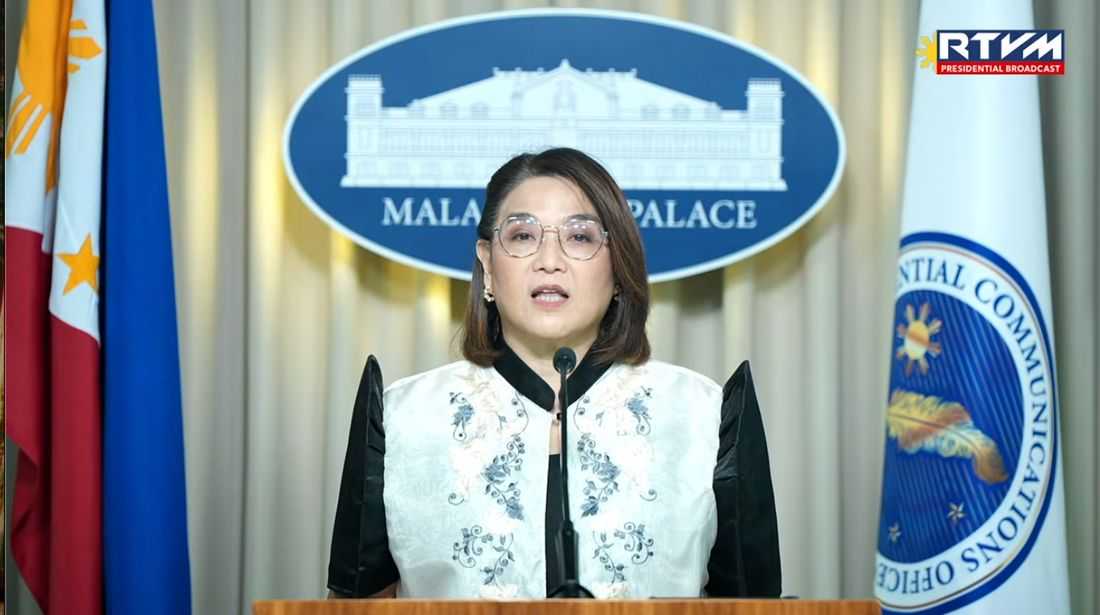
Malacañang on Wednesday defended President Ferdinand Marcos Jr.’s decision not to certify as "urgent" the four priority bills discussed during the Legislative-Executive Development Advisory Council (LEDAC) meeting, saying the President’s message to Congress was sufficient to expedite their passage.
In a press briefing, Palace Press Officer Undersecretary Claire Castro maintained that the four measures identified by the President: the Anti-Dynasty Bill, the Independent People’s Commission Act, the Party-List System Reform Act, and the Citizens Access and Disclosure of Expenditures for National Accountability (CADENA) Act are jointly recognized by both Congress and the Executive as "priority" legislation, RH Leth Narciso reported on dzRH's Rapido Hataw Balita.
“Unang-una po, ito ay e-Congress at Executive na priority bills. Alam po natin 'yan at nagbigay na po ng mensahe ang Pangulo na ito ay unahin. At pag-aralang mabuti para maipasa kaagad,” Castro said.
“Naaayon naman sa Konstitusyon ang ginagawa ng Pangulo. Hindi naman ibig po sabihin na hindi sinertify as urgent ang isang bill ay hindi na sinsero ang Pangulo. Kaya po binigyan niya ng mensahe malinaw, priority bills ang apat na legislative measures,” she added.
The Palace’s remarks come amid disappointment from several lawmakers who argued that merely labeling a bill as a priority does not guarantee faster legislative action.
According to critics, including Mamamayang Liberal (ML) Party-list Representative Leila de Lima and Akabayan Party-list Representative Chel Diokno, an urgent certification would have demonstrated stronger executive commitment to passing reforms related to transparency, accountability, and political dynasties.
Castro, however, pointed out that the Constitution strictly defines when a President may certify a bill as urgent, specifically during cases of public calamity or national emergency.
“Malinaw din naman po ang sinasabi ng Konstitusyon kung kailan kailangang mag-certify as urgent ng bill ang Pangulo. Ito ay kung may tinatawag at tinatawag ng public calamity or emergency," Castro emphasized.
Castro further stressed that the administration remains committed to promoting reforms aimed at strengthening governance and accountability, including the long-standing proposal to prohibit political dynasties.
