
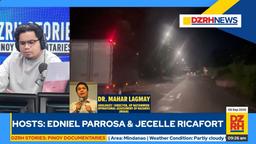

Nationwide Operational Assessment of Hazards (NOAH) Director and geologist Dr. Mahar Lagmay is pushing for the transformation of Project NOAH into a National Climate and Resilience Institute to ensure the continued use of science-based data in government planning and disaster preparedness.
In an exclusive interview with DZRH Stories, Lagmay said climate change scenarios and updated flood hazard maps should be integrated into the country’s flood management master plans, noting that historical flood records alone may no longer be sufficient as extreme weather events become more frequent and intense.
“Mas maganda ang ating chance na maayos ito kung ang basihan natin ay ebidensya. Hindi yung haka-haka, hindi yung tansya-tansya, hindi yung kanya-kanya. Kailangan sama-sama tayo dito magagabayan ng siyensya,” Lagmay said.
He explained that Project NOAH can simulate potential flood scenarios using scientific data, allowing authorities to anticipate where floodwaters could reach before disasters occur. Such information could guide decisions on zoning, housing, catchment areas, environmental protection, and other community interventions.
Lagmay said the program is also being developed to incorporate climate change scenarios into flood hazard maps, which can then be translated into local government plans and flood management strategies.
He noted that work is already underway for 23 major river basins, with the goal of completing the initial work before the end of the year. The project is supported by a ₱1-billion government allocation intended to develop flood hazard maps incorporating climate change scenarios.
For the public, Lagmay said Project NOAH's hazard information can be accessed through its website and mobile applications, allowing users to view flood scenarios even before flooding occurs.
During the interview, Lagmay also revealed efforts in Congress to institutionalize the program.
“May dalawa para gawin pong itong programa na ito na Project NOAH na gawing national effort, gawing National Climate and Resilience Institute,” he said.
Lagmay emphasized that institutionalizing the program would help ensure that science-based planning and evidence-based decision-making remain part of the country's long-term approach to climate change and disaster resilience.
“Sana yun ang maging gabay natin para sa susunod na mga taon at para tuloy-tuloy ang ating development na hindi tayo natutupok palagi o nababalahaw dahil sa mga delubyo,” Lagmay said.
