
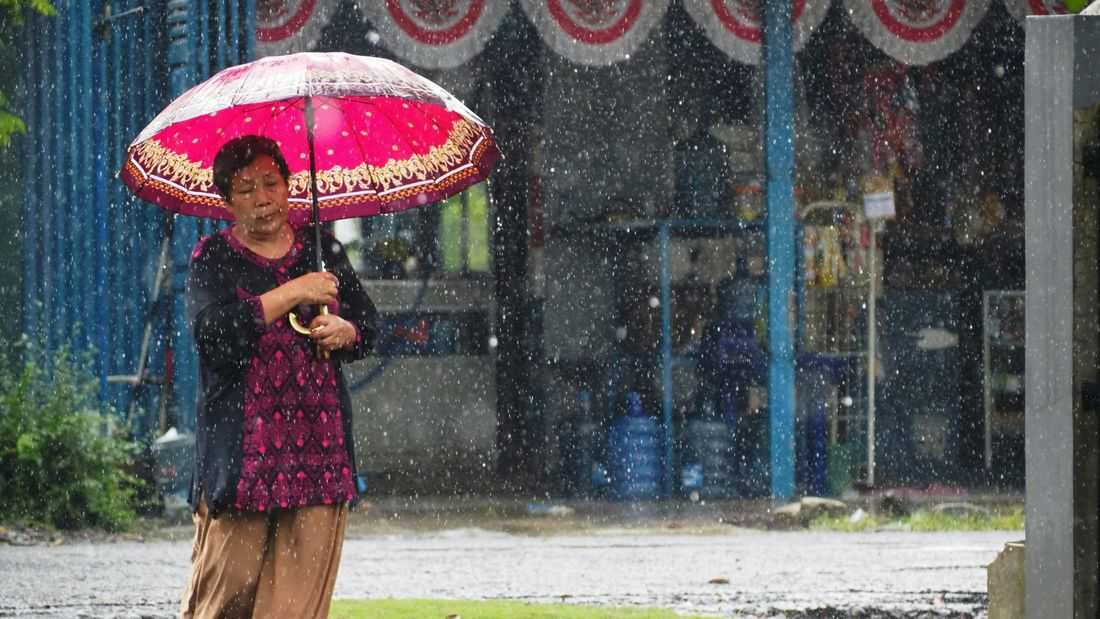
The Philippines is expected to experience wetter-than-usual conditions during the holiday season due to the ongoing short-term La Niña, according to the latest advisory from the Philippine Atmospheric, Geophysical and Astronomical Services Administration (PAGASA).
In an interview with DZRH’s ‘Special on Saturday’, PAGASA climatologist Charmagne Varilla explained that the current La Niña episode—described as short-lived—is already influencing the country’s weather patterns, including the frequency and development of tropical cyclones.
According to the weather bureau, the warm pool of ocean waters has shifted closer to the Philippines, creating conditions that trigger the formation of more storms.
“Kung mapapasin nga natin this year, nakitaan nga natin ng maraming mga pagbagyo kasi noon, parang hindi tayo umaabot sa ganitong dami. Yung last po na nakaranas tayo ng maraming mga sirkulasyon dito sa loob ng ating PAR ay noong 2013 pa.,” PAGASA said, adding that the last time the country saw this many weather disturbances was in 2013.
PAGASA clarified that La Niña is expected to weaken by the first or second quarter of 2026, transitioning back to a neutral climate pattern.
Holiday Weather and January Outlook
With Tropical Depression Wilma anticipated to be the last cyclone to enter PAR this month, forecasters said no new storm systems are expected within the next two weeks based on current model outputs.
However, La Niña will continue to bring increased rainfall, particularly over the eastern section of the country. Western and central parts of the Philippines, meanwhile, are expected to see fewer rain episodes.
When asked if the country should brace for rains as 2026 begins, PAGASA said the conditions point to a wetter start to the year, although storm activity is projected to be minimal.
For January, the estimated number of tropical cyclones ranges from zero to one—consistent with typical first-quarter patterns, which generally produce the fewest storms annually.
Even with La Niña active, PAGASA stressed that prolonged heavy rains are unlikely, given the anticipated short duration of the climate phenomenon.
Preparedness Still Needed
While the expected number of early-year cyclones remains low, the agency advised continued caution, especially in areas that have already experienced saturated soil conditions.
Visayas and Southern Luzon, which bore the brunt of recent rains, may still face risks such as flooding and landslides should another weather system develop.
The northeast monsoon will remain the dominant weather system affecting the country through the first quarter of 2026, contributing to occasional rains in the Visayas and nearby regions.
PAGASA reminded the public to remain alert for updates, especially as transition phases between climate patterns can still influence rainfall and local weather disturbances.
