
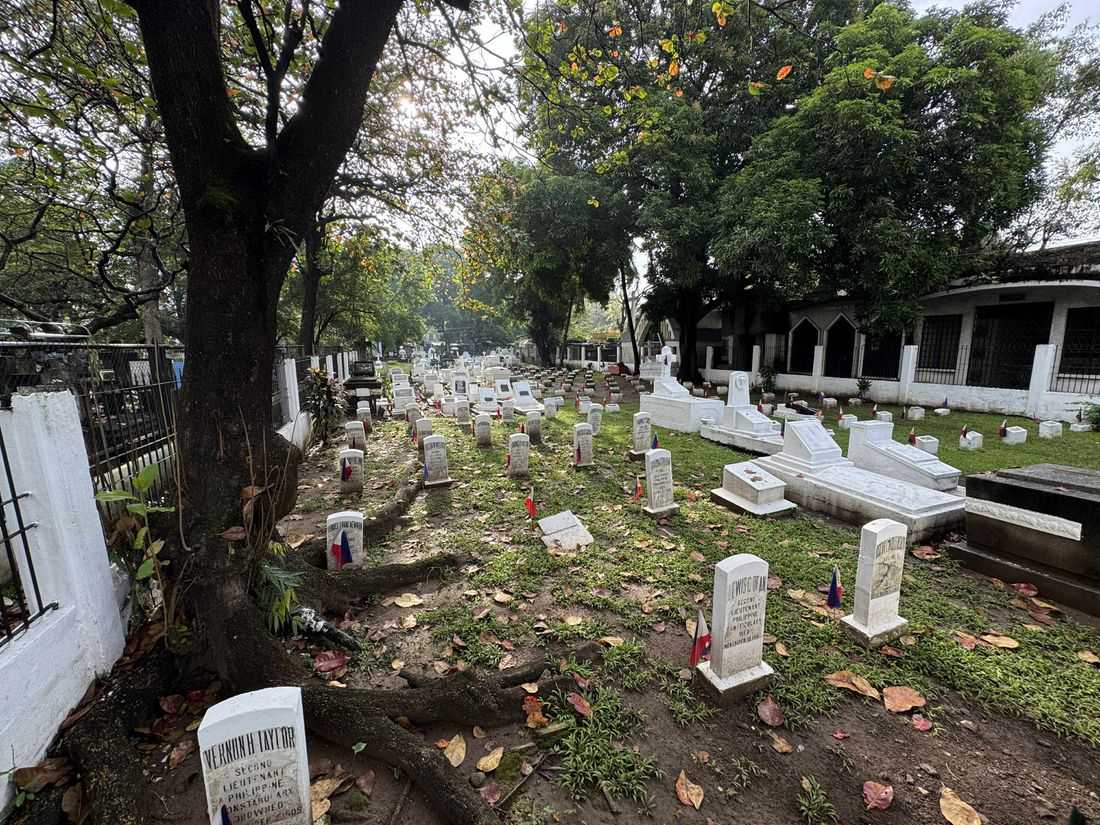
Every year, as November approaches, the Philippines slows down to honor the dearly departed. Streets grow quiet, candles flicker in cemeteries, and even outside neighborhood houses and families gather to clean tombs, bring flowers, and share stories and meals of those who have passed.
For Filipinos, Undas has always been more than just a religious observance. It’s a homecoming and reunion.
For a Gen-Z teacher, Bhea Bernal, who came from a religious Catholic family, Undas is about family and faith.
“Wala namang special kasi katulad lang din ng karamihan,” she said. “Every Undas, kami ay sama-samang pumupunta sa cemetery, as in complete. Parang reunion kasi andun din yung mga second cousins, titas, at iba pa.”
Before Undas, her cousins pitch tents at the cemetery to make the long stay comfortable.
“May folding beds, may tent para sa mga babies kasi malamok sa gabi,” she added.
On the day itself, they pray together and share food prepared by her aunt, a family feast that bridges the living and the dead.
“Siguro ang isang tradition talaga namin is ‘yung sabay-sabay na pagdarasal para sa mga namatay naming family members," Bernal noted.
The Family Feast and Night Vigil
Undas is both solemn and celebratory. It’s common to see families sharing favorite dishes of their departed loved ones — adobo, pancit, and sweet kakanin like bibingka and suman.
These are not only for the living but also offered as 'atang' to the souls of the dead, which is commonly Traditional Ilocano ritual.
As the night deepens, the glow of countless candles fills the cemetery. The light is believed to guide souls in the afterlife, while the stories told by elders keep memories alive. It’s during this time that younger generations learn about their roots, the lives, jokes, and wisdom of ancestors long gone.
Undas in the age of screens
Like many Filipino families, Bhea’s relatives are scattered abroad — in Canada and Saudi Arabia — as Overseas Filipino Workers (OFWs) but even distance can’t stop them from celebrating together.
“Kahit ‘yung mga kamag-anak namin abroad, sinasama pa rin namin sa video call para maramdaman nilang parte sila ng pag-alala,” she said. “Para kasing buo ulit ‘yung pamilya kahit sandali lang.”
Indeed, technology has reshaped the way Filipinos observe Undas. Families now light digital candles, post memorial tributes, and join livestreamed masses proving that remembrance transcends physical presence.
The Catholic Bishops’ Conference of the Philippines (CBCP) runs an “Undas Online” platform where people can submit names of their dearly departed to be included in ongoing masses. The site even features virtual candle lighting, users can light a candle on-screen and recite prayers for their loved ones.
Several cemeteries and memorial parks, such as Manila Memorial Park, have also offered virtual visits, where staff clean and decorate graves while families watch via live video. Meanwhile, city governments like Manila’s North and South Cemeteries launched online grave locators to help people find tombs more easily.
Private memorial service companies like St. Peter Life Plan and Chapels even allow users to send virtual flowers, light candles, and leave messages through mobile apps.
For many families, these virtual gestures complement physical rituals — keeping the essence of remembrance alive, no matter where they are.
Despite these modern touches, Bernal believed that the heart of Undas remains "unchanged."
"For me, ramdam pa rin naman [ang] essence ng Undas kahit modern na na 'yung paraan ng pag-alala. Honestly, depende naman talaga sa tao kung paano nila gustong mag-celebrate. As long as sincere sila, okay lang kahit online. Ayun naman ang mahalaga doon. 'Yung pagiging sincere mo sa paggunita mo ng Undas," she said.
"Siguro dala na rin ng mga nangyari sa paligid kasi kahit sabihin natin na dati may mga iilan na tao na gumagawa ng ganyang practices, ngayon kz mas naging normal na siya siguro kasi mas marami na ring mas gusto ‘yung tahimik na paggunita kaysa makipagsiksikan sa sementeryo," Bernal emphasized.
As candle lights glow both on tombstones and on screens, Filipinos continue to prove that traditions and pratices can evolve without losing their soul.
For the younger generation, the tools may have changed, but the intention remains the same. It’s still about remembering, praying, and celebrating the lives of those who’ve gone before us — whether at a crowded cemetery, a quiet home altar, or on a screen.
