
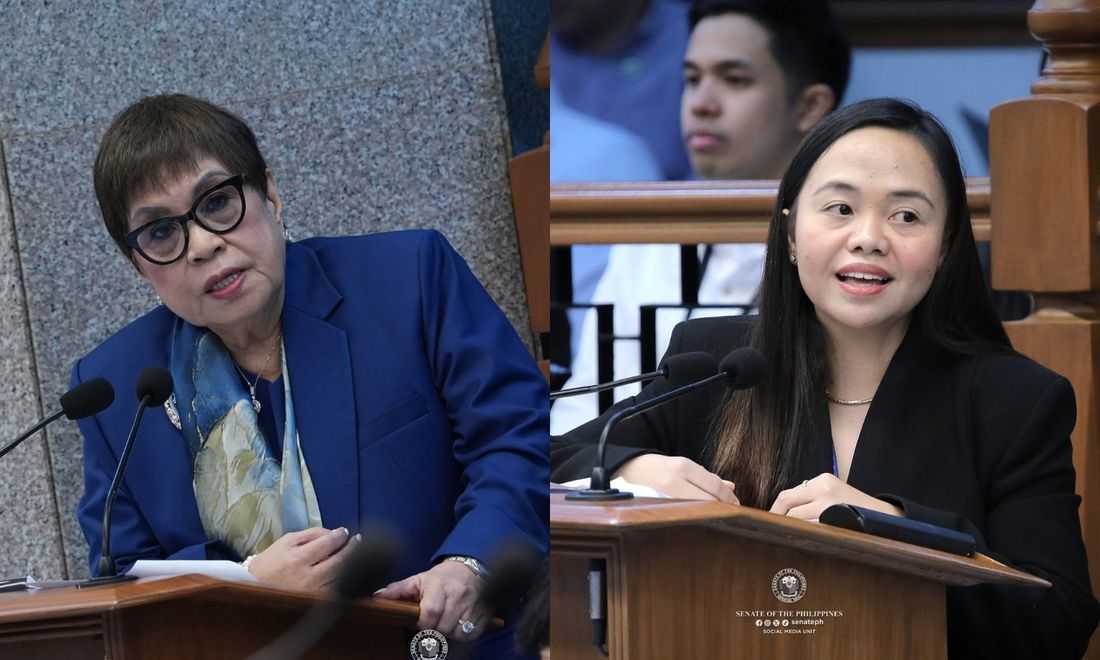
Tension rose between the prosecution and defense during Day 15 of Vice President Sara Duterte’s impeachment trial as private prosecutor Atty. Lorna Kapunan and defense counsel Atty. Kristine Ferrer clashed over the use of documents during the cross-examination of a Commission on Audit (COA) witness.
The exchange began when Kapunan repeatedly objected to Ferrer’s use of defense documents during her cross-examination of COA-Intelligence and Confidential Funds Audit Office (COA-ICFAO) State Auditor Xylene Mae Del Campo.
Kapunan argued that the defense should use the prosecution’s marked evidence, which had already been authenticated by the witness, after Ferrer said the defense was not disputing the documents earlier presented by the prosecution.
“We will not agree, Your Honor, to the presentation of the defense documents. Because precisely there was no stipulation yesterday. Excuse me, counsel. They are now constrained to use our documents precisely. This is what we wanted to avoid yesterday had we did a comparison, not to belabor the obvious, Your Honor, but now counsel says, anyway, it's the same,” Kapunan said, stressing that there had been no stipulation the previous day allowing the defense to use its own copies.
Ferrer pushed back, telling Kapunan that she could not dictate how she would conduct her cross-examination.
“The counsel cannot dictate how I will proceed with my cross-examination. Can the counsel, Your Honor, be reminded that I'm a cross-examiner?” Ferrer said.
Presiding Officer Francis “Chiz” Escudero then intervened, saying the earlier disagreement was already “water under the bridge.”
Escudero allowed Ferrer to present the document while noting Kapunan’s continuing objection. He also suggested that the prosecution could have its assisting counsel check the copy being presented and raise the matter again during redirect examination.
The two lawyers later clashed again after Ferrer interrupted Del Campo while the witness was answering a question.
Ferrer initially asked Del Campo whether she was aware that one of the purposes of intelligence work was crime prevention.
Kapunan objected, pointing out that the proceedings were dealing with confidential funds, not intelligence funds.
“May we know where this is leading because we are not talking about intelligence funds. We're talking about confidential funds,” Kapunan said.
Ferrer said she would rephrase the question.
Escudero then reminded both sides to address the court instead of each other.
“Counsels, please address the court, not each other,” Escudero said.
Kapunan maintained her objection, saying several of Ferrer’s questions appeared to refer to intelligence funds despite the day’s discussion focusing on confidential funds.
Ferrer subsequently reframed her line of questioning around surveillance and confidential activities.
She asked Del Campo whether surveillance or confidential work could be used for crime prevention. The witness answered in the affirmative.
Ferrer then asked about different types of surveillance work and whether the joint circular governing confidential funds limited surveillance activities to crime prevention.
Kapunan objected to the line of questioning, saying there was "no basis" for the question.
The exchange intensified when Ferrer sought to prevent Kapunan from interrupting the witness’s answers.
Kapunan, meanwhile, asked that Del Campo be instructed to answer only with “yes” or “no,” arguing that Ferrer would have an opportunity to ask clarificatory questions later.
Ferrer objected, saying not all questions could be answered with a simple yes or no, particularly during cross-examination.
“Not all questions can be answered by yes or no,” Ferrer said.
Kapunan responded that cross-examination also had limits, particularly when questions could be misleading.
“Never mind if you're on cross. There are limits to cross-examination. Misleading questions are not allowed on cross,” Kapunan said.
Escudero reminded both parties to keep their exchanges orderly and cautioned against allowing what he described as a possible “generational divide” between the two sides to affect the proceedings.
The dispute unfolded as the defense continued its cross-examination of Del Campo, whose testimony centers on the audit of confidential funds involving the Office of the Vice President (OVP) and the Department of Education (DepEd).
The impeachment trial is examining Article I of the Articles of Impeachment against Duterte, which includes allegations of the misuse of confidential funds.
