
Trigger warning: This article contains mention of sexual abuse and childhood trauma. Reader discretion is advised.
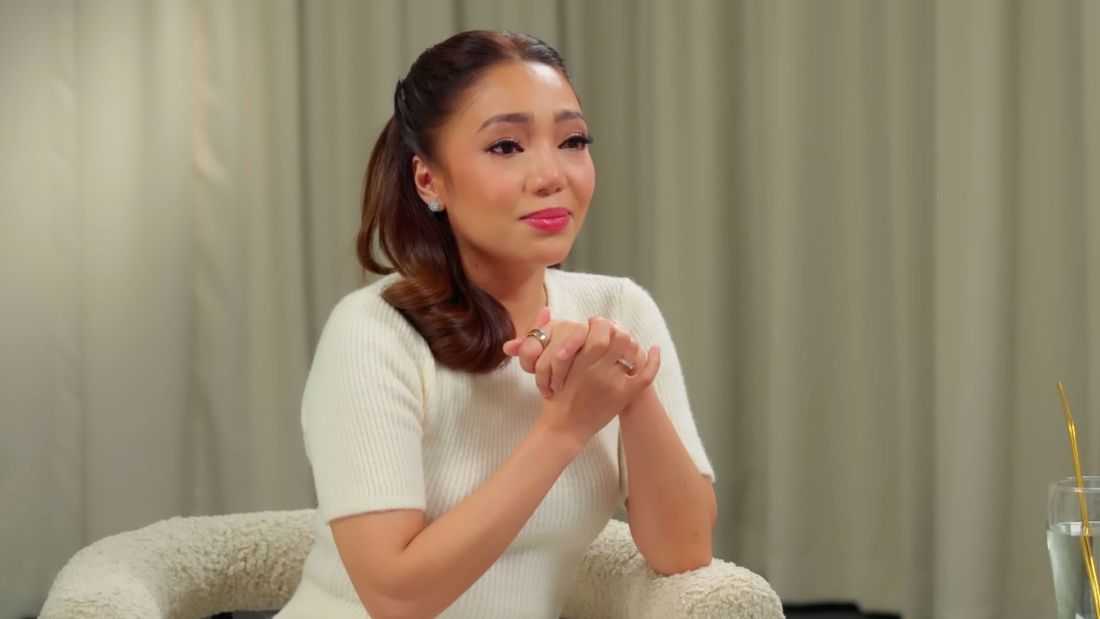
It happened more than once over the course of a year, award-winning singer and “fearless diva” Jona Viray revealed, as she opened up about the sexual abuse and childhood trauma she experienced as a 10-year-old.
Jona, who is famously dubbed as the “Soul Princess” and “Fearless Diva,” opened up for the first time about the trauma she had been carrying in the past. In an interview uploaded on YouTube, the singer said the molestation by her father began after her parents separated.
“That time, hindi ko alam kung paano magrereact. Kasi nga, hindi ko naman ‘yung mga bagay na ganon eh,” she recalled. “Dinala ako sa kwarto tapos doon na nagsimula ‘yung mga horrific na nangyari. At that time, frozen lang ako kasi hindi ko talaga alam. Hindi ko alam kung sisigaw ba ako, or tama ba ‘to?”
Although the abuse stopped after the year her parents separated, Jona said she never told anyone about what happened, even to those closest to her. She and her siblings were left under the care of their father and had lost contact with their mother for years.
In turn, Jona said she sought validation from other people and yearned for the feelings of security, worthiness, and adoration, stating that it was because those were the things taken away from her childhood. However, as she longed for validation, Jona said the resentment towards her mother only grew.
She also mentioned how the harbored emotions of her father and relatives affected her perception. As a result, she said her extroverted self turned into someone who is closed off and conflicted.
“‘Yan ‘yung palaging sumasagi talaga sa isip ko na ‘Siguro kung hindi ka umalis, hindi mangyayari ‘yon.’ Hindi magkakaganito ‘yung family namin na watak-watak kami ng mga kapatid ko na kung saan-saan kami nakatira,” she expressed. “Kaya grabe talaga ‘yung galit ko noon sa mom ko. Kahit nagri-reach out siya, ang tigas talaga ng puso ko, hindi ko siya kinakausap.”
Her fears about the past repeating, taking on a new form, or never having the validation she longs for affected her perspective on life. Although she had been conflicted about her parental relationship for years, Jona emphasized her decision to give them grace.
Reconciliation and healing
The singer-songwriter said her healing journey began before her father passed away. When her father was hospitalized, she said she did all she could to support them, especially financially. A part of her also hoped she would experience what an “ideal” and harmonious family would look like.
“Few weeks before he passed away, nag text lang siya sa akin. Sinabi niya na ‘Anak, patawarin mo ako sa lahat ng nagawa kong pagkakamali. Mahal na mahal ko kayo.’ ‘Yun lang, kahit simple words as that, pero parang isa ‘yon sa pinaka nag contribute ng healing sa akin,” she said.
During the process, Jona said that she and her mother also reconnected. Even if it took her years to come to terms with the pain, she said that she came around and eventually forgave her mother for leaving.
Before Jona opened up about her experience, she said that in the early stage of her singing career, the public dubbed her the “Soul Princess,” because of her emotional and soulful manner of singing. A few performances later, she said that the description changed into “Fearless Diva” due to her fierce stage presence and strong vocals.
“Na-realize ko na may purpose pala kung bakit ako tinawag na ganon na fearless diva. Kasi ngayon I feel fearless and I feel strong enough to share my journey from the past. For a long time tinago ko, even sa sarili ko, dineny ko rin na nangyari sa akin,” she said. “Tinago ko under the rug kasi sa sobrang sakit ng pangyayari na ‘yon ayoko nang maalala na naging part pala ‘yon ng buhay ko.”
In a social media post on Tuesday, October 28, Jona thanked the public for supporting her and for not invalidating what she went through. Her decision to share her experience was not for publicity, but to raise awareness.
“I believe nilagay ng Panginoon sa puso ko yung strong call na gawin ito, para na rin sa lahat ng nakaranas ng CSA (at kahit ano pang abuse) na pilit kinalimutan na lang, o hanggang ngayon nagkikimkim; who were silenced dahil sa takot, humiliation, shaming, victim blaming,” she wrote.
“Para na rin po ito sa iba pang mga pamilya na maging aware, sobrang mag-ingat, protektahan at i-educate ang mga bata sa mga hindi normal at hindi dapat, nang maiwasan ito mangyari sa kanila; Na ito ang reality at isa sa mga epekto sa mga bata ng pagiging broken family,” she added.
To report child abuse and exploitation in the Philippines, you can call the Makabata Helpline 1383 or message Makabata Helpline on Facebook. You may also reach out to the Department of Social Welfare and Development (DSWD).
Child Protection Network:
(+632) 8404-3954 / 8525-5555 loc. 7008
Globe: 0915-7807884
Smart: 0968-2957977
Email: [email protected]
Website: childprotectionnetwork.org
To report violence against women and children, you may reach out to the PNP Women and Children Protection Center (WCPC) through:
Contact: 0919-777-7377
Email: [email protected]
Website: https://wcpc.pnp.gov.ph/
Rapha Helpline:
Call 0977-652-0230 to report physical and sexual abuse
DepEd Child Protection Unit:
Call: 86372306, 86331942, 86359817, or 0995-921-8461 to report abuse
Email Address: [email protected]
Report and Abuse: [email protected]
Facebook: facebook.com/deped.cpu
Center for the Prevention and Treatment of Child Sexual Abuse
