MANILA, Philippines – Japan’s support will continue even though the Philippines has now reached upper-middle income country status”, as officially classified by the World Bank on July 2026.
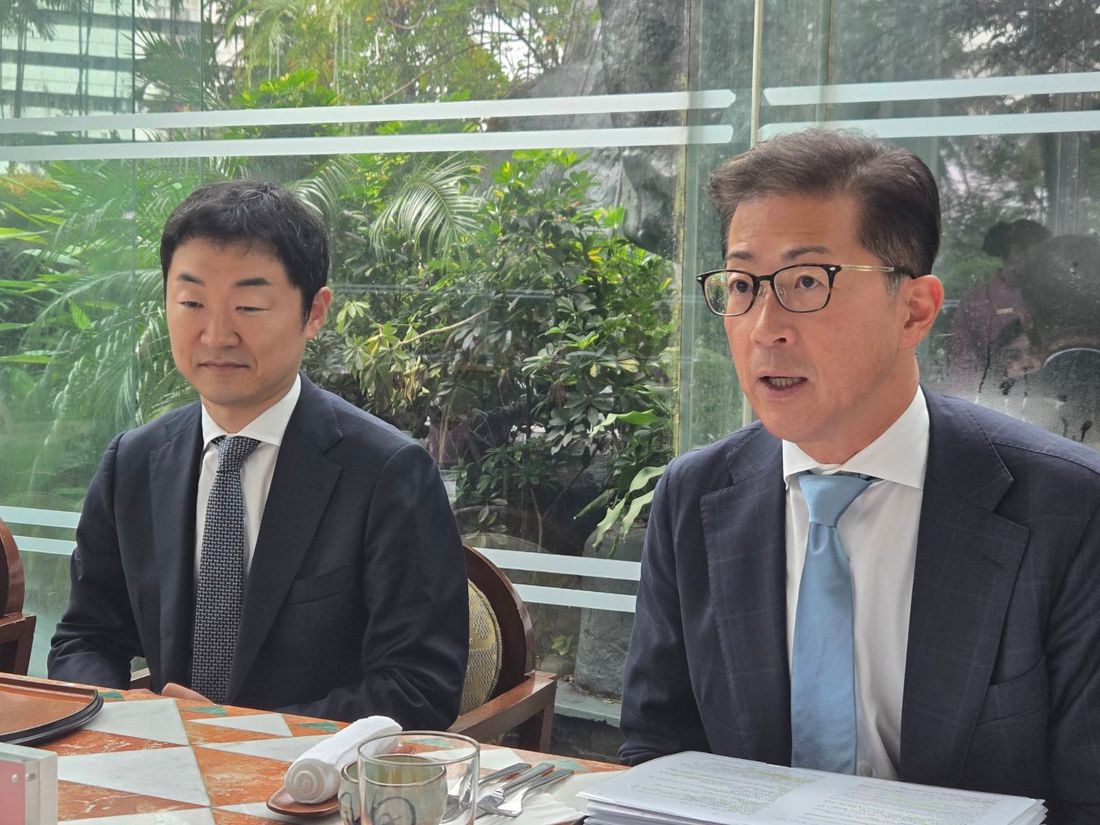
This is the assurance given by Japanese Foreign Ministry Spokesperson KITAMURA Toshihiro, during a press briefing to a small group of journalists on Wednesday.
According to Kitamura, there is a possibility of changes to Japan’s Official Development Assistance (ODA) to the Philippines, and there is a transition period that should be expected, though Manila and Tokyo’s ties “is quite strong”, and that both countries can still cooperate in various forms, including investments or other types of loans.
“It's very welcoming that the Philippines will be categorized as a upper-middle-income country, but there will be some transition period. So, we will not suddenly stop our assistance to the Philippines even after that recategorization of the Philippines to the upper-middle-income country,” Kitamura said.
Japan has been the top donor country to the Philippines for many years through loans, grants and technical assistance, according to the Embassy of Japan in the Philippines’ official website.
Today, Japan remains as the Philippines’ largest provider of ODA, with total loan and grant commitments amounting to approximately USD 13.96 billion as of December 2025, according to the Department of Finance (DOF).
According to Kitamura, the transition will take some time but Japan’s assistance will not abruptly stop even after the re-categorization of the Philippines to upper-middle-income country.
The importance of the Philippines for Japan will remain unchanged, even though we cannot provide any loan assistance at the very concessional rate, he explained.
Kitamura clarified that Japan’s field of security, in the form of Official Security Assistance (OSA) will continue and has nothing to do with the classification of the country based on the Gross Domestic Product (GDP).
The Philippines moved to upper-middle-income country status when its gross national income (GNI) per capita reached USD4,850, exceeding the USD4,636 threshold, which can result to the reduction and eventual phase-out of traditional foreign concessional loans and preferential tariffs over a transition review period.
Prime Minister Takeichi’s visit in the PH
Kitamura also gave an update on the outcome of Japanese Prime Minister Sanae Takeuchi’s meetings during the 49th Association of Southeast Asian Nations (ASEAN) Summit in Manila, where she also met with Philippine President Ferdinand Marcos, Jr.
During talks with her Southeast Asian counterparts, Takaichi assured them that ASEAN will have access to Japan’s “hydro-tanks” that would be available for oil stockpiling.
Under the proposed initiative called Partnership on Wide Energy And Resources Resilience Asia (POWERR Asia), ASEAN will have access to Japan’s crude oil storage facilities during an energy crisis.
Due to the United States-Israel strikes on Iran resulting to the Middle East crisis, ASEAN members have been facing skyrocketing fuel prices amidst fuel shortages.
Japan also established the Official Security Assistance (OSA) in April 2023, with the Philippines being its biggest recipient of non-combat military assistance, with the Philippine Navy as a beneficiary of a radar surveillance system to improve the country’s maritime domain awareness.
Meanwhile, Marcos and Takaichi exchanged views on regional affairs, discussing the situation in the South China Sea, trade and investment, including its part in the Luzon Economic Corridor, as well as upgrading the Japan-Philippines Economic Partnership Agreement (JPEPA).