
DUBAI/CAIRO/WASHINGTON, April 23 (Reuters) - Iran flaunted its tightened grip over the Strait of Hormuz on Thursday with video of commandos in a speedboat storming a huge cargo ship after the collapse of peace talks Washington had hoped would open one of the world's most important shipping corridors.
U.S. President Donald Trump dismissed the threat posed by Iran's "little-wise-guy ships" and told reporters he believed Tehran wanted to make a deal, but its leadership was in turmoil. Trump added that he was in no hurry for a deal, but if Iran did not want one, "I’ll finish it up militarily.”
Iranian state television broadcast footage overnight of masked troops pulling up in a grey speedboat alongside the MSC Francesca, climbing a rope ladder to a door in the hull and jumping through, brandishing rifles.
The footage, presented with an action-movie-style soundtrack and no commentary, included views of another ship, the Epaminondas. Iran said it had captured both on Wednesday, accusing them of trying to cross the strait without permits.
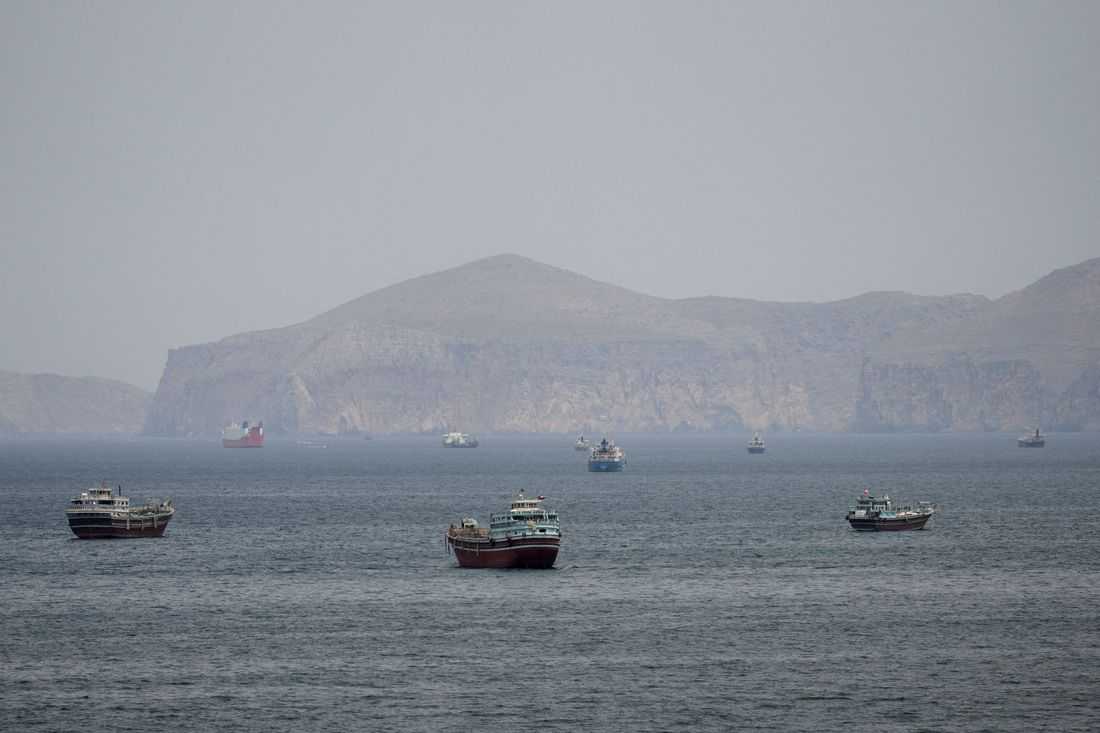
The Iranian boat seizure was a reminder that the United States, despite its more powerful military, struggles to keep control of the Strait of Hormuz. Trump and his military officials have said Iran's navy is "at the bottom of the sea," but Tehran has shown it can still cause major problems for oil markets. Before the war, a fifth of global oil and liquefied natural gas was shipped through the strait.
On Thursday evening, air defence systems were heard engaging "hostile targets" in parts of the Iranian capital Tehran, Iran's Mehr news agency said, a report that drove oil prices sharply higher.
U.S. stocks fell in choppy trading on Thursday, buffeted by the latest updates about the war, while the dollar edged higher.
Iran's Fars news agency later said defense systems in Tehran and several other cities had responded to "the presence of small drones and micro-UAVs, including the 'Orbiter' type, at several locations across the country."
There was no immediate indication of who had launched the drones.
The war, launched by the U.S. and Israel on February 28, has been paused since a ceasefire on April 8, but Israel warned on Thursday that it was ready to restart attacks.
Israel's Defence Minister Israel Katz said Israel was waiting for a "green light" from the U.S. to resume the war, saying that if it did, it would begin by targeting Supreme Leader Ayatollah Mojtaba Khamenei and "return Iran to a dark age".
"This time the attack will be different and deadly, delivering devastating blows in the most sensitive places," he said in a statement released by his office.
STRUGGLE FOR THE STRAIT
Tehran says it will not consider opening the strait until the U.S. lifts its blockade of Iran's shipping, which Washington imposed during the ceasefire and Tehran calls a violation of that truce.
Trump said this week he would indefinitely extend what had been a two-week ceasefire to allow for further peace talks, but on Thursday he said he had ordered the Navy to "shoot and kill" Iranian boats laying mines in the strait, and step up demining activity.
In a social media post, he said Washington was in "total control" of the strait, which he described as "'Sealed up Tight,' until such time as Iran is able to make a DEAL!!!".
Later at the White House, Trump said Iran might have loaded up its weaponry "a little bit" during the ceasefire, but the U.S. military could knock that out in about one day.
"Don't rush me," he said when asked how long was he willing to wait for a long-term peace deal. "I want to make the best deal. I could make a deal right now ... but I don't want to do that. I want to have it everlasting."
Iranian officials cited in state media dismissed claims by Trump of divisions in Iran's leadership, and Khamenei said in a post on X that "enemy" media operations were aiming to undermine unity and national security.
Washington, which has been confronting Iranian ships in international waters to enforce its blockade, said it had boarded another tanker, the Majestic, in the Indian Ocean on Thursday, an apparent reference to a supertanker last reported off the coast of Sri Lanka carrying 2 million barrels of crude.
The U.S. military said on Thursday that U.S. forces had redirected 33 vessels since the blockade began.
Iran's judiciary chief Gholamhossein Mohseni-Ejei said the merchant vessels Iran had seized had "faced the law", while Iranian speedboats and marine drones were sheltering in sea caves off an island keeping the U.S. Navy from approaching.
The vice speaker of Iran's parliament, Hamidreza Hajibabaei, said the first revenue from a toll Iran was now collecting from ships using the strait had been transferred to the central bank. He gave no details about who had paid or how much.
There has been no formal extension of the ceasefire, and no plans have been announced for further talks.
Pakistan, which hosted talks this month and had been preparing for a second round before it was called off on Tuesday, was still in touch with both sides, a Pakistani government source said. Iranian officials were still declining to commit to attend over the U.S. blockade, the source added.
Major surveys showed on Thursday that the global economy is facing ever more tangible strains from the energy shock from the war as factories grapple with soaring production costs and activity weakens even in services sectors.
(Reporting by Reuters bureaus, Writing by Peter Graff, Keith Weir and David Brunnstrom, Editing by Timothy Heritage and Nia Williams)
