
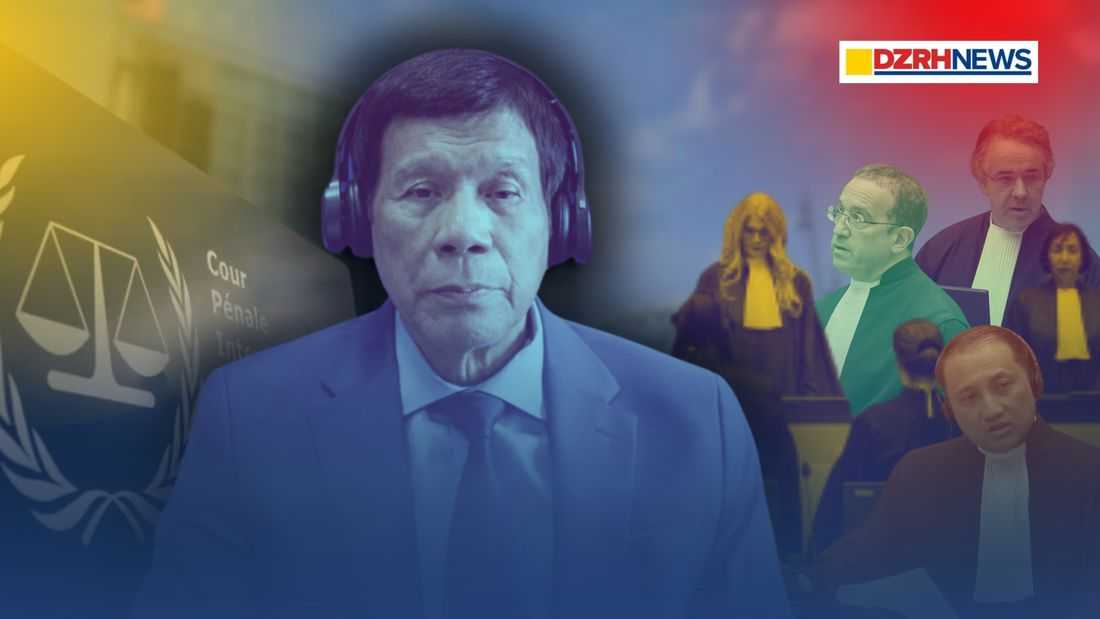
The International Criminal Court (ICC) officially concluded the five-day confirmation of charges hearing of former President Rodrigo Duterte on Friday evening (Philippine time), February 27. Judges now have 60 days from the end of the hearing to issue a written decision on whether the case will proceed to a full trial on allegations of crimes against humanity linked to the Duterte administration's controversial “war on drugs.”
The hearing brought together arguments from the prosecution, defense, and common legal representatives of victims aimed at establishing whether there are “substantial grounds to believe” the former Philippine president committed the alleged crimes, while the Philippines was still a State Party to the Rome Statute (2011–2019).
Highlights from Day 4 and the Hearing:
Defense Position: Lead counsel Nicholas Kaufman repeated his argument that the prosecution failed to meet the legal threshold of proof required for confirmation, particularly on claims about minors and alleged patterns of killings. (Earlier statements from the hearing indicated Kaufman pressed for documentary corroboration and challenged asserted links between Duterte and specific incidents.)
Prosecutor’s Case: Prosecutors underscored allegations of widespread and systematic unlawful killings during the anti-drug campaign, including statements by Julian Nicholls countering defense claims and stressing that withdrawal from the Rome Statute in 2019 limited but did not eliminate ICC jurisdiction over offenses allegedly committed while the Philippines remained a member.
Victims’ Representatives: Lawyers for victims, including Atty. Gilbert Andres told judges that many civilian deaths, including those of children, were intentional acts, not incidental harm, reinforcing the prosecution’s portrayal of the conduct as part of a broader pattern of abuses.
Under ICC procedure, the Pre‑Trial Chamber’s decision can either:
- Confirm one or more charges, transferring the case to a Trial Chamber for a full trial where guilt must be proven beyond a reasonable doubt;
- Decline to confirm charges, effectively ending this phase;
- or modify the charges pending further evidence.
What Comes After the Decision:
If charges are confirmed, Duterte would remain in ICC custody, and both the prosecution and defense would present detailed evidence and witness testimony in a full trial. Victims may participate through legal representatives, and in the event of conviction, the court could impose a prison term of up to 30 years or more, depending on the gravity, and order reparations through the Trust Fund for Victims.
If charges are not confirmed, the prosecution could potentially seek to present additional evidence for a renewed hearing. Either outcome is expected to have significant political, legal, and diplomatic implications for the Philippines, influencing domestic debates on accountability and the country’s relationship with international justice mechanisms.
The 60‑day period for the judges’ written decision will run from the hearing’s conclusion, making it likely that a ruling will be issued by late April or early May 2026.
