
Keira was only four years old when she was diagnosed with Acute Lymphocytic Leukemia. Too young to understand the weight of hospital rooms, chemotherapy sessions, and long days in oncology wards, she nonetheless became the quiet force behind one of the toughest endurance feats completed by a Filipino runner.
Her father, Gerich Dijamco, would later run more than 1,000 kilometers from Aparri to Sorsogon — not for medals or recognition, but for her.
When Dijamco crossed the finish line in Sorsogon, he did not celebrate. There were no raised arms or victory shouts. He lowered his head and cried.
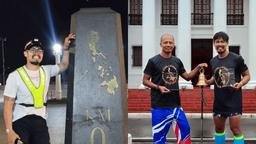
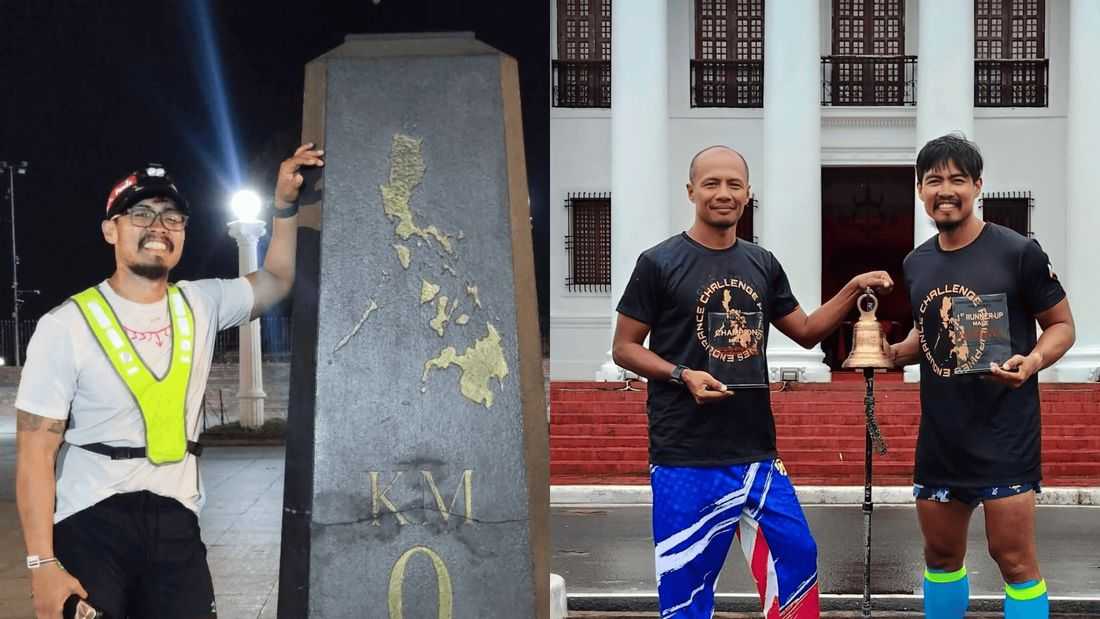
Dijamco, a senior systems lead analyst at Smart Communications, became only the second Filipino to complete the Luzon 672-mile endurance run. But the story behind the achievement began years earlier, inside hospital corridors where his daughter fought a battle far more grueling than any race.
As Keira underwent treatment, hospital visits became routine. For her father, running slowly turned into a coping mechanism. He began with short jogs to clear his mind, often weighed down by fear and uncertainty. Longer runs helped steady his emotions. Over time, five kilometers became ten, fun runs turned into marathons, and when even 42 kilometers no longer felt enough, he pushed into ultramarathons.
The longer the distance, the more space he had to think — and the more he thought of his daughter.
“So far, she’s okay. We’re thankful that she has gotten better after undergoing chemotherapy. She’s off medications now but she’s still being monitored,” he shares. “She is the reason why I turned to running. I was inspired by my daughter’s courage.”
Running With Her in Mind
The Aparri-to-Sorsogon route spans roughly 1,081 kilometers across Luzon, demanding runners cover about 100 kilometers a day within strict time cutoffs. Of the five runners who initially committed, only two finished.
Dijamco began the run still recovering from the flu, with rain falling at the starting line. His pace slowed, rest periods shortened, and fatigue accumulated. There were moments when stopping felt reasonable.
In those moments, his thoughts returned to the hospital — to children like Keira, and to others whose chemotherapy sessions were delayed because their families could not afford treatment. He and his wife had witnessed those realities firsthand.
“The fatigue I felt during the run was nothing compared to what we went through when Keira was undergoing chemotherapy,” he says. “I would remember how hard she fought to live — how brave she was for us. And then I’d ask myself: how could I give up just because I was tired of running?”
Staying Connected to Home
Endurance racing is often a solitary pursuit, with long highways offering little company beyond a support crew. For Dijamco, however, each day ended with the same ritual: calling home. No matter how exhausted he was, he made sure to speak to his wife and children.
“Nakakatuwa… kahit pagod ka na, tuloy-tuloy pa rin ang saya,” he says.
In remote stretches where signal could have been unreliable, staying connected mattered. His official sponsor, TNT, supported his ultramarathon journey, allowing him to consistently check in with his family through Smart’s 4G and 5G networks. Hearing Keira’s voice — stronger now — became a form of emotional fuel.
Those nightly conversations reminded him why he was on the road. He admitted there were stages when he might not have continued without them.
The Finish Line She Led Him To
As Dijamco entered Sorsogon, the local running community stepped in to help. Hydration stations appeared every few kilometers. When his shoes finally gave out, fellow runners searched through their teams to find a pair in his size.
Others joined him in the final stretch, running alongside him toward the finish. “I was really, really tired. But their cheers kept me going,” recalls Dijamco.
He crossed the line in the rain, exhausted and overwhelmed — a moment that felt less like victory and more like release.
“This has been my dream,” he says. “I’m glad it was raining. Nobody noticed I was crying.”
Those tears were for his daughter.
Today, Dijamco hopes his run will be remembered not only as a historic endurance accomplishment, but as a reminder of the battles fought quietly by children like Keira and by families navigating childhood cancer.
He now dreams of building a community that can offer tangible support to children undergoing treatment and to parents facing the same fear and uncertainty he once carried.
“I don’t want families to feel alone the way many of us did in the hospital,” he says. “If running can become a way to connect people who want to help with children who need it, then that’s the real finish line for me.”
