

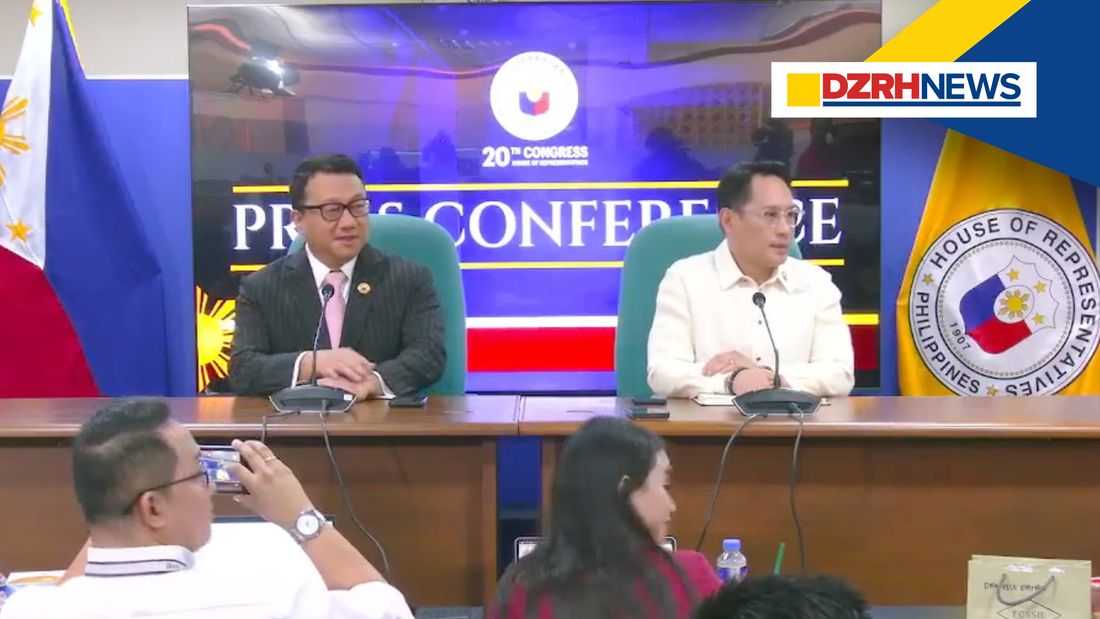
House prosecutors on Monday said it is still premature to conclude whether names such as "Mary Grace Piattos" listed in acknowledgment receipts for the Office of the Vice President's (OVP) confidential funds are fictitious, emphasizing that the focus of the impeachment trial remains on the findings of the Commission on Audit (COA).
During a press briefing after the 11th day of Vice President Sara Duterte's impeachment trial, House Prosecutor Rep. Joel Chua said the prosecution is currently presenting the basis for the COA's issuance of an Audit Observation Memorandum (AOM), rather than determining whether the listed recipients actually exist.
"Well, hindi pa natin, wala pa tayo sa puntong 'yun. Dahil sa ngayon, ang pinakikita pa lang po natin... ito yung findings ng COA. Kung paano niya sinabi, kung bakit siya nag-recommend ng audit observation memo," Chua said.
He explained that an AOM is issued when auditors identify deficiencies or irregularities in the documents submitted for liquidation, such as incomplete requirements or transactions that do not appear to comply with COA rules.
Chua also pointed to an example involving "Mary Grace Piattos," where an acknowledgment receipt reportedly indicated a purchase of reward but also listed medicine, raising questions about the nature of the transaction.
"Lumalabas, meron pa nga doon kay Mary Grace Piatos... yung purchase of reward, may nakalagay medicine. So, hindi malaman kung ang pinambayad ay medicine," he said.
Meanwhile, House Prosecutor Rep. Zia Adiong stressed that documents supporting confidential fund disbursements must meet strict compliance requirements, citing the testimony of former COA State Auditor Roderick Wamil.
"Ang sinabi ni Atty. Wamil is strict compliance kasi pera ng taong-bayan itong pinaggagamitan dito sa confidential activities," Adiong said.
He added that acknowledgment receipts alone are insufficient if the disbursements involve purchases such as medicines, noting that supporting documents like sales invoices should also be submitted to verify that the expenses were legitimate and properly documented.
The prosecutors maintained that the issue before the impeachment court is whether the confidential fund transactions complied with COA regulations, while the question of whether some recipients were fictitious has yet to be established through the proceedings.
