

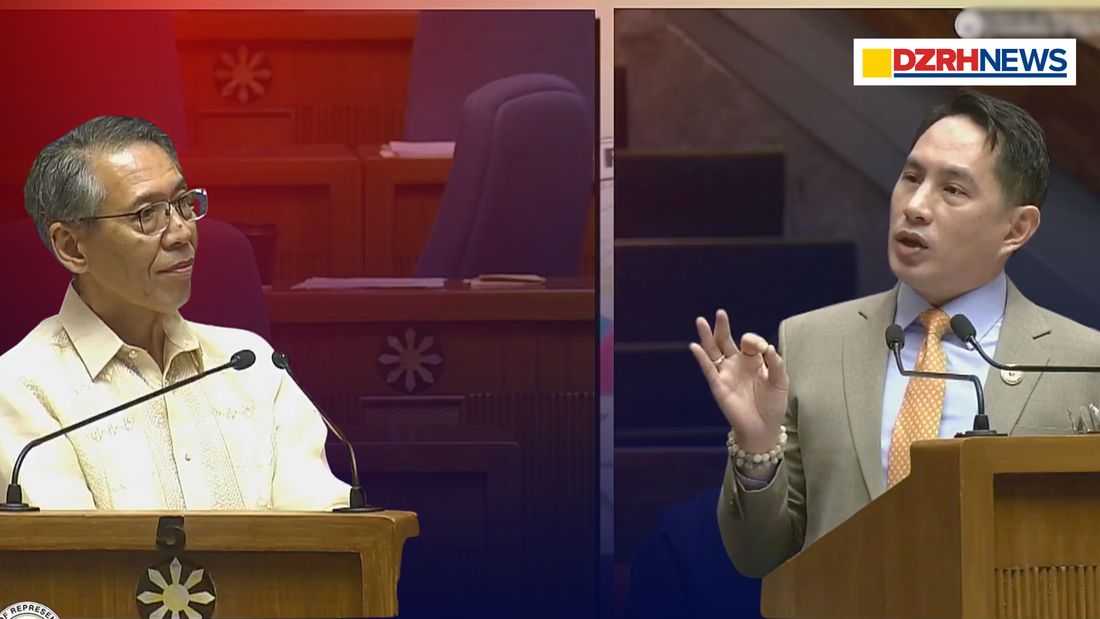
The proposed Anti-Political Dynasty Bill, House Bill 8389, may still be considered “pro-dynasty” by critics, but it is expected to directly affect the current composition of the Senate if enacted into law, according to Lanao del Sur Representative Zia Alonto Adiong, chair of the House Committee on Suffrage and Electoral Reforms.
During interpellation by Akbayan Party-list Representative Chel Diokno on Tuesday, Adiong explained that the bill’s provision covering the second degree of consanguinity and affinity would have immediate consequences on the 20th Congress, which currently includes four sets of siblings in the Senate.
While Adiong did not name them, they are widely understood to include Senators Cayetano, Tulfo, Villar, and Ejercito-Estrada.
“Definitely, it will directly affect the current setup in the Senate right now. I would admit there are four sets of siblings serving under this current Congress. I do not want to mention their names, we all know who they are,” Adiong said.
He added that the measure would limit the influence of political families at the national level, weakening “possible sources of votes from localities that have captive votes simply because of the control of that family in one locality.”
This, he said, could also reduce the support base for national candidates, including presidential, vice-presidential, and senatorial aspirants.
“But directly, with this bill, it will change 180 degrees the setup in the Senate because we know there are four sets of siblings serving under the 20th Congress,” Adiong said.
Diokno, however, criticized the bill for still allowing simultaneous political control within the same family across multiple government positions. Under the proposed measure, a family could still hold positions such as President, Congressman, Governor, Mayor, and Barangay Captain at the same time.
Data presented during the discussion indicate that the bill could open 5,613 of the 9,852 elective positions nationwide to new leaders seeking to serve in government.
