

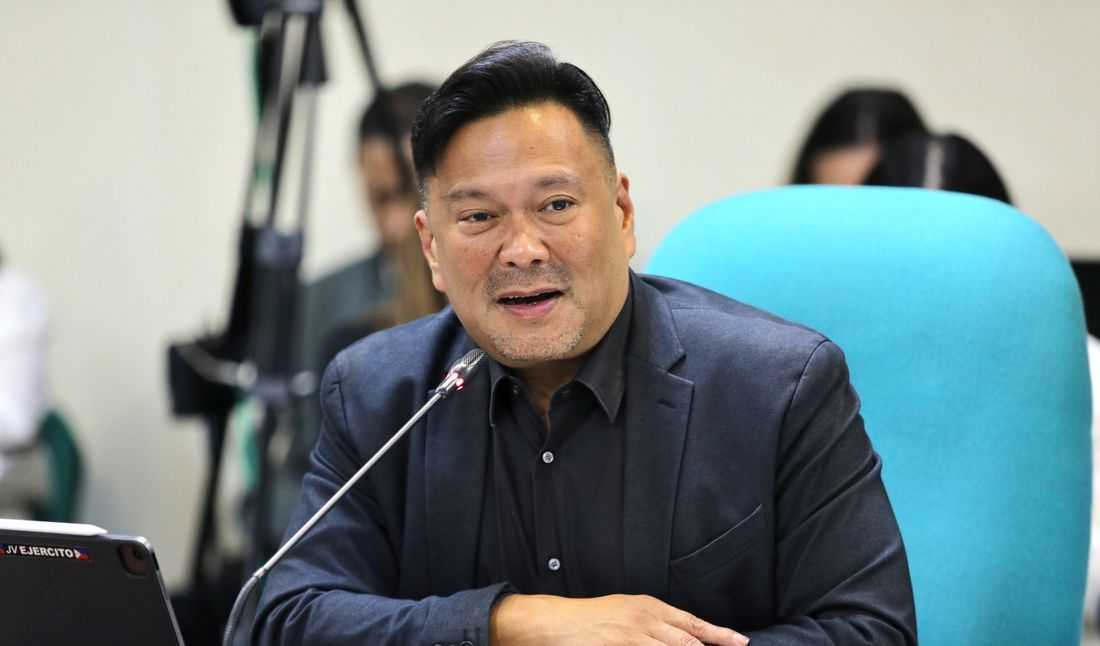
Senator JV Ejercito on Monday called the Bicameral Conference Committee to reconsider the approved increase in funding for the Department of Health’s Medical Assistance to Indigent and Financially Incapacitated Patients (MAIFIP), warning that the sharp hike could undermine universal, system-based healthcare.
According to RH Raymund Dadpaas' report, Ejercito called for a careful review of the proposal to raise the MAIFIP budget to ₱51.6 billion in the 2026 national budget from ₱24.23 billion under the National Expenditure Program (NEP). The approved amount is also higher than the program’s ₱42 billion allocation this year.
The senator said the more than 100-percent increase could be viewed by the public as “politically mediated access to healthcare,” instead of a genuine effort to strengthen the country’s health system.
“The sharp increase...might be interpreted as politically mediated access to healthcare,” Ejercito said, reiterating his warning that the move could encourage “ayuda politics.”
In a statement, he stressed that since Congress is willing to allocate a larger budget for health, lawmakers should reconsider where the funds are placed. Ejercito proposed that additional resources be directly lodged with PhilHealth or with hospitals implementing zero balance billing, to reinforce the Universal Health Care Act.
“Since we are willing to allocate a higher budget for health, I recommend lodging it directly to PhilHealth as the first payor of healthcare expenses, or directly to hospitals implementing zero balance billing,” Ejercito said.
“If our goal is to ensure proper medical assistance to the poor and to those just one illness away from poverty, we must seriously reconsider the massive increase in MAIFIP,” he added.
He noted that MAIFIP has long been criticized as being similar to pork barrel funds, as patients often need to secure guarantee letters from the offices of senators or congressmen to avail of assistance.
The senator said the setup makes access to medical help dependent on politicians rather than being automatic and readily available during emergencies. He likened MAIFIP to other government assistance programs such as the Assistance to Individuals in Crisis Situations (AICS) and TUPAD, which are often associated with political mediation.
Ejercito has formally submitted a manifestation to the bicameral committee urging lawmakers to reconsider the MAIFIP increase, reiterating that strengthening PhilHealth funding would be a more sustainable and equitable solution.
He also pointed out that full implementation of zero balance billing was among the health commitments of President Ferdinand “Bongbong” Marcos Jr.
He added that true health reform means ensuring that Filipinos can access medical services immediately in times of need, rather than relying on discretionary assistance programs.
"Dapat tayong maging matibay sa ating paninindigan: sa oras ng pangangailangan ang tulong ay dapat abot-kamay at automatic, at wala sa diskresyon ng mga politiko," Ejercito noted.
"Ibuhos natin ang pondong pang-kalusugan diretso sa health system, mga ospital, at pasyente. Hindi dapat nanlilimos ng serbisyong pangkalusugan ang ating mga kababayan," he said.
The senator, a member of the Senate bicameral committee, was unable to attend the first day of the live-streamed bicameral deliberations due to illness.
