
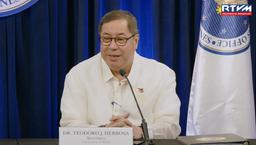
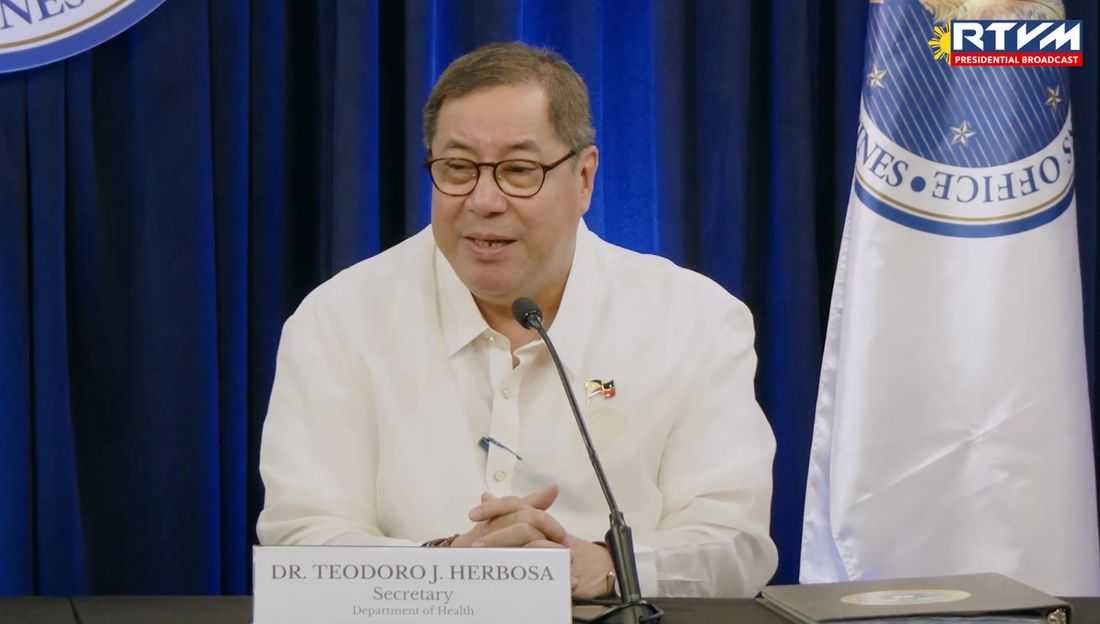
Department of Health (DOH) Secretary Teodoro Herbosa on Thursday clarified that the use of “guarantee letters” (GLs) issued by politicians to cover hospital bills is no longer allowed under government policy, following new anti-patronage provisions in the 2026 national budget.
In an interview on dzRH's Dos Por Dos, Herbosa said the change is in line with the full implementation of the DOH’s "zero-balance billing" policy.
The health secretary explained that the prohibition is clearly stated in the 2026 General Appropriations Act (GAA), which bars political involvement in the distribution of cash and medical assistance, including guarantee letters.
The reform addresses long-standing concerns that the Medical Assistance for Indigent and Financially Incapacitated Patients (MAIFIP) program had been used to advance political interests.
Section 19 of the 2026 GAA states that all cash assistance and other forms of financial aid must be distributed exclusively by authorized government officers, personnel, or accredited partners. Section 20 further strengthens the so-called “anti-epal” policy by banning the display of names, images, or likenesses of public officials on government-funded projects and assistance.
“Kasama sa anti-epal prohibition ang GL,” Herbosa said, noting that guarantee letters fall under prohibited political involvement in the distribution of public assistance.
Under the new system, patients seeking medical assistance must coordinate directly with hospitals, particularly DOH-run facilities, through their medical social workers.
“Didiretso na po sa DOH hospitals. Kung may medical condition o kailangan ng gamot, doon na po makikipag-usap sa social worker ng ospital,” Herbosa said.
"Kung yan ay DOH hospital at nakaconfine naman basic accommodation o yung ward kayo ay zero-balance billing na," he added.
Under the DOH’s zero-balance billing policy, indigent patients admitted to basic or ward accommodations in DOH hospitals are not required to pay for hospital services, medicines, or professional fees. The policy has been in effect since July last year and is designed to ensure patients are discharged without out-of-pocket expenses for services covered by the Philippine Health Insurance Corp. (PhilHealth).
"[Kapag] kayo ay naka-confine sa basic accommodation o ward sa DOH hospital, zero-balance billing na,” he said.
Herbosa clarified the difference between “no balance billing” and “zero-balance billing.”
Under no balance billing, patients must be certified as indigent, typically through the Department of Social Welfare and Development’s household targeting system, to receive free services. Under zero-balance billing, however, patients only need to be admitted to a basic ward in a DOH hospital to qualify.
“Iba po ang zero balance sa no balance billing,” he said. “Ang no balance billing, kailangan ma-approve na kayo ay indigent at kabilang sa DSWD household targeting system.”
“Sa zero-balance billing naman, ang kailangan lang ay ma-admit kayo sa basic or ward accommodation,” he added.
For patients confined in local government unit (LGU) hospitals or private hospitals, some costs may still apply. Indigent patients without the means to pay may apply for assistance under the MAIFIP program, which is funded by taxpayers’ money and allocated annually by Congress.
“May programa po ang DOH na MAIFIP. Pinopondohan po ito ng tax money — pera po ito ng taumbayan,” he said.
“Dati po, pupunta pa ang pasyente sa opisina ng mga mambabatas. Ngayon, ang mismong mga legislator ang naglagay sa batas na bawal na ito," he added.
Bigger health budget for 2026
Herbosa said the MAIFIP allocation was increased to P51 billion in the 2026 budget, up from the DOH’s original proposal of P24 billion, with funding sourced from canceled flood control projects.
“Sa 2026 budget na kakapirma lang, P50 billion ang inilaan para sa medical assistance ng indigent at financially incapacitated patients,” he said.
The budget for the maintenance and other operating expenses (MOOE) of 83 DOH hospitals was also increased by about 15 percent. In addition, specialty hospitals—including the Philippine Heart Center, Lung Center of the Philippines, National Kidney and Transplant Institute, and the Philippine Children’s Medical Center—each received an additional P1 billion to support the full implementation of zero-balance billing.
Herbosa acknowledged that in some parts of the country, DOH hospitals are geographically inaccessible. In such cases, MAIFIP assistance may be extended to patients in private hospitals, but coverage will be limited to basic accommodations due to the high cost of private care.
The health secretary said the reforms are part of President Ferdinand R. Marcos Jr.’s directive to prioritize health, education, and agriculture in the national budget.
