

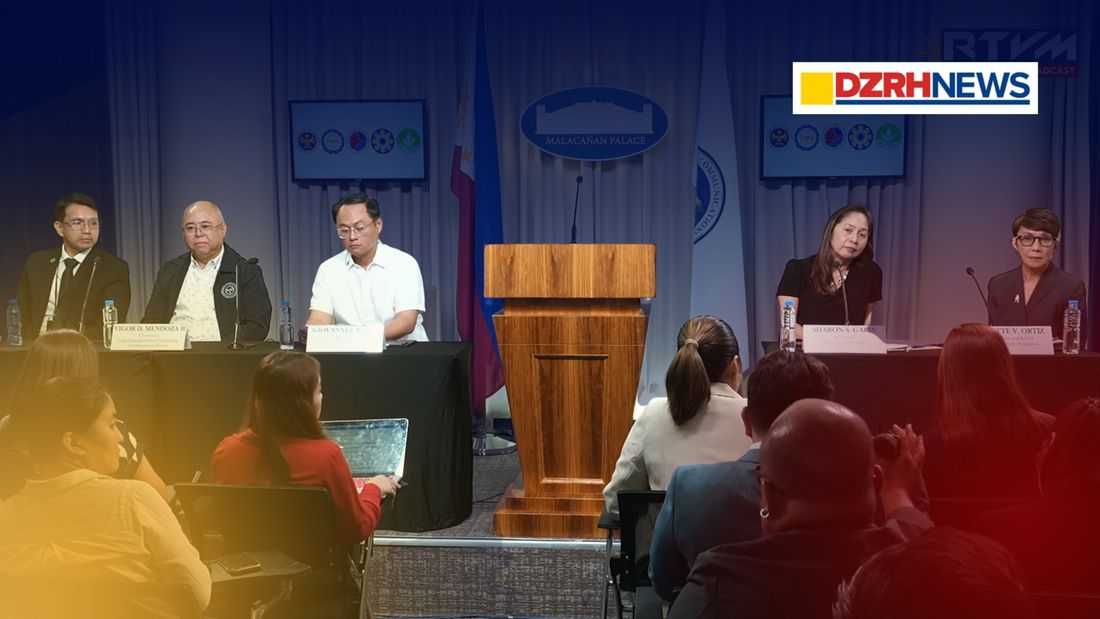
The government on Tuesday, April 14, announced a ₱10 per liter fuel discount for public utility vehicles (PUVs) in Metro Manila, as part of intensified efforts to cushion the impact of rising oil prices driven by tensions in the Middle East.
During a joint press briefing, Energy Secretary Sharon Garin announced that the program will initially cover 52 participating gas stations in the National Capital Region, with 33 already onboarded and the rest expected to follow.
“Our current problem is not only a problem today or next week… it will be a prolonged problem… pero tuloy tuloy parin kahit hindi natin kontrolado ang cause of the problem, we are trying to soften the impact to each and every household,” Garin said, noting that the crisis is expected to be prolonged due to ongoing geopolitical conflicts.
The ₱10 per liter discount applies to diesel purchases of registered jeepneys and UV Express units, with a maximum of 150 liters or ₱1,500 subsidy per week per vehicle. Authorities said the program will eventually expand nationwide.
Transportation Secretary Giovanni Lopez emphasized that the initiative aims to ensure continued public transport operations and reduce commuter waiting times.
“Mas matitiyak po natin na merong tuloy-tuloy na pasada… at hindi masasayang ang oras ng ating mga commuter,” he said.
The Land Bank of the Philippines, led by President Lynette Ortiz, introduced a digital system to streamline subsidy distribution, allowing drivers to access discounts through a mobile app integrated with participating fuel stations.
Meanwhile, LTFRB Chairman Vigor Mendoza II said the fuel discount is part of a broader package of assistance, including service contracting, food aid, and existing fuel subsidies.
“If you add all of that, it will be more than that… the program is already in place as we solve the problems one at a time,” he noted.
Alongside the subsidy rollout, the Department of Energy (DOE) reported recent fuel price rollbacks and assured the public of stable supply levels, averaging around 50 days of inventory, while the government continues to explore long-term solutions such as renewable energy expansion to reduce dependence on imported fuel.
