
The suspension of fuel excise taxes could take effect as early as April 12, following the official signing of a new law aimed at mitigating skyrocketing energy prices.
During a PROTECT Committee hearing on Thursday, officials from the Department of Finance (DOF) and the Department of Energy (DOE) outlined the timeline for implementation while facing scrutiny over the speed of the government's response.
Senator Bam Aquino pressed agencies for clarity on the "triggers" required to activate the tax relief. Under the law, the suspension or reduction of excise taxes is contingent upon the Mean of Platts Singapore (MOPS) reaching or exceeding $80 per barrel for a 30-day average.
"We're at one forty. So we've breached eighty. Matagal na nating na-breach yung eighty," Aquino noted, arguing that the 30-day count should be applied retroactively.
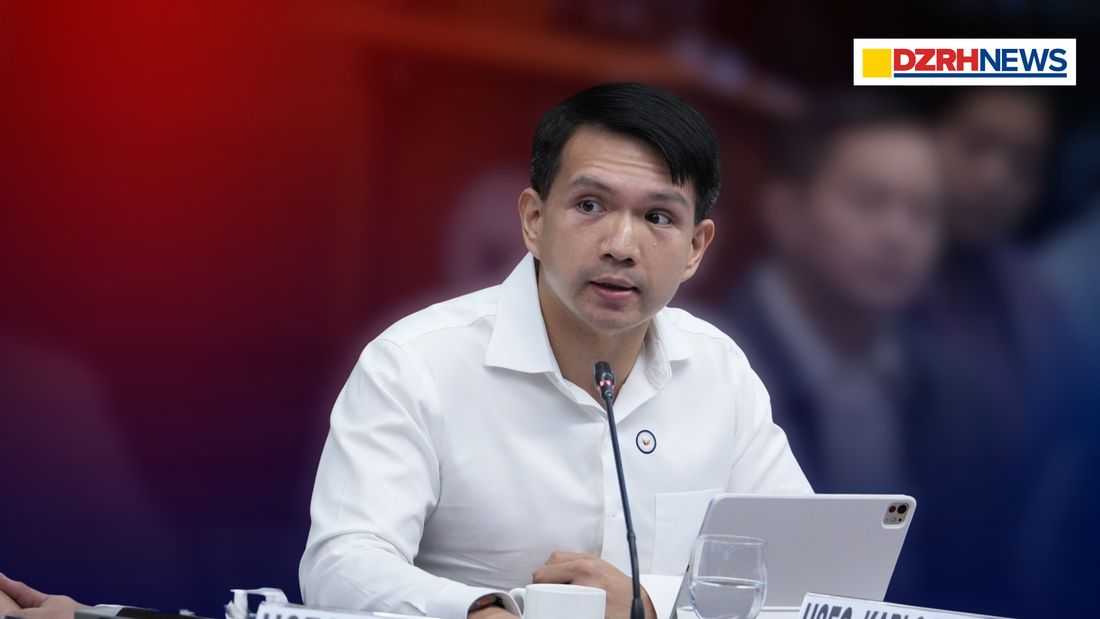
DOF Undersecretary Karlo Adriano confirmed that the first trigger—the price threshold—has already been met. However, he noted that the law requires a formal recommendation from the Development Budget Coordination Committee (DBCC) and must undergo a mandatory 15-day publication period.
"The earliest that the President can issue the [Executive Order] is around April 12 or 13," Adriano told the committee. He added that the DBCC is scheduled to meet this Friday and will finalize its recommendation to the President by next week, before the Holy Week break.
The "UPLIFT" Crisis Committee
The hearing also highlighted the formation of the "UPLIFT" Committee, a specialized crisis body chaired by the President to manage the ongoing energy emergency.
Despite the urgency of the situation, DOE Undersecretary Wimpy Fuentebella admitted the committee has yet to formally convene, with an indicative meeting date set for next Tuesday or Wednesday.
Aquino criticized the delay, urging the executive branch to match the "velocity" of rising fuel prices.
"The name is 'crisis committee,' so when there is a crisis, we need to move fast," Aquino said. "If the price of diesel and gasoline goes up every week, you should also be meeting every week."
Limits of the "Energy Emergency"
The proceedings further clarified the distinction between the currently declared "National Energy Emergency" and a full "State of National Emergency."
Under the current energy-specific declaration, the government’s powers are largely limited to supply monitoring and replenishment logistics.
Assistant Secretary Reynaldo Cancho confirmed that there is currently no "price freeze" in effect for basic necessities, as such a measure would require the declaration of a full state of national emergency or a state of calamity.
Aquino expressed concern that without a price freeze, the cost of essential goods—including poultry and pork—could continue to spiral.
"Before the war started, many people already felt prices were high. We are looking for action to prevent continuous increases in supermarkets and wet markets," he said.
Industry Concerns
Representatives from the fuel retail sector raised concerns regarding existing inventories. Mr. Capinpin, representing retailers, asked whether businesses would be allowed to draw down stock that had already been taxed at the higher rate or if a more efficient refund process would be established.
“Is what happens to those inventory already in the market na bayad na yung excise tax? Will they be allowed to draw it down?” Capinpin asked.
“For that matter, for the oil companies as well, they have inventory na paid na yung excise tax. Or will it be through another refund process? Well, we know that the refund process is very tedious. Is there a proposal for a better refund process for that?” he further questioned.
While the DOF acknowledged the request, Usec. Adriano noted that the primary constraint remains the legality of refund mechanisms under the current Tax Code.
“I would like to note that in the Tax Code, I think may isang mechanism lang for refund sa excise sa under Section 145, if I'm not mistaken. So again, the main constraint here will be the legality.”
The committee is expected to reconvene following the Holy Week break to monitor the progress of the DBCC recommendation and the initial meeting of the UPLIFT Committee.
