
The social networking platform Friendster has announced its comeback nearly 11 years after its hiatus from mainstream use, relaunching with a simplified, privacy-centered approach to online connection.
Originally launched in March 2002 by Jonathan Abrams, Friendster was one of the early pioneers of social networking before being overtaken by newer platforms. Its return marks a shift away from modern social media features, focusing instead on private, real-life connections.
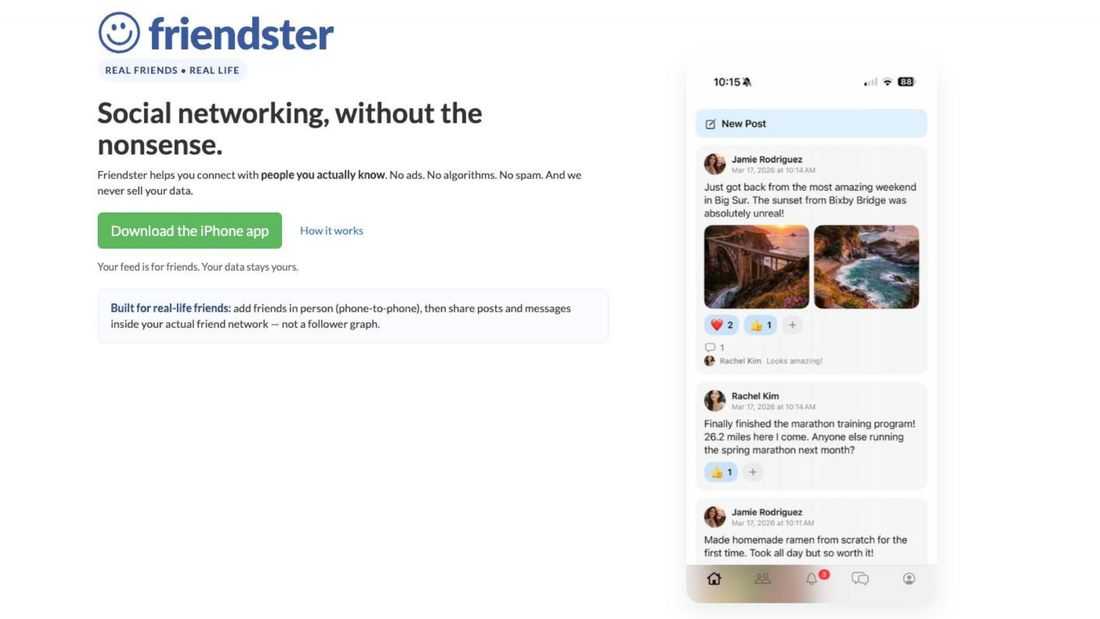
The updated platform limits friend connections to people users already know, using in-person or phone-to-phone linking instead of public search or discovery tools. It removes follower counts, suggested users, and algorithm-driven feeds commonly found in other social apps.
According to its App Store listing, users will only see posts from approved friends in a chronological feed. The platform also eliminates advertisements and says it does not sell user data, emphasizing a more private user experience.
Core features include a friends-only feed, direct and group messaging, and notifications for interactions such as comments and posts. The design aims to reduce digital noise and encourage more intentional social interaction.
Friendster is currently available on iOS, with an Android version expected in a future rollout.
