
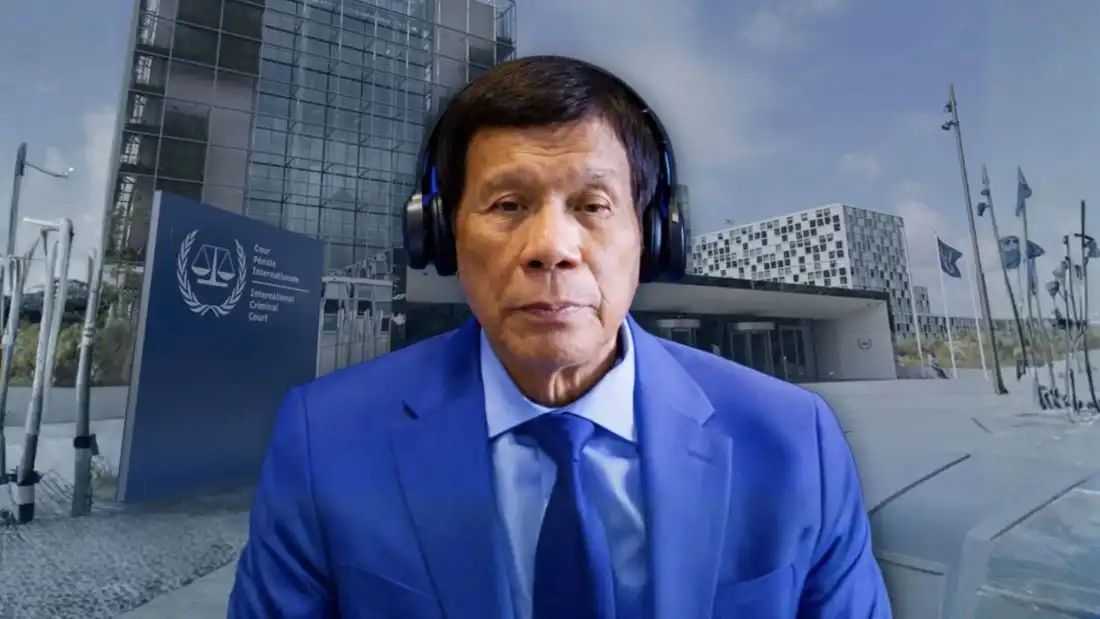
Former President Rodrigo Duterte’s defense team is pushing for stricter rules to strengthen verification requirements for open source and user-generated evidence.
In a document released Friday, September 3, the former president’s defense team asked the International Criminal Court (ICC) Trial Chamber III to amend its e-court protocol. The Duterte camp argues that the items disclosed by the prosecution are illegible.
Moreover, audio-visual materials were also submitted without transcripts or translations and individual pages of the same document were disclosed independently, “with distinct and inconsecutive ERNs.”
“Based on a small sample of documents from the same dataset which has already been received by the Defence, it is clear that there are major issues with this collection of documents; it includes many duplicates and documents of very poor quality which, notwithstanding its volume, makes meaningful review immensely challenging,” ICC Defense Counsel Peter Haynes wrote.
In addition, the defense expressed its concern that the quality and quantity of evidence may be risked with “flooding the record” with unreliable or irrelevant material, stating it would be detrimental for the parties and the Chamber’s search for truth.
According to them, the prosecution had submitted over 25,00 evidence items, and is planning to submit another 200 gigabytes of material.
To mitigate the risk, the defense team is requesting that the ICC amend the e-court protocol and add a new expert verification metadata field.
“This field would confirm whether or not the item will be accompanied by an expert report if it is to be submitted to the Chamber as evidence. This field would operate similarly to the witness fields in the E-Court Protocol, which list forms of metadata “to be provided on an ongoing basis during the trial phase,” the defense team stated.
Such verification reports can cover multiple items of evidence and will always be accompanied by open-source and user-generated evidence submitted to the Chamber in the present case. This would include material sourced from OTPLink and screenshots of text messages that are unaccompanied by a statement or testimony from an individual who authored any of the messages or participated in the exchange.
“In the Defence’s view, any such expert report ought to include, at a minimum, information on: the source of the item (both the sender/uploader and the creator of the piece of evidence, if known); its chain of custody and whether the item is the original or a copy; its metadata and any other technical aspects, such as the hash value generated at the time of capture; the steps taken to verify the material and to check for editing or manipulation,” they stated.
Materials should also include information on the qualifications and experience of the person who undertook those steps to verify it. The defense argues that without this information, it would be “very difficult for the Chamber to come to a view on the evidence’s relevance and admissibility, pursuant to Article 69(4) of the Statute.”
Duterte has been detained in the ICC since March 2025. He is facing charges of crimes against humanity regarding the extrajudicial killings (EJKs) and the war on drugs campaign during his tenure as mayor of Davao City and his presidency.
The next status conference for Duterte is scheduled for September 16.
The trial will begin on November 30.
