
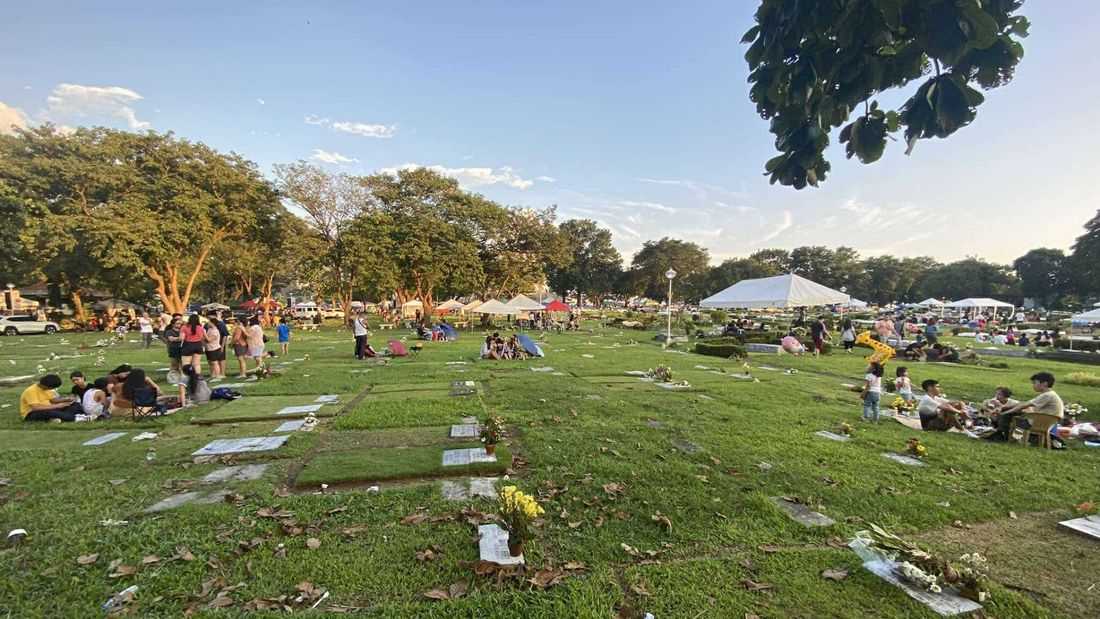
While the rest of the world is packing up sweet treats and getting ready for their scariest (or cutest) costumes, Filipinos are occupied with cleaning the mausoleum, preparing a variety of foods, and, most of all, commemorating their deceased loved ones.
Undas is observed during All Souls Day on November 1 and All Saints Day on November 2. The annual two-day celebration is a time for Filipinos to reflect and remember, intertwining memories with religion.
Similar to other Catholic countries, people flock to various cemeteries across the country every November 1st. This is not only a time of remembrance, but also a time to hold family reunions.
But like any other tradition, superstitions are also intertwined with traditional practices. Here’s a look at some of the Undas superstitions.
If it rains during All Souls Day, they are tears of the dead
Nevermind the weather forecast. If it rains on All Souls Day, chances are your relatives would tell you it’s because souls are crying.
While it may be hard to believe, this superstition is rooted in strong emotional attachments between family members. While Undas may be a religious holiday, it is also a space meant for healing and being present with loved ones.
Lighting candles for the dearly departed
One way to honor the dead is for relatives to light candles on graves or at home on All Souls Day. The light is believed to guide the souls of the departed on their journey to the afterlife.
As long as the candle burns, someone’s prayers will continue to be extended and repeated. So, next time that you become curious as to why there are several candles in the graves, think of those who are on their journey to the afterlife.
Food and offering
It’s no brainer that food and dining together are the marks of a true Filipino. A shared meal with family and friends is not just for special occasions and holidays, but also for the dead.
The gesture of atang, or offering food on the altar or tomb of the dead, is common among Filipinos during All Souls Day. Through this, the soul of the dead remains well-fed with their favorite foods, an important aspect for any Filipino (or soul) on a long journey.
No sweeping of the floor
While this is commonly observed at night, some still believe that sweeping the floor on the night of Undas will drive away the visiting dead relatives.
On regular days, however, elders believe that sweeping the floor at night is equivalent to sweeping away good fortune.
Which of these practices are commonly observed in your family?
