
A science experiment designed by Filipino students from the Rizal Technological University (RTU) was successfully performed aboard the International Space Station (ISS), marking another milestone for Philippine participation in space-based research.
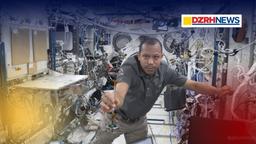
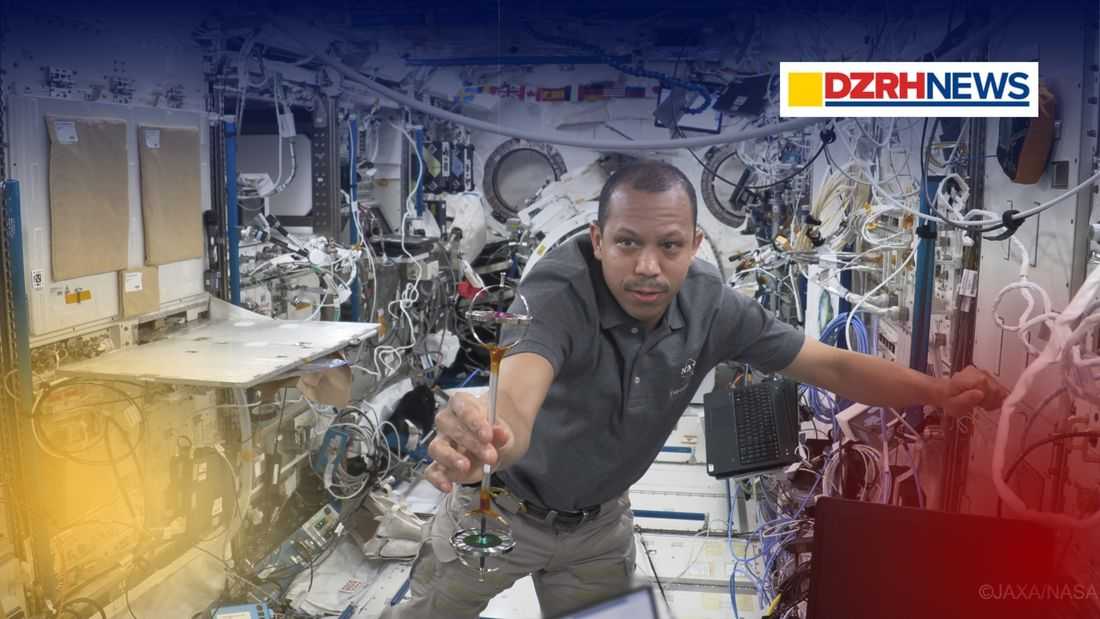
The “Double Gyroscope” experiment was carried out by Christopher Williams inside the Kibo module of the ISS on March 24, 2026, as part of the 2025 Asian Try Zero-G (ATZG 2025) program, an initiative led by the Japan Aerospace Exploration Agency (JAXA).
Developed by RTU astronomy students Christopher Tumamac, Ryan Andrew Doña, and Rose Ann Cezar, the experiment examined how paired gyroscopes behave in microgravity conditions, testing stability, motion interaction, and directional balance in a near-weightless environment.
The experiment was among 11 projects conducted during the session, which was livestreamed to finalists at the JAXA Tsukuba Space Center in Japan. It was selected from 89 proposals submitted nationwide and later endorsed as part of the Philippines’ official entries through the Philippine Space Agency (PhilSA).
According to the student researchers, the study explored whether spinning gyroscopes moving in opposite or identical directions would cancel, stabilize, or amplify motion in space. Their hypothesis suggested that opposite spins may create near-stable balance, while same-direction spins could enhance stability against external disturbances.
The findings also demonstrate key principles used in spacecraft orientation systems, including reaction wheels and control moment gyroscopes, which allow satellites to adjust direction without fuel-based propulsion.
Astronaut Williams conducted repeated trials of the device, observing its motion under controlled conditions. Final results will be presented in the ATZG 2025 wrap-up session later this year.
Since 2022, Filipino student experiments have consistently reached ATZG finals, reflecting the country’s growing participation in space science education and research initiatives in the Asia-Pacific region.
