
Farmers’ groups from across the country voiced deep frustration and anger over the continued impact of the Rice Tariffication Act (Republic Act No. 11203) and the Agricultural Tariffication Act (RA 8178) during the Senate Committee on Agriculture, Food and Agrarian Reform hearing on Wednesday, saying the policies have devastated local producers and placed the nation’s food security at risk.
Representatives from Nueva Ecija and Occidental Mindoro painted a grim picture of rural life under the current agricultural importation regime, urging lawmakers to rethink what they called “band-aid” policies that have favored importers and foreign suppliers over Filipino farmers.
Rice is cheaper than animal feed
Rudy Undan, president of the Utak Magsasakang Nueva Ecijano (UMANE), delivered a scathing critique of the two laws, calling their implementation “anti-farmer and anti-consumer.”
“Ang rice tariffication act RA 11203 at ang agricultural tariffication act RA 8178 as implemented ay anti-farmers. Hindi makatarungan sa magsasaka at sa mga consumers,” Undan said.
“Yong presyo ng palay mas mura pa sa presyo ng pagkain ng hayop.”
Undan lamented that local rice prices have dropped so low that even feed grains for animals now sell for more. He warned that despite the patience and resilience of Nueva Ecija farmers, their frustration is nearing a breaking point.
“Matatyaga ang mga taga Nueva Ecija pero wag nang antayin na iba ang maisip nila,” he said.
Undan blamed excessive rice importation for driving farmgate prices down, calling for an end to import dependence and a renewed focus on strengthening domestic rice production.
“Ang kalaban ng mga local rice farmers ay importation. Talaga bang sasandal tayo sa importation? There is one alternative only—local production support. At ‘yon ay dapat isakatuparan na ngayon,” he emphasized.
He outlined three urgent appeals first raised in an August 20 congressional hearing:
-
Raise the farmgate price of palay to at least ₱20 per kilo;
-
Halt rice importation; and
-
Reinstate tariffs from 15% to at least 35% or higher.
“Kung kailangan tayo ay umasenso, dapat bigyan ng pansin ang mga magsasaka, lalo na ang mga taga Nueva Ecija, kung saan nanggagaling ang bigas ng Metro Manila,” Undan added.
Forgotten Heroes
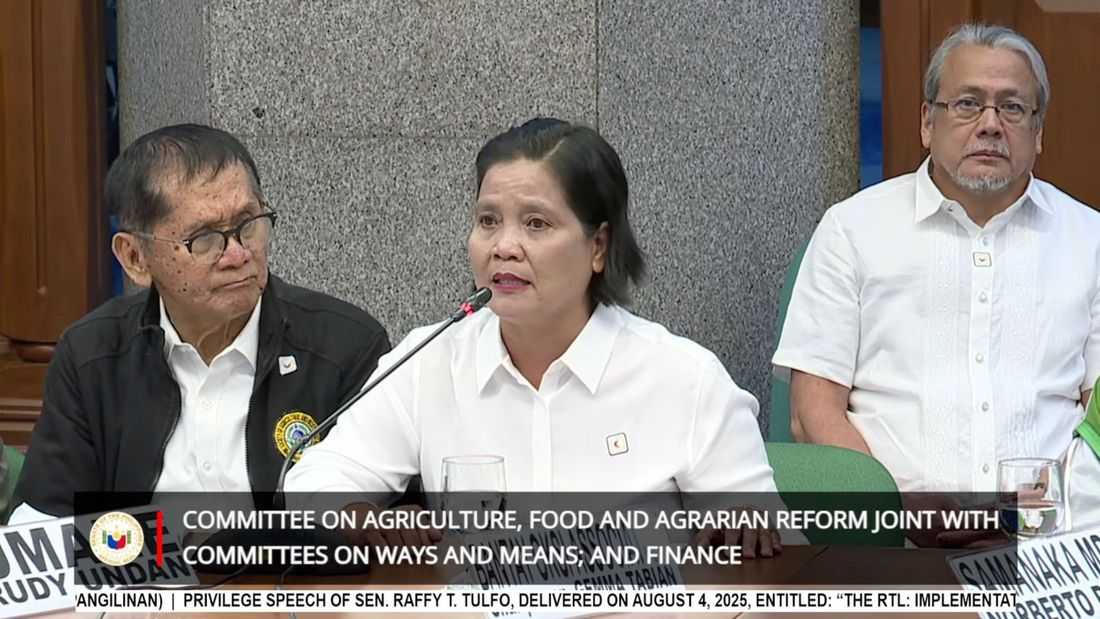
Echoing Undan’s sentiments, Gemma Tabian, president of Bantay Occidental Mindoro, shared the worsening plight of farmers in her province.
Speaking before the committee chaired by Senator Kiko Pangilinan, Tabian described the dire conditions of farming families who have been left behind amid the liberalization of agricultural imports.
“Hirap na hirap na ang magsasaka ng Occidental Mindoro. Wala kaming ibang inaasahan na tutulong sa amin kung kaya’t kami po ay nag-inisyatibo na lumakad paparito,” she said.
Tabian noted that despite years of hardship, the lives of farmers and their children have not improved. Instead, import-dependent policies have pushed them deeper into poverty.
“Patuloy kaming lumulubog dahil sa nangyayari. Sino ang pinayayaman natin? Ang ibang bansa. Dahil sa pag-iimport natin ng bigas… delubyo ang nangyari sa magsasaka,” she lamented.
She also decried the weakening of the National Food Authority (NFA), which she said has lost its power to stabilize rice prices and support local producers.
“Ang National Food Authority na inaasahan ng marami sa aming magsasaka, nawala ang kanilang kapangyarihan,” she said. “Napakasakit isipin na sinasabi n’yong lahat na bayani kami pero nasaan? Limot na bayani kami.”
Tabian added an emotional plea, describing the hardship farmers have endured for years: “Baon-baon na kami hindi lang sa buhay kundi sa utang.”
The hearing underscored the growing clamor among agricultural stakeholders for a review—or even repeal—of the Rice Tariffication Act, six years after its enactment. While the law was intended to stabilize rice supply and lower consumer prices, farmers’ groups insist that it has done the opposite for rural communities, decimating incomes and worsening inequality.
Senators are expected to revisit the tariff structure, import quotas, and the role of the NFA in future sessions, amid renewed debate over the country’s food security strategy.
