
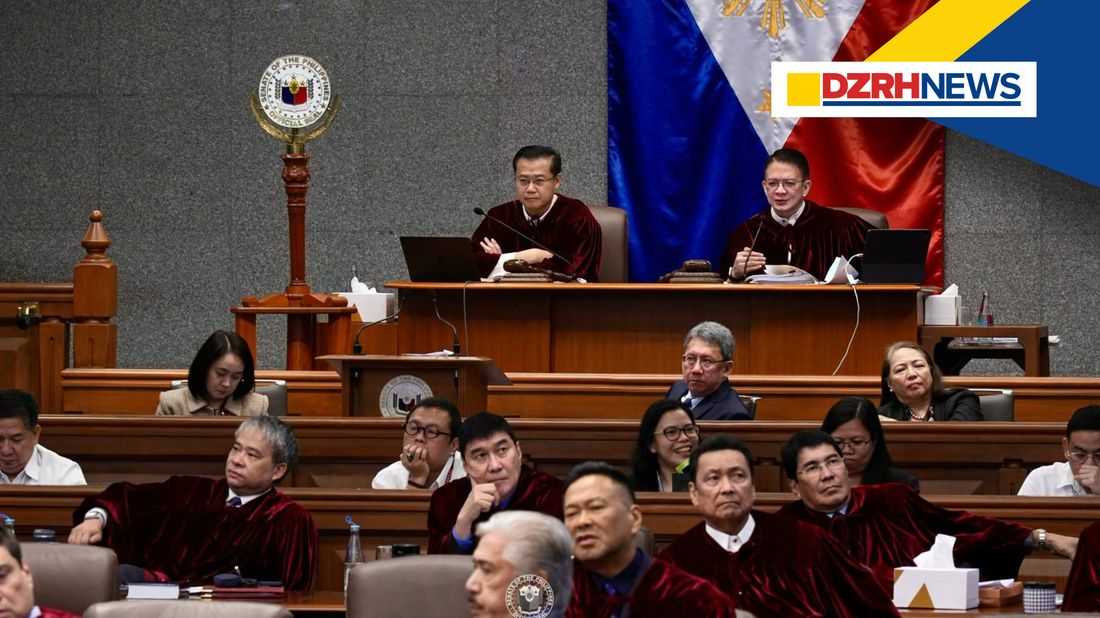
Senate President and Presiding Officer Chiz Escudero reminded the 17 senator-judges to uphold impartiality, political neutrality, and proper parliamentary conduct as the impeachment trial of Vice President Sara Duterte entered its 19th day on Wednesday, August 26.
In his ruling on the alleged sub judice violation, Escudero stressed that the senator-judges must maintain the appearance as well as the reality of impartiality throughout the proceedings.
“A judge must not only be impartial but must also appear to be impartial,” Escudero said, citing the need to assure all parties that the proceedings would be conducted fairly.
Escudero also invoked the senator-judges’ oath to “do impartial justice according to the Constitution and the laws of the Philippines,” as well as the impeachment rules requiring political neutrality, which he described as the exercise of official duties “without unfair discrimination and regardless of party affiliation or preference.”
He emphasized that impartiality does not prevent senator-judges from closely examining the evidence or asking probing questions during the trial. Citing Supreme Court jurisprudence, Escudero said judges are allowed to ask questions to test a witness’s credibility, clarify relevant facts, and help establish the truth—even if the answers may ultimately benefit one side or weaken the other.
“Taken together, Rule 17 and the Gumbor case confirm that a searching question is not partial merely because the answer may aid one side or weaken the other,” Escudero said.
However, he stressed that questioning must remain relevant, material, fair, and aimed at clarifying the truth. He warned that inquiries should not turn into speeches, harassment, partisan advocacy, or statements suggesting that a senator-judge has already reached a conclusion.
Escudero likewise reminded the senator-judges to observe parliamentary rules and refrain from “unparliamentary remarks, personal attacks, imputations of improper motive, and other language incompatible with the dignity of these proceedings.”
He said differences in judgment and vigorous debate are expected, but should be handled with patience, flexibility, and respect. “Firmness need not be unkind, nor courtesy come at the expense of duty. Both serve the same end, the fair and honorable administration of justice,” Escudero said.
The presiding officer also clarified that allegations involving a senator-judge’s possible violation of the impeachment oath, Senate rules, or other applicable rules may be referred to the Senate Committee on Ethics and Privileges. Such disciplinary matters, he said, should not be taken up within the impeachment court to avoid diverting attention from the case against Duterte.
Escudero concluded by urging senator-judges to exercise their authority to question witnesses, prosecutors, and defense counsel during the proceedings and on the official record, rather than through commentaries on social media.
