
The Philippine Solar and Storage Energy Alliance urged wider adoption of rooftop solar systems in the country, citing steeply reduced installation costs, potential household savings of up to 7,000 pesos per month, and new government financing support as key drivers for faster deployment.
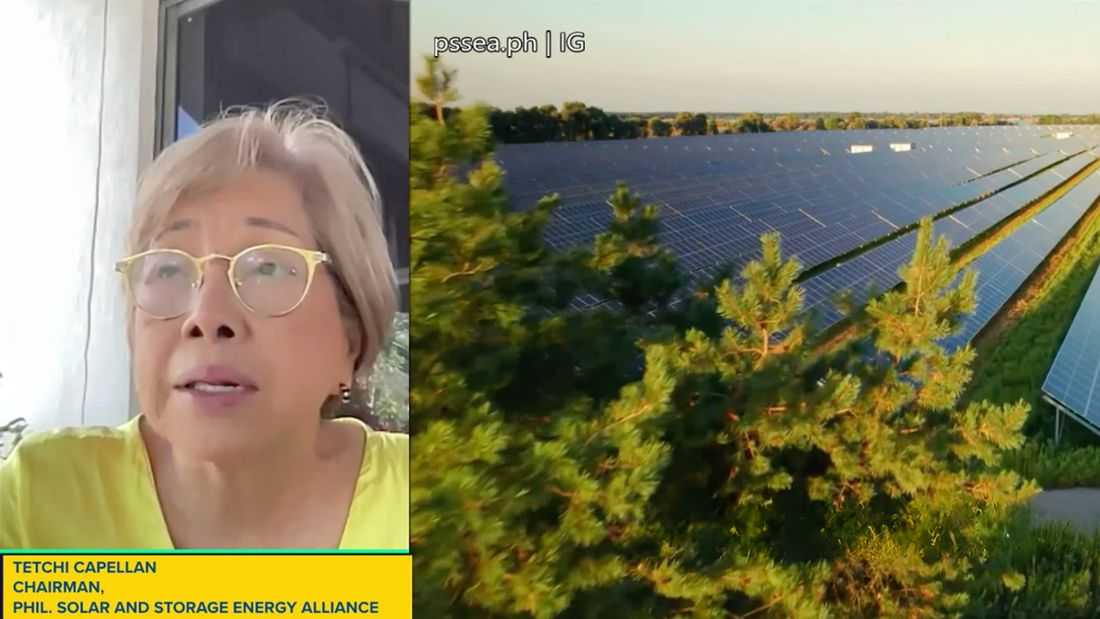
In an interview on DZRH’s Special on Saturday, Tetchi Capella, chairman of the Philippine Solar and Storage Energy Alliance, said rooftop solar is becoming increasingly affordable and essential for energy security amid global supply uncertainties, while calling for streamlined permitting rules to accelerate installations.
Capella said the alliance, formed in 2012 after the passage of the Renewable Energy Law and its implementing rules, brings together about 75 members across the solar value chain, including developers, installers, utilities, financiers, and manufacturers, to promote industry growth and policy coordination.
She noted that while the Philippines’ total installed solar capacity has expanded from just 1 megawatt in 2004 to about 4,000 megawatts in 2024—and is projected to reach 7,500 megawatts with upcoming large-scale projects—rooftop solar remains underdeveloped at only about 250 megawatts.
“So karamihan yan, puro power plant, medyo naiwan yung solar rooftop. Kasi, naiwan siya. So, ang gusto kasi ng gobyerno, dumami muna yung supply.”
Capella said early solar projects were largely donor-funded and off-grid, but current rooftop systems are grid-connected and increasingly viable for households.
She added that installation costs have dropped from as high as 4 million pesos in the early 2000s for small systems to about 70,000 pesos per kilowatt today.
A typical household system costing 320,000 to 400,000 pesos can cut monthly electricity bills from about 10,000 pesos to around 3,000 pesos, with payback possible in roughly four years, she said.
She also welcomed recent government moves allowing GSIS members to finance rooftop solar installations through loans, though she said broader lending reforms, including for other housing finance programs, are still needed to improve access.
Capella further called for standardized permitting requirements across local government units, saying inconsistent rules remain a major barrier despite the relatively fast one-week installation timeline for solar rooftop systems.
