
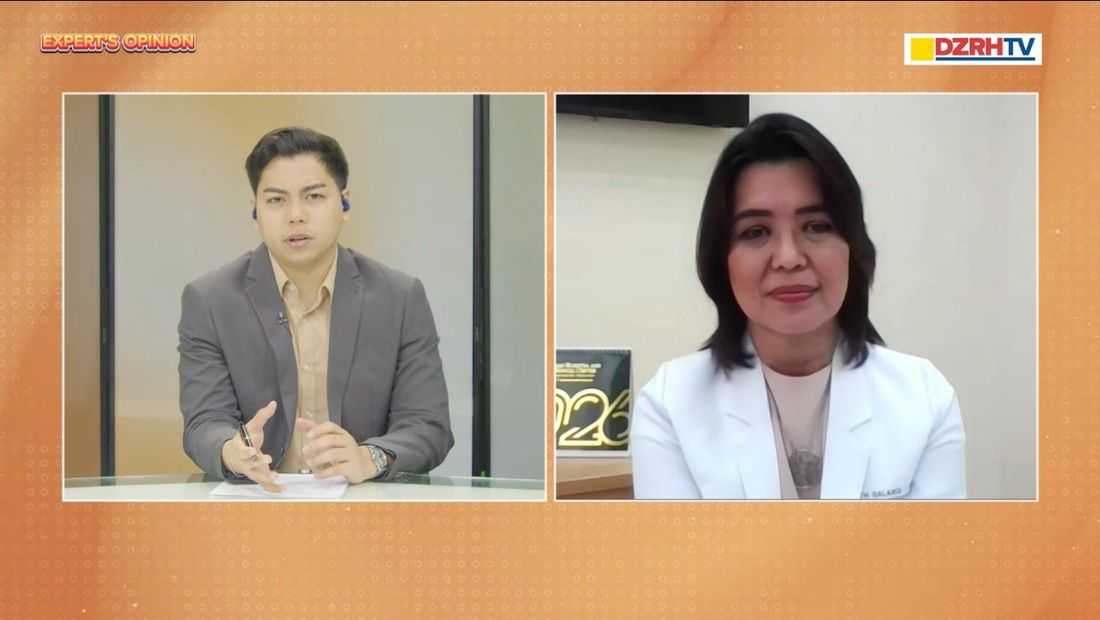
In an exclusive interview on DZRH TV’s Experts Opinion, Dr. Judith Galang-Perez, an obstetrician-gynecologist and reproductive medicine specialist from Asian Hospital and Medical Center, emphasized that PCOS is often misunderstood and overlooked.
PCOS is a hormonal disorder that disrupts ovulation due to imbalances in androgen hormones and insulin levels. It is a leading cause of irregular menstruation, especially among women in their reproductive years.
As Dr. Perez explained, “Ang PCOS kasi, maaaring dala mo na o nasa katawan mo na siya, at tapos siya ay nagpapakita lang.”
She added, “Hindi siya masakit. Walang sakit na nararamdaman ang isang babaeng may PCOS.”
Because symptoms are often subtle or dismissed, many women only discover the condition during consultations for irregular periods.
According to Dr. Galang-Perez, early signs of PCOS include irregular or missed periods, severe acne, excess facial or body hair, and thinning hair or hair loss.
Dr. Perez also debunked the misconception that PCOS causes weight gain: “Hindi po ang PCOS ang nagiging dahilan ng pagdagdag ng timbang—bagkus, ito po ang pagdagdag ng timbang ang siyang nagtutulak para sa isang babae na magkaroon ng PCOS.”
She explained that excess body fat can interfere with hormonal signals, increasing the risk of developing the condition.
Doctors may prescribe hormonal pills or insulin-regulating drugs, but regular exercise and a balanced diet remain essential.
“Ang gamutan, yung pag-actual na umiinom ng gamot, ay isang aspeto lamang sa pag-manage ng PCOS,” she explained. “Kaya nga napakaimportante sa mga konsultasyon namin sa clinic. Ini-encourage namin ang mga pasyente na mas maging active, mas maging aware sa kanilang katawan, mas maging aware sa kanilang kinakain."
Dr. Galang-Perez stressed the importance of awareness and early consultation to prevent complications: “Magkaroon po tayo ng awareness sa ating katawan… maganda pong humingi ng opinion.”
As the country observes Women’s Month, health experts continue to urge Filipinas to prioritize reproductive health, reminding them that early action can make a lifelong difference.
