
The Philippines is expanding its global reach as new direct flights from China open more doors for tourism, business, and cultural exchange.
The Department of Tourism (DOT) has welcomed the launch of new air routes linking Hangzhou and Changsha to Manila, marking another step in strengthening international connectivity and travel convenience.
Hangzhou–Manila route boosts travel and business
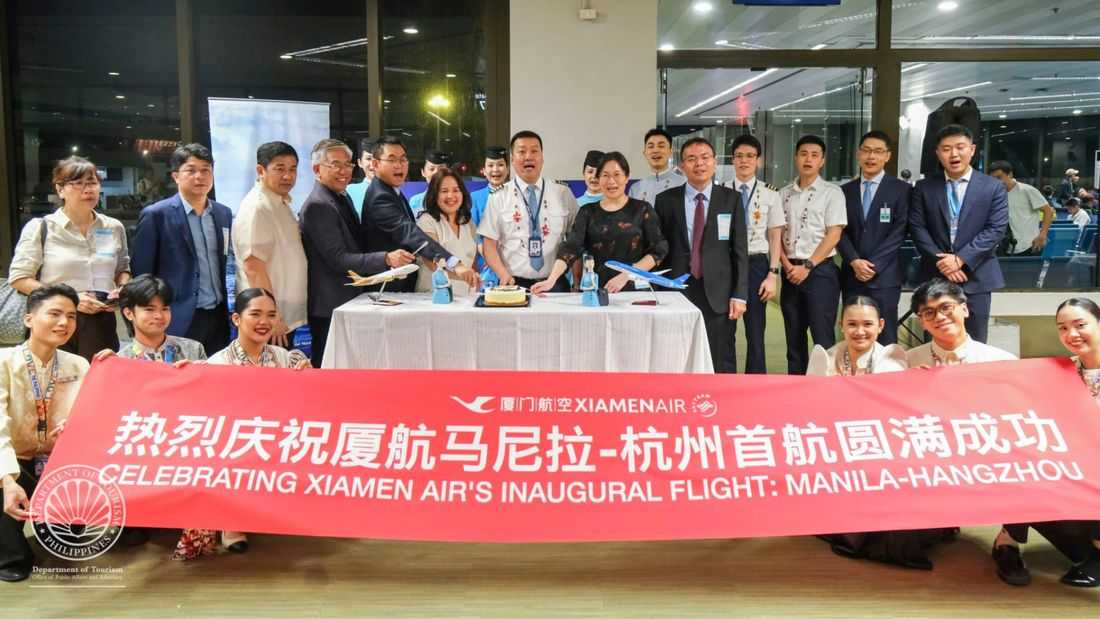
The inaugural Hangzhou–Manila flight, operated by Xiamen Airlines, landed on May 20 at Ninoy Aquino International Airport (NAIA) Terminal 1 with 76 passengers on board. Its return flight departed the same evening, carrying 122 passengers.
The route will operate four times weekly—every Monday, Wednesday, Friday and Sunday—until Oct. 31, 2026.
Hangzhou, known as one of China’s leading high-tech hubs, is home to major digital industries and a rapidly growing urban culture.
The new connection is expected to attract not only leisure travelers but also entrepreneurs and business leaders looking to explore opportunities in the Philippines.
The DOT said the route is part of a broader push to position the country as a more accessible destination for international visitors. Since early 2025, at least 32 new direct international routes have been launched to the Philippines.
Changsha flights highlight cultural tourism
Days earlier, on May 16, the DOT also welcomed the maiden Changsha–Manila flight operated by Qingdao Airlines.
The flight arrived in Manila at 2:20 a.m. with 56 passengers and departed shortly after with 170 passengers. It will run three times weekly—every Tuesday, Thursday and Saturday—until Oct. 24, 2026.
Changsha, the capital of Hunan province, is known for its rich history, striking architecture and vibrant food scene. The new route is expected to draw Filipino tourists eager to explore central China, while also inviting more Chinese visitors to experience Philippine destinations.
The expansion of direct flights comes amid improving travel conditions between the Philippines and China, including the restoration of visa-free policies for Chinese tourists—one of the country’s largest visitor markets.
Tourism officials say increased air connectivity plays a crucial role in revitalizing travel and lifestyle industries, from hospitality and dining to retail and local experiences.
