

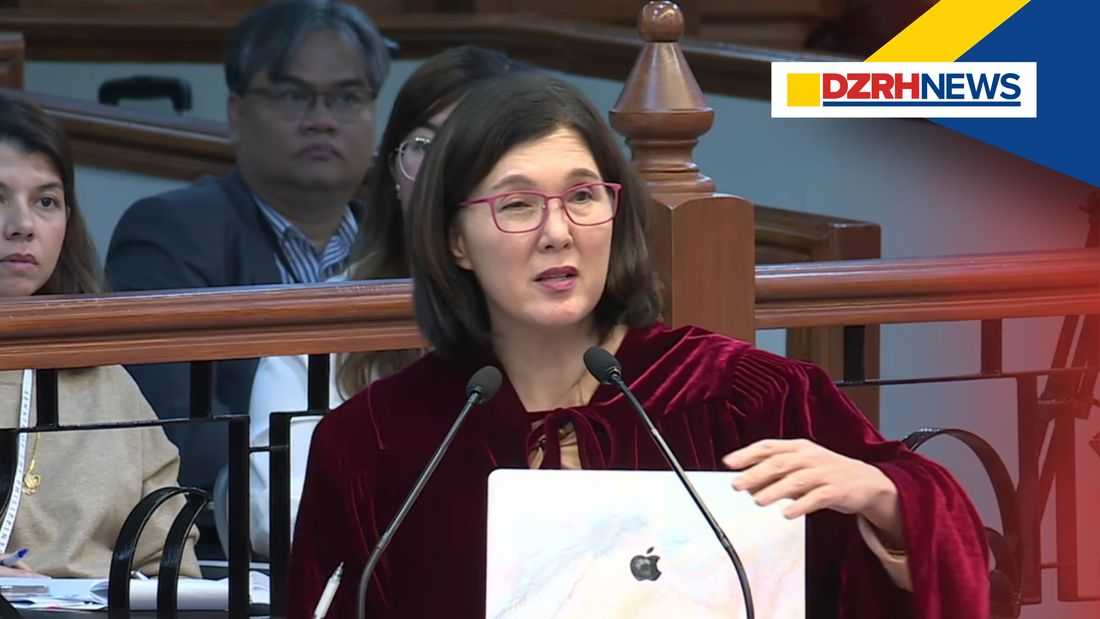
Senator-judge Pia Cayetano on Tuesday challenged the prosecution’s presentation of the affidavit of self-confessed former Davao Death Squad member Arturo Lascañas during the eighth day of Vice President Sara Duterte’s impeachment trial, questioning its authenticity and admissibility as evidence.
Cayetano raised concerns after NBI Director Atty. Melvin Matibag cited Lascañas’ affidavit as part of the NBI’s investigation related to alleged threats against President Ferdinand Marcos Jr.
She questioned lead prosecutor Rep. Gerville Luistro on whether Lascañas was considered an important witness for the prosecution and whether the affidavit met the requirements for authentication under the Rules of Evidence.
“The rules of evidence are very clear. You either present a witness who provides your testimony or you present a document,” Cayetano said.
She noted that the affidavit presented by the prosecution was not acknowledged before a notary public and questioned whether the witness personally saw the document being executed or could verify the signature.
“Yung pinakita na document is not acknowledged by a notary public,” Cayetano said.
When asked whether the prosecution provided evidence proving the document’s authenticity, Luistro answered that they did not.
Cayetano then criticized the presentation, saying the prosecution must ensure that proper witnesses and documentation are submitted before the impeachment court.
“Do your job and present the proper witness and the proper documentation to do that. Do your job,” Cayetano said.
She added that allowing the document to be shown during proceedings could influence the perception of senator-judges, even if questions remain about its admissibility.
“You cannot unsee what you see. You cannot unhear what you hear,” Cayetano said.
Cayetano also reminded the impeachment court that witnesses must be competent and credible, citing provisions under Rule 132 of the Rules of Evidence regarding the impeachment of witnesses through contradictory evidence or challenges to their credibility.
The prosecution maintained that the affidavit was presented only to establish what documents were reviewed during the NBI’s investigation, while the defense continued to question its evidentiary value.
