

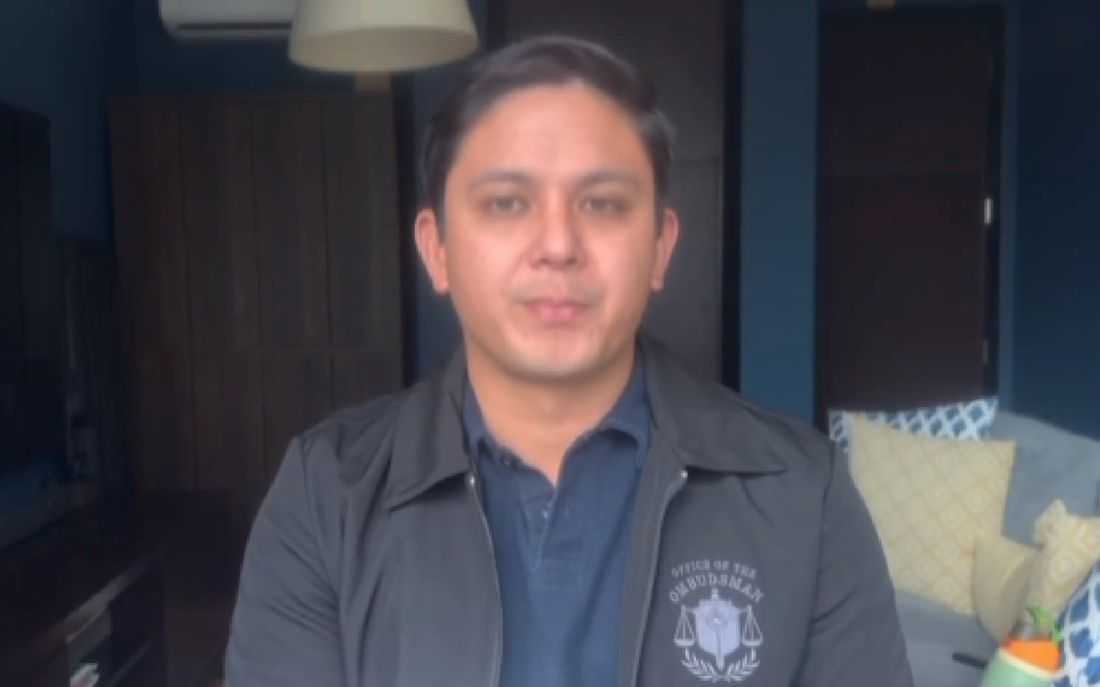
Assistant Ombudsman Mico Clavano clarified on Monday that the so-called “Cabral files” circulating online remain of low credibility and cannot yet be used as evidence in the ongoing investigation of allegedly anomalous flood control projects.
In a video statement released earlier today, Clavano explained that the files may be manipulated, and therefore, the Office of the Ombudsman treats them with caution. He confirmed that multiple sources have approached the office claiming to possess copies of the files.
“The Office of the Ombudsman has actually been approached by multiple sources, claiming to possess copies of the supposed ‘Cabral files,” Clavano said.
“These claims underscore and really highlight the importance of distinguishing between original evidence on the one hand and secondary or third-party copies on the other hand.”
According to Clavano, the most reliable sources of documents are those directly coming from agencies and individuals who had custody or control over the materials, including the Department of Public Works and Highways (DPWH) and the late former Undersecretary Maria Catalina Cabral.
“The best and most reliable source of documents are actually the agencies and individuals who had custody, who had control and even authorship of the computers, the storage devices, and the files themselves,” he said.
“Evidence that is derived directly from these sources will naturally carry far greater evidentiary value than copies that are circulating outside official custody.”
Clavano also emphasized that the Cabral files represent only one aspect of the ongoing investigation. Alleged insertions or modifications in these files must still be examined to determine whether the projects were actually implemented or if they were ghost projects.
“The office clarifies that the Cabral files are only one part of the investigation. Alleged insertions that are supposedly in these files still need to be carefully examined to determine whether these projects were actually implemented or if they turned out to be ghost projects,” Clavano said.
He added that the presence of an insertion alone does not automatically indicate illegality unless it can be proven that it involved deception, misuse of funds, or ghost projects.
