
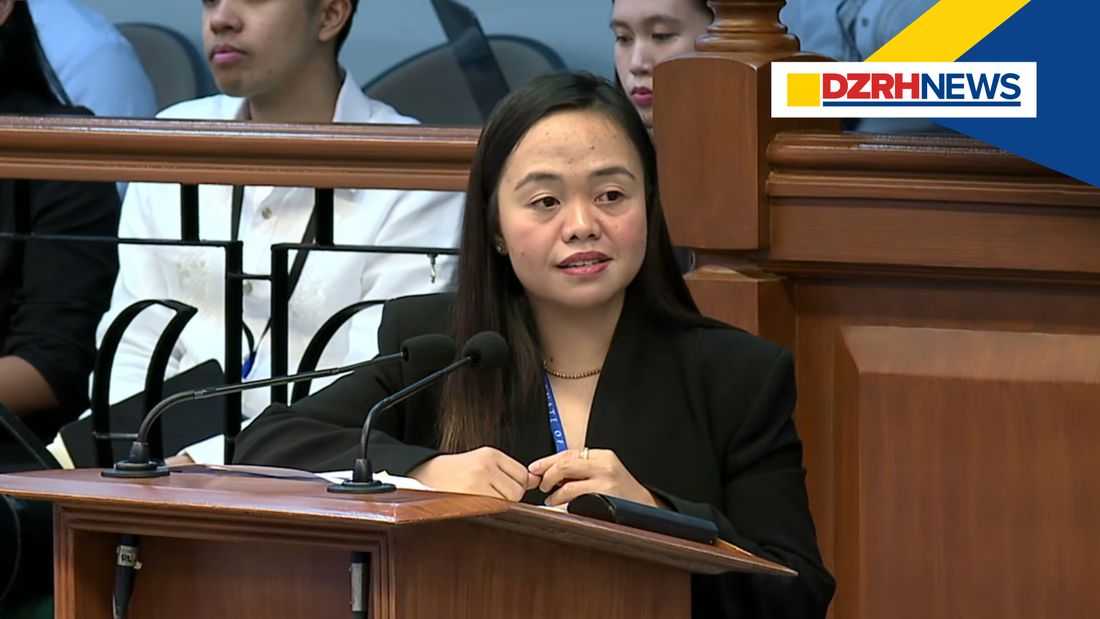
Defense lawyer Kristine Ferrer clarified the defense team’s position on the document comparison after House private prosecutor Atty. Lorna Kapunan accused them of failing to attend a meeting to compare exhibits related to the impeachment case against Vice President Sara Duterte.
Speaking during Day 14 of the impeachment trial on August 11, Ferrer said the defense does not see the need to physically compare the exhibits, arguing that the impeachment court itself will determine their authenticity after the prosecution formally offers its evidence.
“There’s no need for us to actually compare the exhibits just so we can arrive at a stipulation that this and that are the same,” Ferrer said.
Ferrer said the authenticity of the acknowledgment receipts should be resolved by the court and would only be determined after the prosecution submits its formal offer of evidence, which the defense would then be allowed to comment on.
“The authenticity of the exhibits is something that the court will have to decide. And the court will only decide on that after the prosecution has already submitted their offer of evidence. And that will be subject to our comment,” she said.
The defense lawyer also questioned whether COA-ICFAO State Auditor Xylene Del Campo was sufficiently familiar with all the documents to identify them in court.
“We did not stipulate here in open court that the witness is competent to identify the exhibits, Your Honor, kasi hindi naman namin kilala yung taga-COA,” Ferrer said.
“Pangalawa, we don't know the extent of her examination of the documents. Pangatlo, she just assumed the work of Mr. Wamil,” she added, referring to former COA auditor Roderick Wamil, who previously testified in the proceedings.
Ferrer said the defense could not simply agree to Del Campo’s competence to identify all the documents without examining the extent of her review.
“Mahirap naman po sabihin nun ang kliyente namin, sige, okay na, payag na kami, she can identify the exhibit, she knows all of those, she has examined all of those. Precisely, that's the duty of the counsel to do in open court,” she said.
Instead, Ferrer proposed that the prosecution use Rule 130, Section 7, which allows a witness to testify based on a summary or compilation of voluminous documents.
“Now, there's Rule 130, Section 7, and for those of you who are litigating before the CTA, you already know this rule, that a witness can testify based on a summary,” Ferrer explained.
She said the defense would not object to the prosecution identifying only selected exhibits or samples instead of going through every document individually.
“We will not even object, attorney, as to how many exhibits you will identify or you will have as samples, kahit sampu per quarter or kahit 100 or kahit wala,” Ferrer said.
Ferrer maintained that the rule does not require the parties to individually identify all documents or stipulate on their authenticity before the prosecution can use a summary.
She estimated that, if properly implemented, the prosecution could finish presenting the documents for one quarter in less than 10 minutes.
“We don't object to their implementation of Rule 130, Section 7 as to the manner by how they will do it. We will also not object, but subject to cross-examination, Your Honor,” Ferrer said.
The defense’s explanation came after Kapunan earlier accused the team of leaving the prosecution waiting for a meeting to compare 4,492 documents related to the liquidation of the Office of the Vice President’s confidential funds.
Kapunan had described the situation as “Na-indian po kami” and claimed there was “bad faith” after the defense allegedly proposed a meeting on August 14 instead of the Thursday or Friday schedule previously discussed by the court.
