

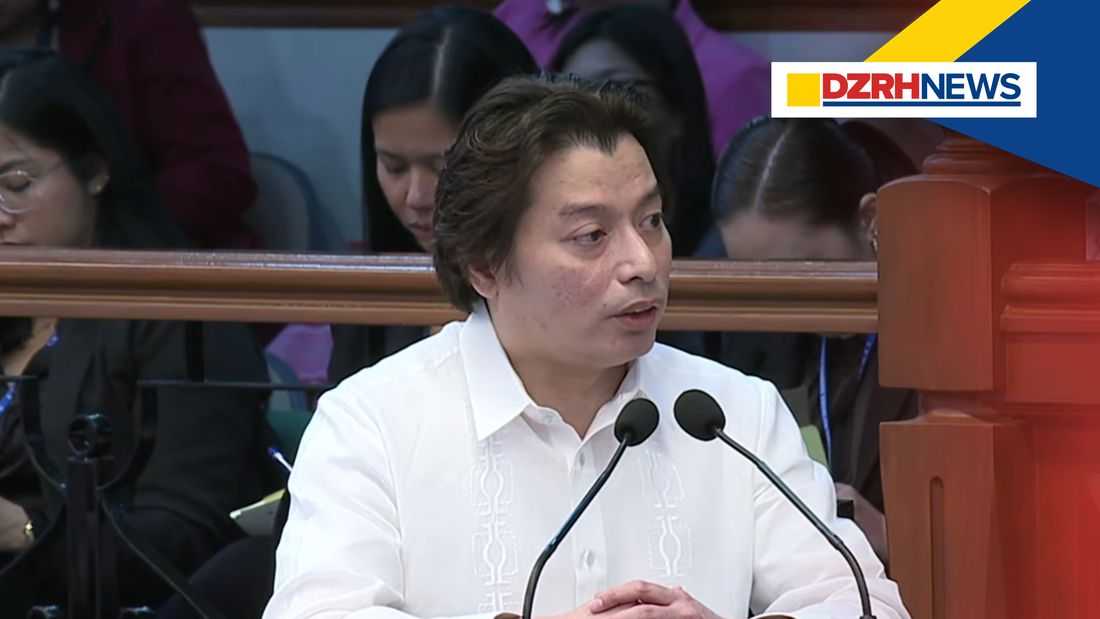
The defense panel of Vice President Sara Duterte on Monday argued that the Senate impeachment court cannot compel the release of confidential Anti-Money Laundering Act (AMLA) records, insisting that the prohibition under the AMLA is "absolute" and protected by law.
During the seventh day of the impeachment trial, defense counsel Atty. Michael Poa opposed the House prosecution’s request to subpoena AMLC documents, citing Section 8-A of the Anti-Money Laundering Act, which provides for the confidentiality of AMLC reports and related information.
Poa maintained that while the Senate impeachment court is a constitutional body, it must still operate within the limits imposed by the Constitution and existing laws.
“For us, whatever an impeachment court may or may not do, it must be confined to the limits imposed by the Constitution and the laws,” Poa told the senator-judges.
The defense lawyer stressed that their objection was not rooted in opposition to transparency or accountability, but in ensuring that constitutional rights and legal safeguards are upheld.
“We are not against transparency. We are not against accountability,” Poa said. “But just because we are all looking for accountability and transparency does not mean we should set aside the rights guaranteed by law—not only for an impeachable officer, but for every Filipino—including the absolute confidentiality of AMLC reports.”
Poa argued that, unlike other financial documents that may be released under certain conditions, AMLC records are expressly protected by an absolute prohibition under the law.
“Those certain conditions may be allowed for other records, but when it comes to AMLC, the prohibition is absolute,” he said.
He warned that allowing the impeachment court to suspend or disregard the confidentiality provision would amount to judicial legislation, which he said is beyond the court’s authority.
“If we were to amend or at least suspend the provision of Section 8-A, then it is as if this honorable court is actually doing some sort of judicial legislation, because we are technically suspending this law for a specific person that we cannot do for others,” Poa argued.
The defense further emphasized that the pursuit of truth in the impeachment proceedings should remain within the legal framework established by the Constitution and Philippine laws.
“In the search for truth, transparency, and accountability, we must still work within a framework, which means that we must work within the limits imposed by the Constitution, the laws, and the rules of the land,” Poa said.
Poa’s arguments came before the Senate impeachment court ultimately granted the House prosecution’s request to subpoena AMLC, bank, and Bureau of Internal Revenue records, ruling that the requested documents are relevant and material to the allegations of unexplained wealth under Article II of the impeachment complaint.
