
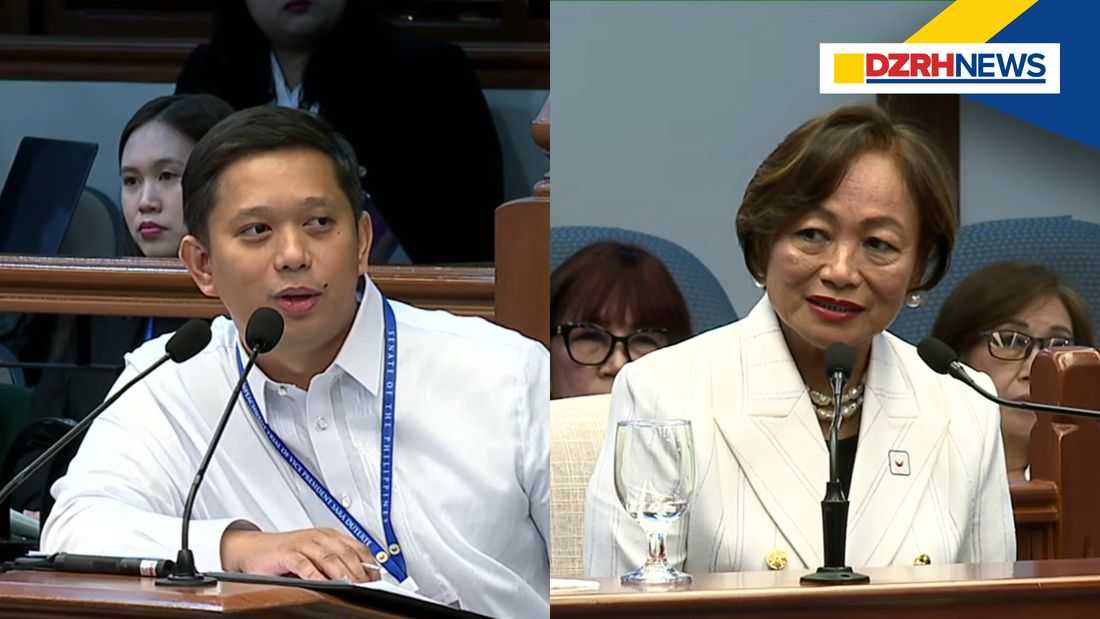
Defense counsel Atty. Mark Vinluan on Monday questioned the prosecution’s presentation of retired Supreme Court Justice Amparo Cabotaje-Tang as a witness, arguing that her testimony was procedurally improper and violated Vice President Sara Duterte’s right to due process.
During Day 24 of the impeachment trial, Vinluan described Tang as a “surprise witness,” noting that she was not included in the pre-trial order and that the defense was not provided with the materials that would be used in her testimony beforehand.
“First and foremost, procedurally, the presentation of retired Justice Amparo Cabotaje Tang is improper. Your Honor, this is the first time that the Vice President is being confronted with Justice Tang and her testimony,” Vinluan said.
“For the record, she is not listed in the pretrial order as witness and there is no reservation for a witness with her designation or background. So, for all intents and purposes, Justice Tang is a surprise witness which violates fair play and is prohibited under the rules,” he added.
Vinluan also said the defense had no opportunity to fully assess Tang’s background, the extent of her testimony, or the documents she might identify because the prosecution allegedly did not furnish them in advance.
He said the notice provided by the prosecution on September 9 only identified Tang by name, her previous official function, and the general purpose of her testimony.
According to Vinluan, Tang’s name and testimony were also not specifically alleged in the Articles of Impeachment, which he said made it difficult for the defense to anticipate the substance of her testimony.
“Therefore, without the proper link of Justice Tang to this case, and without having been provided in advance with the materials that will be used in her testimony, we could not have possibly predicted what she will testify on,” he said.
The defense lawyer argued that presenting Tang under these circumstances could infringe on Duterte’s ability to intelligently cross-examine the witness and violate her constitutional right to due process, particularly her right to be informed of the nature and cause of the accusation against her.
Vinluan likewise challenged the prosecution’s apparent reliance on Tang as a legal expert, saying she was not presented as an amicus curiae and that the impeachment court had not specifically approved her testimony based on her expertise.
He further argued that asking Tang to interpret legal principles could result in her making conclusions of law that should instead be determined by the impeachment court.
“What the prosecution cannot do directly under the subjudice rule, it can and will do indirectly through the testimony of this witness. The prosecution will thus circumvent the rules by presenting this witness,” Vinluan said.
In view of these objections, Vinluan moved for the exclusion of Tang’s testimony and left the matter to the discretion of the impeachment court.
Meanwhile, House prosecutor Rep. Chel Diokno defended the presentation of Tang, saying it is intended to help the public understand the legal and financial concepts involved in Article II of the impeachment case.
Diokno emphasized that transparency is not limited to livestreaming the proceedings but also involves making the issues being discussed understandable to the public.
“Real transparency means that the people can understand what is happening,” Diokno said.
He said it is important for the public to understand concepts such as financial interest, conflict of interest, and the direct or indirect involvement of public officials in businesses relevant to the case.
The prosecution maintains that Tang’s testimony will provide a legal framework that will help explain the financial and documentary evidence that will be presented in the succeeding proceedings.
