
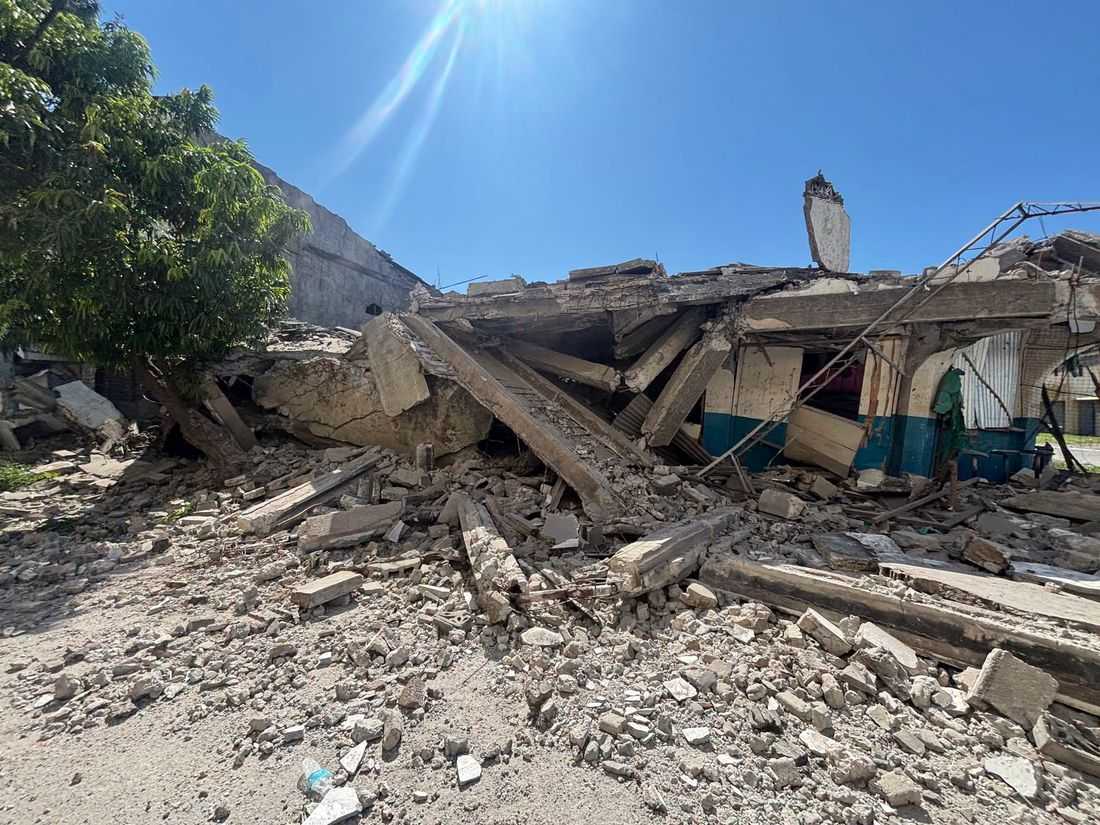
The death toll from the magnitude 7.8 earthquake that struck off the southern coast of Mindanao has risen to 47, while 31 people remain missing and 688 others have been injured, according to the Office of Civil Defense (OCD) on Thursday, June 11, 2026.
Speaking in an interview on DZRH’s Damdaming Bayan, OCD Assistant Secretary Raffy Alejandro said the death toll increased after two additional fatalities were reported in Glan, Sarangani.
Alejandro also reported that the number of missing persons rose to 31 after 13 more cases were recorded in Glan and General Santos City.
Most of the missing individuals were believed to have been victims of landslides, falling debris, and rockfalls triggered by the powerful earthquake.
The earthquake affected 75,324 families across 291 barangays in Regions 9, 11 and 12 and the Bangsamoro Autonomous Region in Muslim Mindanao (BARMM), the OCD said.
Of the affected families, 3,515 are currently staying in 32 evacuation centers, while 7,279 families are sheltering outside evacuation facilities.
Authorities continue to validate casualty and displacement figures through the government's mass casualty cluster led by the Department of Social Welfare and Development (DSWD).
Alejandro said collecting updated reports remains challenging because of intermittent communication signals and power outages in several affected areas.
The provinces of Sarangani and General Santos City were among the hardest-hit areas in terms of casualties, displacement, and damage to homes and infrastructure.
"General Santosa City as a major city talagang matindi ang tama doon sa Sranggani naman na province ang pinakamatinding tinamaan sa lugar ay ang munisipyo ng Glan at Malapatan in terms of casualty," Alejandro said.
Initial assessments showed that 12,641 houses were damaged by the earthquake, including 2,289 homes that were totally destroyed. The remaining structures sustained partial damage.
He also said that several malls and commercial buildings also suffered varying degrees of damage, with some structures collapsing.
Reported damage to infrastructure in Regions 11 and 12 has reached P666.5 million. However, authorities expect the figure to increase as local government units and national agencies continue conducting damage assessments.
“We are expecting these numbers to increase kasi pumapasok na po ‘yung mga damage assessment report galing sa LGU at yung ating national government agencies," he said.
Meanwhile, the Department of Energy (DOE) is working to restore electricity services across affected areas. Officials aim to restore about 90 percent of power supply before the end of the week, although inspections of household distribution lines are still ongoing.
Power restoration efforts are gradually progressing in General Santos City, he said.
As of Thursday morning, the Philippine Institute of Volcanology and Seismology (PHIVOLCS) had recorded 2,889 aftershocks since the earthquake struck on Monday.
Alejandro warned residents to remain cautious, particularly those living in buildings that have not yet undergone structural integrity inspections.
Local government units, together with the DSWD and OCD, are distributing tents and other emergency shelter assistance to displaced residents, although officials acknowledged challenges in rapidly delivering aid to affected communities.
PHIVOLCS said the tectonic earthquake occurred at 7:37 a.m. local time on Monday at a depth of 33 kilometers. Its epicenter was located approximately 32 kilometers southwest of the coast of Maasim town in Sarangani province.
