
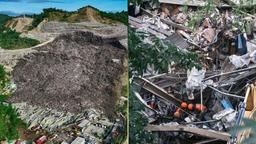
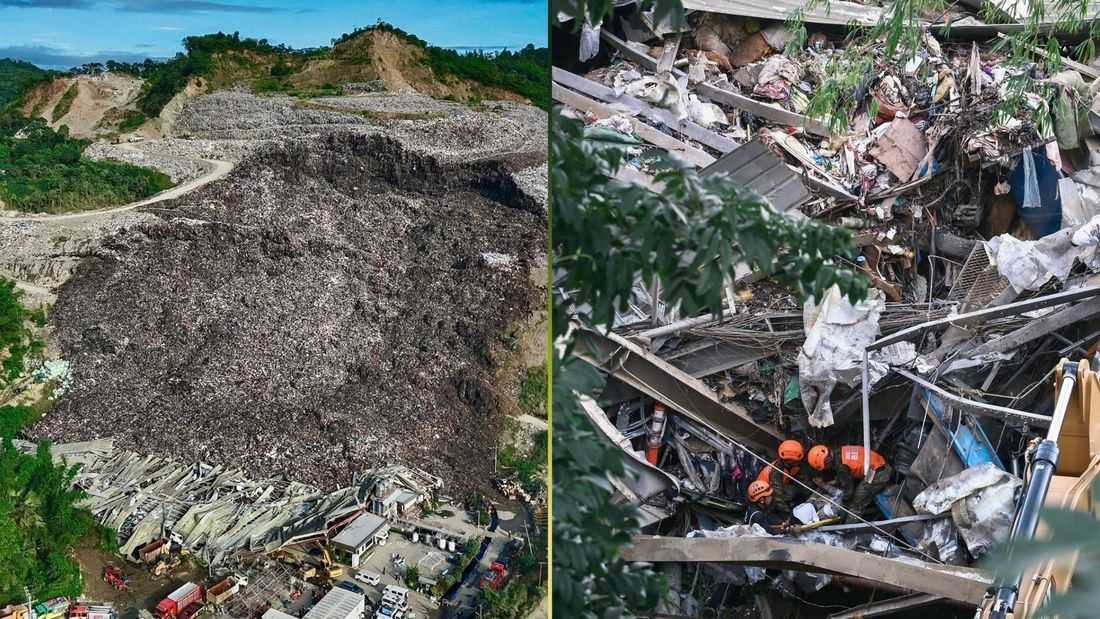
The death toll from the Binaliw landfill collapse in Cebu City has climbed to 11, with 25 people still missing, as authorities grapple not only with an ongoing rescue operation but also with the challenge of managing an estimated 500 tons of garbage generated daily by the city.
Cebu City Councilor Dave Tumulak, chair of the committee on disaster management, said in an interview on DZRH’s Magandang Umaga Pilipinas that the latest fatality—a 58-year-old woman—was recovered at around 2:58 a.m. Tuesday.
Eighteen other individuals remain hospitalized due to injuries sustained in the incident.
Rescue operations continue around the clock at the site, though access remains highly restricted due to hazardous conditions, including unstable debris, large steel beams, and the presence of methane gas beneath the collapsed landfill.
Rescuers are working on a rotational basis to limit exposure to toxic fumes and physical danger, the councilor said.
Amid the tragedy, Cebu City is also facing a mounting waste disposal problem following the Department of Environment and Natural Resources’ issuance of a cease-and-desist order against the Binaliw landfill’s operations.
With the facility shut down, the city has begun dumping its waste at a landfill in Barangay Pulog, Consolacion—around 15 kilometers away.
Tumulak said Cebu City produces about 500 tons of garbage every day, underscoring the scale of the problem now confronting local authorities.
While the Binaliwan facility previously handled recycling and waste sorting, that same recycling facility was buried in the collapse, trapping workers who were unaware of the ground failure as heavy machinery continued operating.
Authorities are still determining the cause of the collapse. While landfill management cited possible ground shaking and the cumulative effects of heavy rains in previous months, Tumulak noted that rainfall in the days leading up to the incident was not unusually strong.
The DENR’s Environmental Management Bureau is expected to conduct a formal investigation.
“Kaya nga sabi ng management, baka may ground shaking at saka... Yung ulan last November, naka-contribute din. Hindi pa gaano malaman talaga kasi yung DENR-ENB, magcoconduct sila ng investigation,” Tumulak said.
The Cebu City government and landfill management have provided assistance to affected families, including coffins for the deceased, food packs, psychosocial services, and continuous support from social workers and psychologists.
Heavy equipment, ambulances, and trained rescuers—some from private mining companies—remain deployed at the site.
Despite the increasing number of fatalities, officials said operations are still officially classified as rescue efforts, citing the difficult terrain and the possibility, however slim, of finding survivors.
“Rescue pa rin po tayo. Kasi wala pong kaibahan yung sa retrieval atsaka yung rescue operations natin kasi napakahirap po pasukin dahil po doon sa mga bakal at saka yung mga basura na nandoon sa loob, yung amoy, yung methane,” the councilor explained.
President Ferdinand Marcos Jr. and the Department of the Interior and Local Government secretary are expected to visit Cebu, raising hopes that a long-term solution will be identified for both the disaster response and the city’s persistent solid waste disposal problem.
