
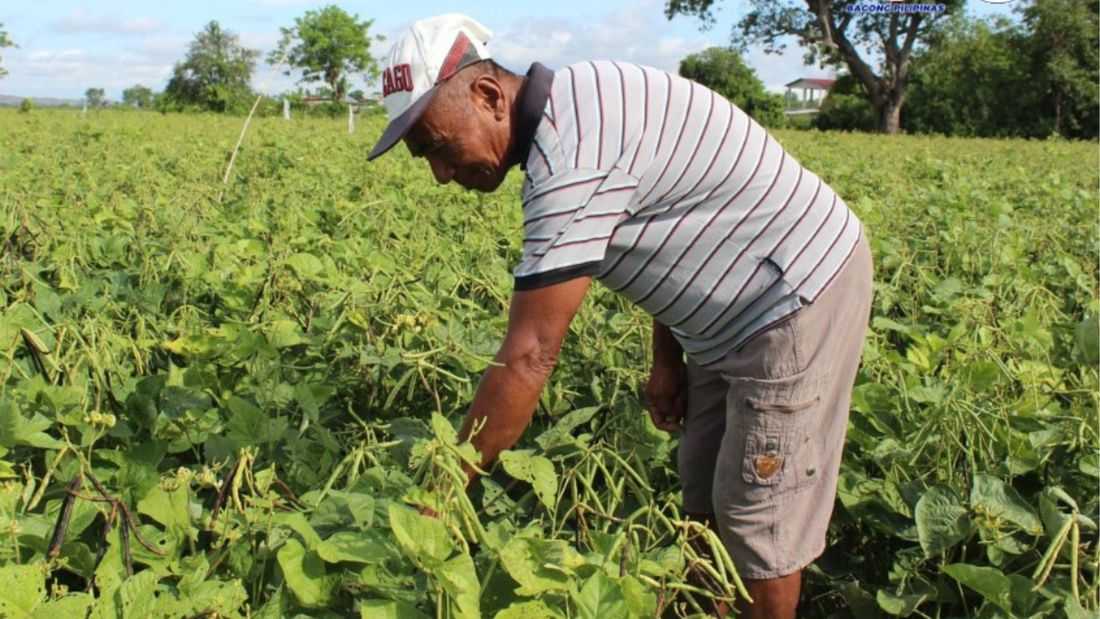
The Department of Agriculture (DA) is set to roll out expanded farmer support programs in 2026, including the nationwide deployment of thousands of agricultural workers and closer collaboration with the Technical Education and Skills Development Authority (TESDA) to modernize the country’s farming sector.
DA Undersecretary Asis Perez said in an interview with DZRH’s Special on Saturday, the agency plans to intensify its extension services beginning this year, marking a shift toward more direct engagement with farmers.
As part of the initiative, around 6,000 agricultural workers are expected to be deployed across the country to provide targeted interventions and technical support.
Perez also noted that the DA’s proposed budget has increased from P153 billion to P185 billion, pending final approval by the President.
He said the additional funding would allow the agency to scale up investments that deliver faster and more measurable production results for farmers, particularly in staple crops such as rice.
“Each time we invest, or we provide investment for our farming sector, then we generate immediate results. And that is within 6 months' time. So yun ang mga good news. With the increased budget, we're able to increase our output as well.”
TESDA Deputy Director General Sarge Colambo confirmed that the agency is strengthening coordination with the DA through existing training regulations and national certification programs in agricultural production and agribusiness.
He said TESDA is working with the Agricultural Training Institute (ATI) to provide skills training not only in farm production but also in value-adding activities such as processing, marketing, and agri-business development.
Both agencies also announced plans to explore bamboo production as a new growth area, with TESDA proposing the establishment of bamboo “boot camps” in Luzon, Bicol, and Iloilo, areas identified as having strong potential for bamboo cultivation and industry development.
Addressing concerns over the aging farming workforce, Perez said attracting young people back to agriculture depends largely on making the sector profitable and sustainable.
“There has to be reasonable certainty that our farmers will get something out of their toil. ‘Yon ang focus.”
He emphasized that efficiency, productivity, and fair pricing—supported by proper training and policy—are key to encouraging youth participation in farming and agribusiness.
“With proper training, with proper policy, pwede natin mapabalik ang mga farmers natin. At kahit mga bata, pwede mag-invest sa party.”
Colambo echoed the need to integrate technology into agriculture, noting that TESDA aims to encourage young people to engage in modern agribusiness roles rather than traditional manual farming, including research, marketing, and value-added processing.
He added that TESDA will also help train the agricultural workers to be deployed by the DA nationwide.
Perez said enabling farmers to participate in more profitable segments of the value chain could help address long-standing income challenges in the sector, making agriculture a more viable livelihood amid rising living costs.
