
By Ayose Naranjo, Anett Rios and Laura Gottesdiener
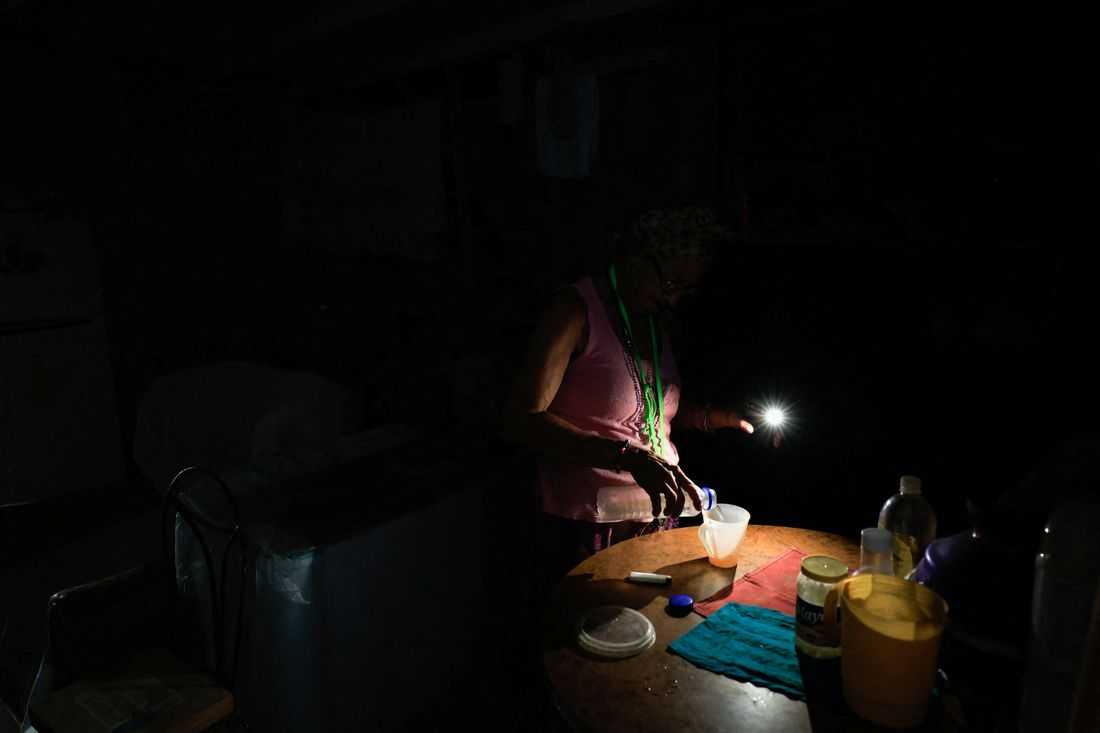
HAVANA, July 10 (Reuters) - Cuba's national electrical grid collapsed on Friday in the second nationwide outage this week and the fourth this year as a U.S.-imposed oil blockade has crippled the island's already obsolete generation system.
"We are already working on restoring the National Electric Power System, a complex situation amid all the difficulties we face on a daily basis," Energy Minister Vicente de la O Levy wrote on social media.
Before the collapse, large swaths of Cuba, including Santiago de Cuba, were still disconnected due to severe fuel shortages after a nationwide outage cut off power to the island's 10 million residents on Monday. Authorities had reconnected most of the nation's grid from that outage by late on Tuesday.
RISING TENSIONS
Yailin Fis Garcia, 26, stood outside her darkened cafe and pizza joint in central Havana, her 5-month-old baby on her shoulder. She and her family had opened the La Criolla cafe just a few weeks ago, and Friday marked the second time the electrical grid had collapsed since they started.
"All the food spoils, which is an economic hit," she said.
Still, she knew it could be worse. Her neighborhood on the outskirts of the capital suffers such severe energy shortages that for the last month her home has only received electricity for an hour or two a day, she said.
President Donald Trump imposed the oil blockade on the Caribbean island after Washington deposed Venezuelan President Nicolas Maduro on January 3. Venezuela was Cuba's primary fuel supplier, and subsequent U.S. pressure led Mexico to halt oil shipments to the island.
Havana resident Gabriel Rico said he has gotten used to keeping a flashlight handy, as the blackouts have grown more frequent.
"We are prepared for the blockade, which is what has us suffering like this, what has left us in shreds — in shreds, that's what it has done to us."
The chronic power failures have fueled rising social tensions, sparking scattered pot-banging protests in Havana after Monday's nationwide blackout.
But the dispersed protests are a far cry from the most recent mass demonstrations in July 2021, when thousands of Cubans took to the streets in the largest anti-government protest on the communist-run island in decades.
U.S. MEASURES ARE 'COLLECTIVE PUNISHMENT,' MINISTER SAYS
Havana blames a decades-old U.S. trade embargo for its failing infrastructure, while Washington says the blackouts are due to the mismanagement of Cuba's state-run economy.
The U.S. has openly stated its goal is to change Cuba's government, demanding democratic elections and the release of prisoners it says are being held on a political basis.
During a U.N. General Assembly debate on Tuesday, U.S. Ambassador to the U.N. Mike Waltz laid the blame solely on Havana, stating, "Change your ways and turn the lights back on for your people."
The vast majority of countries that spoke during the debate, however, called on Washington to end the blockade and reverse the sanctions that they say have crippled the island's economy.
Cuba's minister of foreign affairs, Bruno Rodríguez Parrilla, criticized the U.S. measures in remarks to the U.N., saying the fuel embargo and economic sanctions amounted to a "systematic violation of the human rights of an entire people in an act of collective punishment."
After Friday's blackout, he posted on social media: "It has been another very difficult week under the impact of the energy blockade: two nationwide grid collapses, almost no fuel to power the generating plants, and several units out of service."
(Reporting by Natalia Siniawski in Mexico City, Ayose Naranjo, Anett Rios and Laura Gottesdiener in Havana; Editing by Daina Beth Solomon, Aurora Ellis and William Mallard)
