
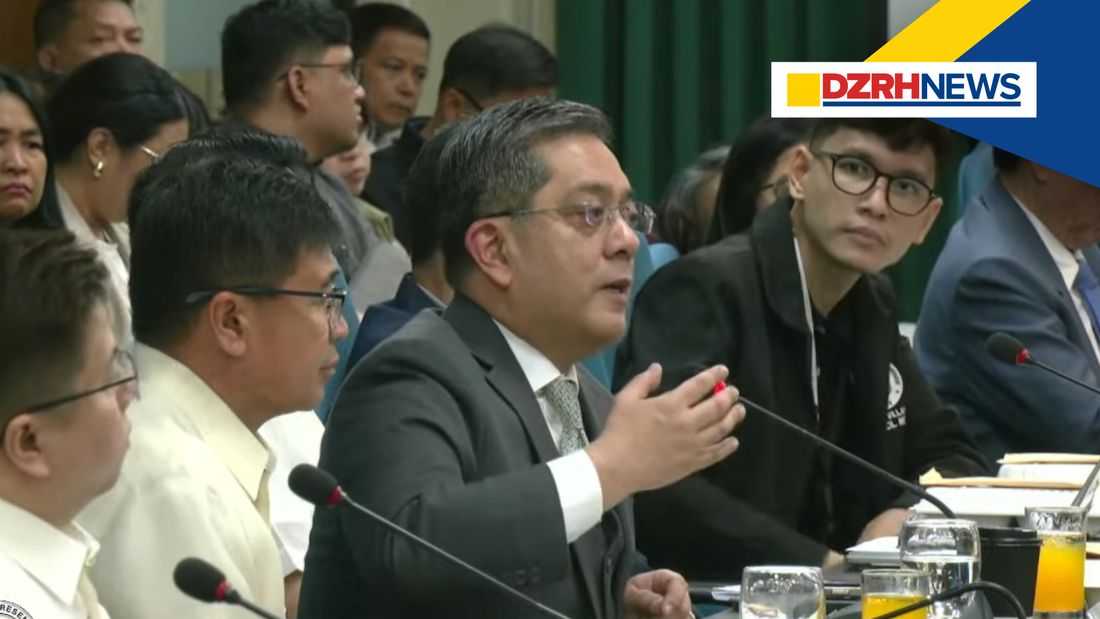
Commission on Elections (COMELEC) Chairman George Garcia assured lawmakers that the poll body is fully prepared to conduct the Barangay and Sangguniang Kabataan Elections (BSKE) on November 2, even as Congress considers measures seeking to postpone the polls amid the energy crisis and developments in the Middle East.
Speaking during a House Committee on Suffrage and Electoral Reforms hearing on Thursday, August 13, Garcia said the COMELEC can proceed with the elections as scheduled if Congress decides not to postpone them.
“Kami po ay handa and therefore kung ipag inyo pong sasabihin at ituloy ang eleksyon sa November 2, kakayanin po namin 'yan,” Garcia said.
Garcia also disclosed that the COMELEC had written President Ferdinand Marcos Jr. requesting that November 3 be declared a non-working day, following the November 1 observance of Undas.
“Nung nakaraang linggo tayo po'y lumiham sa ating kagalang-galang na Pangulo at pinapa-request po namin na baka pwedeng ang November 3 ay madeklara na walang pasok din sapagkat walang pasok ang November 2, ang November 1 po ay Undas,” he said.
He explained that the additional non-working day could give Filipinos who travel home for Undas more time before returning to their places of work or residence.
Garcia, however, raised legal concerns over congressional proposals seeking to postpone the BSKE because of the energy crisis, the situation in the Middle East, and possible increases in commodity prices.
He said the COMELEC had reviewed the proposed measures and noted that they were generally framed as postponement bills.
“Nakita po namin ang title is really postponement because of the energy crisis, because of what is happening in the Middle East, and because of what perhaps will be increased in the prices of commodities and etc. Technically po, and this is with all due respect, yung ground na ito, kung sakali pong ito'y mapapasa ng ating pong Kongreso, will be tested as against the very strict measure or guidelines issued by the Honorable Supreme Court,” Garcia said.
Garcia cited the Supreme Court's ruling in Makalintal v. Commission on Elections, which he said imposed strict requirements for postponing elections.
He explained that while Congress has the authority to fix the term of barangay officials and postpone elections through legislation, the COMELEC's delegated authority to postpone elections is limited to specific circumstances such as violence, terrorism, force majeure, or the destruction or loss of election paraphernalia.
“Basic principle, ang Kongreso ang may kapangyarihan na mag-fix ng term, o mag-postpone ng isang halalan. Ang Comelec, binigyan po niyo kami ng delegated authority na mag-postpone ng halalan. On a very limited ground like violence, terrorism, force majeure or loss or destruction of election paraphernalia. And the postponement can only happen for 30 days,” Garcia said.
He stressed that a general postponement remains within Congress' authority, but warned that any legislation based on the current energy crisis or geopolitical developments could later be challenged before the Supreme Court.
“Whoever are the proponents of this postponement should be prepared to defend to the Honorable Supreme Court later kung sakali pong ito maipasa as against that very strict guidelines. Napaka-stricto po ng guidelines na in-impose ng kataas-taasang hukuman,” Garcia said.
Garcia distinguished the proposed postponement measures from Republic Act No. 12232, which previously moved the BSKE by extending the term of barangay and SK officials from three years to four years.
According to Garcia, RA 12232 was treated differently because it was a term-fixing law, rather than merely a postponement law. He cited Article X, Section 8 of the Constitution, which provides that the term of local officials is three years, except for barangay officials, whose term may be fixed by law.
He noted that the Supreme Court dismissed a petition questioning the constitutionality and legality of RA 12232.
“Ang ibig kong sabihin, dun sa nangyari sa 12232, ang ginawa po nila doon ay hindi postponement, it became what we call as term-fixing law. Hindi po siya postponement law,” Garcia said.
Garcia said the distinction is important because the Supreme Court's strict guidelines on election postponement were not applied in the same manner to RA 12232.
He noted that proposals being considered in the Senate reportedly seek to extend the current four-year term of barangay and SK officials to five years, which would constitute a term-fixing approach.
Despite the legal concerns, Garcia reiterated that the COMELEC is prepared to conduct the BSKE on November 2 if the elections proceed as scheduled.
“Ang inyong COMELEC ay handang-handa [na] isagawa ang halalan po natin sa darating na November 2,” Garcia said.
He urged Congress to clarify the issue before the end of September to give the COMELEC sufficient time to prepare.
“Ang amin lang pong pakiusap, sana po maging maliwanag ang lahat bago po matapos ang September,” Garcia said.
