

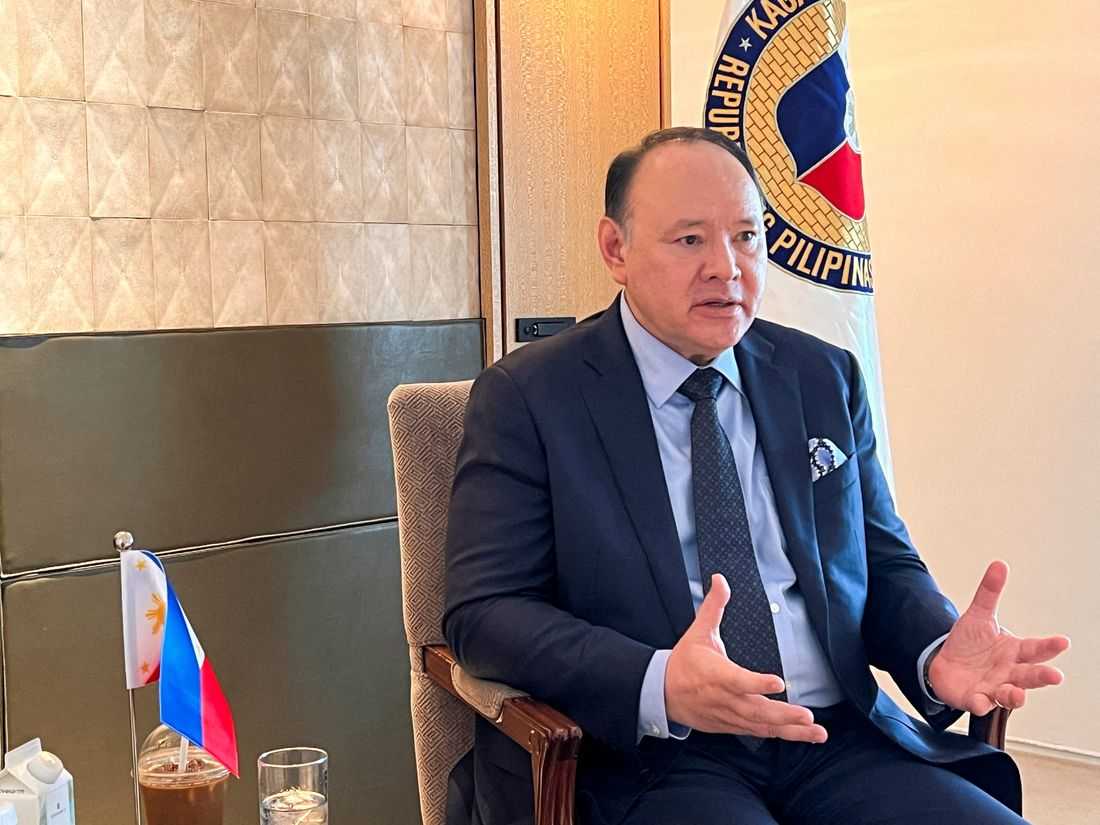
The Chinese Embassy in Manila has accused Defense Secretary Gilberto Teodoro Jr. of “distorting the facts” over the arrest and detention of 70 Chinese nationals during a raid at Sanjia Steel Corporation in Tagoloan, Misamis Oriental last May.
In a statement issued through its spokesperson Ji Lingpeng, the embassy questioned why only Chinese workers were arrested during the operation while Filipino workers were released.
“Secretary Teodoro’s remarks are completely unfounded. They distort the facts and turn black into white,” Ji said.
The embassy also questioned Teodoro’s involvement in the operation, including the participation of the Armed Forces of the Philippines (AFP), and why the Chinese workers were transported to Manila aboard a military aircraft for detention.
“If the plant violated environmental or other laws, why were the workers arrested instead of the people in charge?” the embassy said.
“Why were only the Chinese workers arrested, while all the Filipino workers were released on the spot?” it added.
The Chinese Embassy further raised concerns over the workers’ detention conditions, claiming that 70 Chinese nationals were held in cramped cells and that Philippine authorities failed to provide consular notification or arrange consular visits in accordance with the bilateral consular agreement.
It also said it had provided Philippine authorities with copies of the workers’ passports and valid work visas or permits, questioning why the workers remained detained for as long as 32 days.
The embassy cited a May 28 resolution by Philippine prosecution authorities, which it said ordered the release of all 70 Chinese nationals unless they were being held for other lawful reasons.
The embassy likewise rejected Teodoro’s allegation that Chinese Embassy officials intervened in Philippine law enforcement proceedings.
It said protecting the safety and legitimate rights of Chinese nationals is among the responsibilities of a diplomatic mission, including conducting consular visits and making representations to Philippine authorities to ensure the humane and fair treatment of detained Chinese nationals.
Teodoro, however, has maintained that the Chinese nationals were involved in illegal activities and accused Chinese Embassy officials of interfering in Philippine law enforcement.
The defense chief earlier said Beijing was avoiding the key issues surrounding the case, particularly whether the Chinese workers were engaged in illegal activities and whether Chinese Embassy officials intervened in local law enforcement operations.
“The Chinese Foreign Ministry continues to evade the crucial issue. The first question is: were these individuals involved in illegal activities?” Teodoro said.
He maintained that authorities had gathered evidence through search warrants issued by Philippine courts, citing alleged violations involving substandard and radioactive-tainted steel, environmental destruction and the release of untreated toxic fumes.
Teodoro also pointed to an allegation raised during a Senate hearing on August 13, when Presidential Anti-Organized Crime Commission Executive Director Benjamin Acorda Jr. claimed that Chinese Embassy officials had threatened to have Filipino workers arrested in China if Manila did not release the Chinese nationals arrested during the Misamis Oriental raid.
Acorda said the alleged threat was conveyed during a visit by Chinese Embassy officials to his office, although he did not identify the official involved or specify when the alleged threat was made. Beijing has denied that its actions were intended to pressure Manila.
The latest exchange adds to tensions between Manila and Beijing, with both sides trading accusations over the treatment of their respective nationals and the conduct of law enforcement operations.
The Chinese Embassy accused Teodoro of pursuing “anti-China activities” that could further strain bilateral relations, while Teodoro has insisted that the Philippines must enforce its laws and address alleged violations regardless of the nationality of those involved.
