
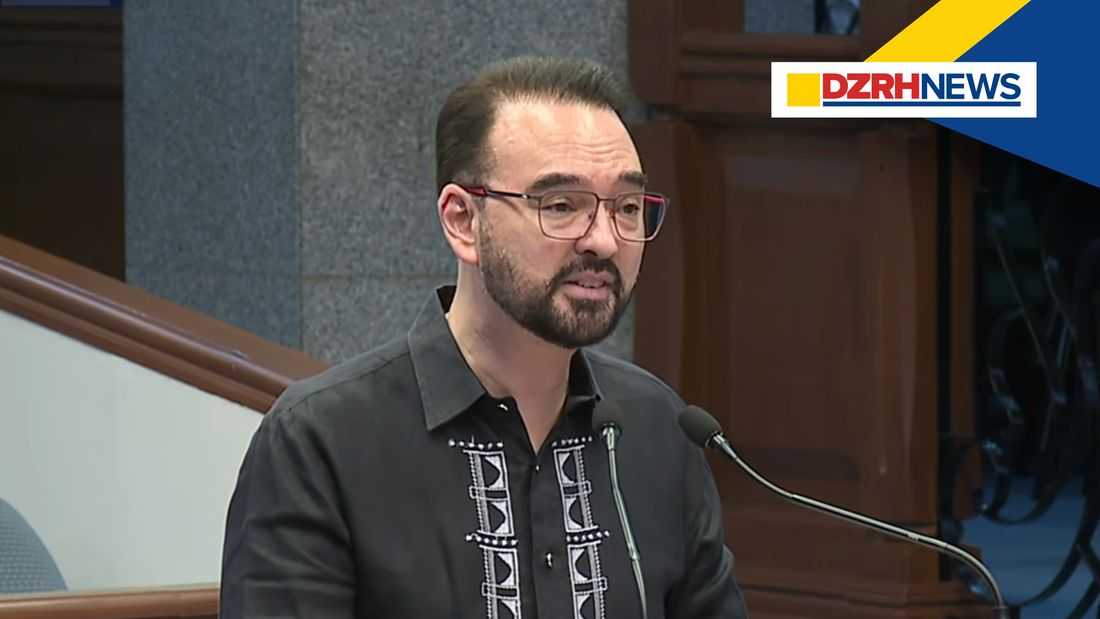
Senate Minority Leader Alan Peter Cayetano criticized the state of the country's agriculture sector during his Kontra (counter)-State of the Nation Address (SONA) on Tuesday, July 28, saying the Philippines has failed to modernize agriculture and provide sustainable opportunities for farmers over the past four decades.
Cayetano said the struggles of farmers continue despite the country's rich agricultural resources, stressing that agriculture remains one of the country's most neglected sectors.
“Kung sino man ang magsasabi sa atin na okay naman ang takbo ng ating agriculture, let's agree to disagree. Kasi I think in the last 40 years, I'm not blaming only this administration, we haven't figured out how to really modernize, how to bring back the enthusiasm in agriculture, how to make it really sustainable,” Cayetano said.
He noted that while wealthy investors are entering the farming industry, many small-scale farmers are leaving agriculture due to financial challenges, particularly the lack of capital.
Citing economic data, Cayetano said the agriculture, forestry, and fishing sector's contribution to the country's gross domestic product (GDP) fell to 7.9% in 2025, while its share of total employment declined from 26.99% in 2016 to 20.61% in 2024.
He emphasized the importance of strengthening local food production, saying the COVID-19 pandemic exposed weaknesses in the country's supply chain.
“Kailangan we learn to be self-sustaining and produce our own food,” he said.
Cayetano also pointed out that agricultural workers continue to receive the lowest wages among economic sectors, with poverty incidence remaining high among farmers at 27% and fisherfolk at 27.4%, based on 2023 data from the Philippine Statistics Authority (PSA).
In a wordplay on political divisions, Cayetano remarked, “Parati kasi tayong nagdi-disagree, kaya napabayaan ang agri.”
The senator likewise raised concerns over workers' wages, saying many Filipinos earn only the minimum wage instead of the "living wage" envisioned under the Constitution, which he said should be sufficient to cover housing, food, and other basic family needs.
