
By Daria Sito-Sucic
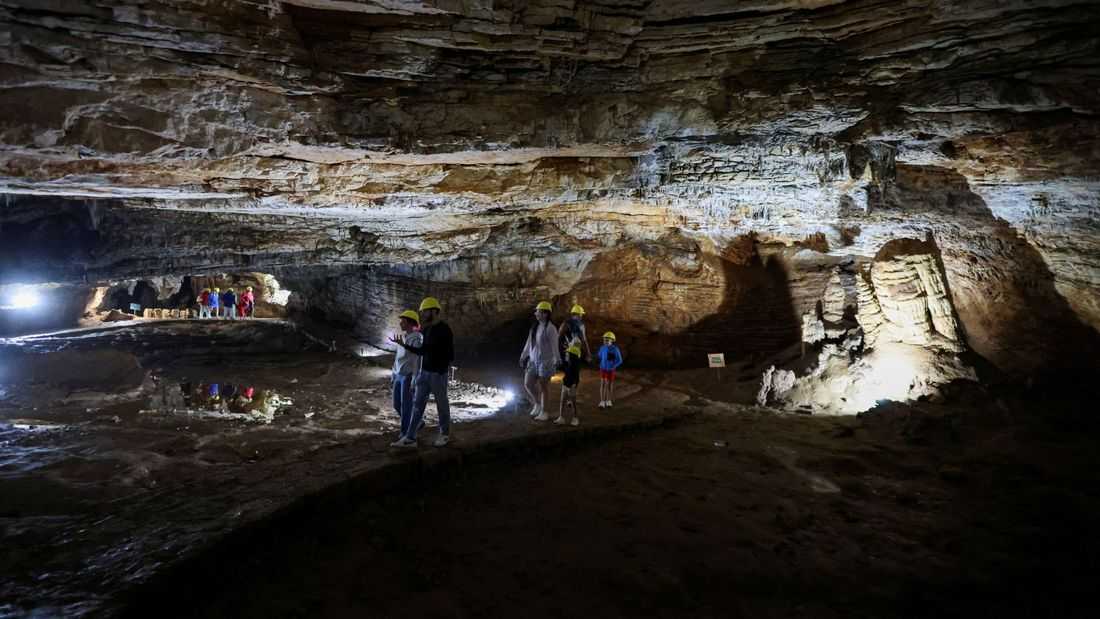
RAVNO, Bosnia and Herzegovina, Aug 6 (Reuters) - As southern Bosnia sweltered in 40 degree Celsius (104 degrees Fahrenheit), tourists have taken shelter in the constantly cool temperatures of the UNESCO-listed Vjetrenica cave.
Vjetrenica, which means wind cave, is located in the south of Bosnia and Herzegovina, about 25 km (15 miles) north of the Adriatic town of Dubrovnik, where cruise liners in high season arrive daily with thousands of visitors.
Numbers allowed to visit the cave are limited because of the sensitivity of the environment. Its constant 11 degrees Celsius (52 F) temperature year-round has made it a refuge for biodiversity as well as for humans.
Visitor groups of a maximum of 80 at a time explore some of the 7.5 km labyrinth of dark corridors and spacious chambers, where legend says fairies used to dance all the way down to the Adriatic Sea.
"Initially when we are entering the cave, it's a nice wind and then it's very cold and it does not only give a cool for your eyes but also for your body," said Ranjithkumar Rajendran, a neurobiologist based in Germany, who visited the cave with his family.
"It's literally like free air conditioning," said Mila Jankovic, a young Serb living in England.
Davor Bakovic, director of the Vjetrenica public institution that manages the cave, said increasingly intense summer heatwaves had meant that more than half of last year's 21,000 visitors to the cave arrived during the summer months.
He also said Vjetrenica was working with scientific organisations to try to protect the biodiversity of the cave, which has been home to hundreds of organisms.
The most famous is Proteus anguinus, the European blind cave salamander that can live up to 100 years.
(Reporting by Daria Sito-Sucic; editing by Barbara Lewis)
