
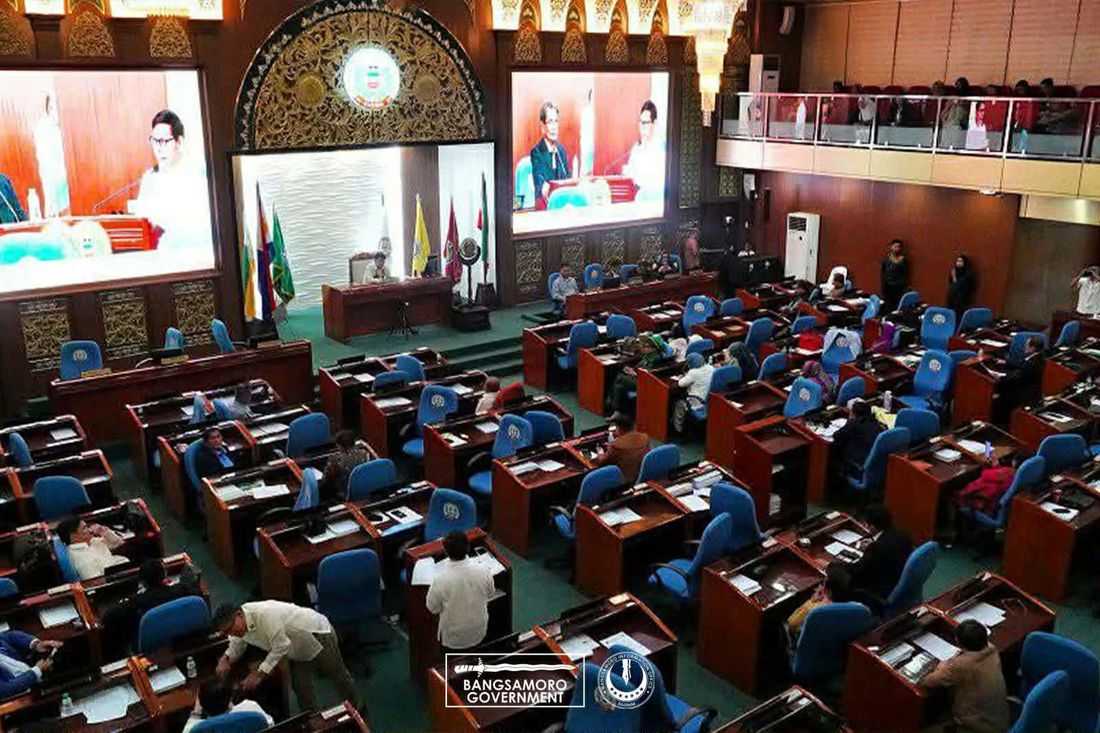
The Bangsamoro Transition Authority (BTA) has approved reforms to its election rules requiring regional political parties to follow a “one-in-three” gender rule in their lists of 40 nominees, a move that could result in at least 15 women winning seats in the first Bangsamoro parliamentary elections.
During an exclusive interview in DZRH's Special on Saturday (SOS), Member of Parliament Atty. Suharto Ambolodto said the reforms introduce a stricter gender placement requirement for regional party lists, moving beyond the existing 30 percent women’s quota to ensure women have a real chance of winning.
Under the amended Bangsamoro Autonomy Act (BAA) No. 35, regional parliamentary political parties are now required, “as far as practicable,” to observe a “one-in-three” rule in their list of 40 nominees for the regional party elections. This means that in every set of three nominees, at least one must be a woman.
“Actually, there were proposals to reducing it [Bangsamoro Autonomy Act No. 35] to 20%, ngunit ‘yun nga po, hindi na ni-reduce sa 20% yung minimum participation ng mga kababaihan. kundi , ni-retain na 30%. Hindi lang po ni-retain na 30%, nilagyan pa po ng ngipin na dapat 1 is to 3 po na requirement,” Ambolodto explained.
“With this the participation [of the women] maipapakita ang galing ng mga kababaihan sa first bangsamoro parliamentary elections, we hope to see more of them,“ Ambolodto said.
He added: "Nauna ng isabatas na kailangan 30% sa mga kandidato sa regional party election ay dapat nagmula sa hanay ng mga kababaihan. Para bigyan ng ngipin itong requirement ng BA 35 inamend lalo ang BA 35 para i-require sa lahat ng kanilang partido na sa lahat ng 40 nominees for the regional party elections Bangsamoro region.
He said the new rule addresses this gap by ensuring that women are distributed throughout the list. “Halimbawa, first 3 mayroon 1, 4 to 6 another, 7 to 9 another na kailangan mayroong rule of one is to three dahil maaari namang magkaroon ng 30% ngunit yung probability of winning ay napakababa dahil nandoon sila sa kaduluduluhan,” he said.
“With the rule of 1 and 3, it ensures yung women participation will not only be token or tokenistic or symbolic but rather effective and participatory,” he added.
Ambolodto stressed that while the phrase “as far as practicable” allows flexibility, it does not make compliance optional. Political parties that fail to meet the requirement must provide clear justification, and the burden of proof lies with the party, not with women candidates.
“Kung mayroon mang balakid na maaaring maging legal justification so be it, as far as practicable ngunit ang burden of proof, compliance nasa partido dapat magkaroon ng 1 on 3 participation, more or less minimum of 13 in the nominees,” he said.
According to projections discussed during deliberations, the Bangsamoro Parliament will be composed of district-elected members, sectoral representatives, and up to 40 percent to 50 percent regional party-list members. With the strengthened rules, lawmakers estimate that around 15 women, or just under 25 percent of the parliament, could win seats in the first parliamentary elections.
“Pinapalakas ang hanay ng kababaihan…hindi po maaaring isantabi na lang [ang mga kababaihan],” Ambolodto said.
Despite the Bangsamoro Parliament being male-dominated, Ambolodto said the amendment faced no opposition, “There was a lot of explaining, masyadong malalim ‘yung explanation doon sa interpolation at sa sponsorship ng amendment. We also made manifestation along those lines ngunit yung mga kababaihan. Walang oposisyon and the matter we are unanimous.”
The gender reform was approved alongside other major electoral changes under Parliamentary Bill (PB) No. 419. These include lowering the election threshold for parties to win a seat from 4 percent to 2.5 percent of total valid votes, allowing smaller regional parliamentary political parties (RPPPs) to gain representation. The bill also reduced the membership requirement for registering a regional party from 10,000 to 5,000 members.
Ambolodto noted that new certification rules will also be implemented for parties seeking to participate in the Bangsamoro Parliament.
He added that institutional reforms in the region have been gaining momentum, citing the passage of an anti-dynasty law in 2023, which will take effect in 2028 under the Bangsamoro parliamentary and local government code.
“Para patas ngayon there will be new certification of political parties to be able to participate in the bangsamoro parliament. ‘Yung reform momentum ng amending bangsamoro act 35 doon naisakay ang tungkol sa kababaihan,” Ambolodto said.
