
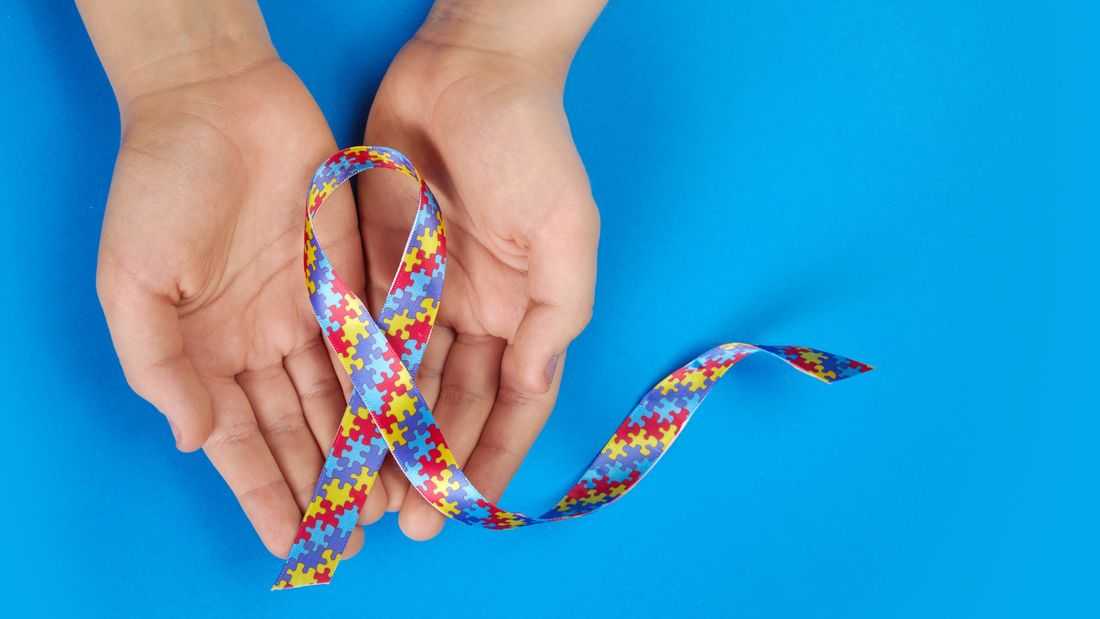
With Autism Awareness Month happening this April, advocates are once again calling attention not only to the need for acceptance, but to the gaps in support systems for autistic individuals.
In the Philippines—where an estimated one in every 100 people is on the autism spectrum, according to the Autism Society Philippines (ASP)—access to timely diagnosis, therapy, and mental health care remains uneven—often leaving families to navigate a fragmented and under-resourced system on their own, not to mention the general stigma surrounding all mental health issues and conditions.
Meet two autistic Filipinos: Mars, who has faced stigma masked as religiosity in a predominantly Catholic country, and Herodotus, whose parents spent years seeking help for their son and who had to temporarily stop attending college to focus on emotional healing. They have chosen their aliases.
Meet Mars
Mars, in her twenties and working, is diagnosed as autistic. She described herself as an “upfront and straightforward” person with a brain inclined to puzzles and organization, although she feels more like she’s operating on her own version of artificial intelligence (AI) or like she’s an “alien.”
As much as she would love to be famous and leave her mark in history, she aims instead to be stellar in everything she does, having been convinced many people are predisposed to disliking her anyway—additionally, she thinks being a woman limits her chances of gaining recognition.
Mars said that people usually find her “weird” but can’t pinpoint why. Over the years, she’s learned that the people who were always and truly in her corner stick around, and those who aren’t a fit fall away.
“Like there’s this off feeling that they have that they’re (other people) not with a human. I’ve learned over the years that people who aren’t for you will just leave your life whether you want them to or not. People who accept you will be there, it just takes time,” she said.
“Take it from someone who’s been bullied all their life for being different. Teachers, classmates, orgmates, even my former bosses at work have bullied me, talked horribly about me or actually used their power to accuse me of being an abuser,” she explained, adding that although you get used to expecting pain, experiencing it remains a constant.
Mars said she has wished she were neurotypical many times, explaining that she developed Post-Traumatic Stress Disorder (PTSD) from “severe” bullying, and that navigating intimate friendships while maintaining authenticity has proven difficult.
“Finding your footing in life only to realize that the condition for a lifelong friend is that you can never be yourself. Lying through your teeth that you understand a feeling, but you really don’t. You just know you’ll lose them if you contradict anything they say. You slip up once and it’s over,” she said.
All the same, Mars finds joy in her condition and has stopped wishing she was “normal” or “just like everyone else.”
“Over time, I’ve come to value how I think. It gives me joy even in the smallest times. Getting explosively excited over things you love. Running around in a little circle in the room gives the best feeling. I know now I have a unique perspective and it comes from pain,” she said.
“Now, I don’t wish I was neurotypical. I just wish that what I am isn’t going to lead to all the pain I had to go through,” she added.
When asked what it was like meeting people of the same wavelength, Mars said one “feels it off” others the same way people without autism sense that something is “weird” about people who do.
“People I consider my close friends are all neurodivergent, autistic, ADHD, or otherwise. To be frank, meeting neurotypical people has gotten boring to me. It feels like they’re trapped in their own cage that they made themselves. The energy, the passion and the commitment for the things they love, from autistic people especially, is unmatched,” she said.
As an autistic person, there are some things she finds very upsetting that are normal or tolerable for neurotypical people, like garbage trucks passing by and strong perfume.
“Being autistic comes with some superpowers with horrible weaknesses. A lot of autistic people have heightened senses. Mine happens to be my sense of smell and hearing. When garbage trucks pass by, it’s not only the horrible stench… it’s also the vibrations. They emit this buzzing like a wave of bass. It shakes me to my core and gives me what I could describe as mini panic attacks,” she explained.
“Also, can there be an illegal amount of perfume to spray? If I can smell you before I even see you, you should be arrested,” she joked.
Living in the Philippines as an autistic person—subject to the culture, particularly the stigma and denial surrounding mental health issues, and the state of the healthcare system—made the diagnosis a “nightmare” for Mars.
She dealt with not having received the proper help she needed and reflected that there just isn’t a cure for a condition like autism.
“Getting diagnosed was a nightmare. I raised my concerns to my parents, asking them to get me some help. Listed down all my reasons and everything. I just wanted to know. Instead of getting me a mental health professional, they got me a pastor life coach. My dad told me that I could not be autistic ‘cause I do well in school. I had to take things into my own hands,” Mars recounted.
The University of the Philippines (UP) Psychology Department was interested in her case, and gave her a free diagnosis, she said, adding that autism in females is harder to detect, as the diagnostic criteria is designed for males.
“Getting diagnosed as an autistic female is already hard enough. Most diagnostic criteria is around how autistic men present their symptoms, so unless the evaluator knows the differences or you make it clear that these differences point to certain symptoms, you’re likely to get misdiagnosed,” she continued.
“Treatment is just coping skills at most. There is no medication to help alleviate autism symptoms. It’s just who you are. You can’t make your senses any less sensitive. You can’t take a pill for you to understand social cues properly,” she said.
Mars likened the condition to being a computer without an operating system, such as Windows, MacOS, or Linux, that other computers have out of the box.
“They can just immediately do the things they’re supposed to. Autistic people have to figure out how to get all those files manually. You’re starting at an inherent disadvantage,” she explained, comparing therapy to a tutorial pointing autistic people to the right download links and teaching them how to repair corrupted files.
Meet Herodotus
Herodotus, like the Greek historian, found that for a long time, he was more interested in historical figures than in people living in present times, until undergoing therapy or rehabilitation.
After an “emotional spiral” that led to a “sidepath,” as he described them, he is now back in college, earning his degree in music, singing along to classical music, and writing stories online.
“You see, a few years into my first run through college, I went through a kind of emotional spiral. There were a lot of reasons for that, but to make it simple, I felt helpless, I tried to kill myself a couple times, and I ended up in rehab to deal with the fact that I felt like I couldn't understand people and other people couldn't understand me. And so in rehab, I learned how to listen and understand, and in so doing, I learned to understand myself,” he said.
He said that as an autistic person, not being able to immediately resolve issues with other people used to get under his skin.
“I’ve learned and continue to learn that giving space and time does help. Sometimes you need that detachment from an argument to get your head in a clear enough state to fix things,” he said.
Most people, Herodotus said, have been “pretty decent” to him, even in the past, when he did things that did not merit respect.
“Like back in the day, I was too absorbed in my own drama and emotional dysregulation that I pushed the patience of my family to their limits,” he recalled, adding that there are still times he slips back into the habit of provoking people.
While Herodotus has wished he was neurotypical, he’s come to terms with his autism, rehab having helped him deal with feelings of inadequacy.
“Back in the day, I saw myself as only really useful for my singing voice and nothing else. Rehab taught me life skills that really alleviated a lot of that anxiety about feeling useless,” he explained.
When Herodotus does meet other autistic people or others who share his interests, he said being able to discuss topics he cares about gives him a nice feeling.
As an autistic person residing in the Philippines, he considers himself lucky, having been considered high-functioning, even prior to rehab. He also shared that his parents genuinely sought out help for him.
As for the systems the country has in place for addressing health concerns, Herodotus believes they are insufficient or ineffectual as is.
“Honestly, the systems we have right now can’t even help neurotypical people, let alone people like me,” he quipped.
Awareness about how neurodivergent minds work and the knowledge on alleviating stress-inducing symptoms should be more prevalent, Herodotus thinks, emphasizing the importance of the parental role in treatment and symptom management.
“I do think we as a society could afford to have more awareness of how these neurodivergences actually work and how to mitigate and alleviate the issues caused by them. I don’t really have specific ideas on how to do that, but yeah, as always, parents actually parenting their children is important,” he said.
Mars’ and Herodotus’ stories reflect a mental healthcare system that still falls short of the individuals it is meant to serve. While Autism Awareness Month amplifies conversations about the condition, it also highlights the urgency of addressing gaps in mental health care, challenging harmful beliefs, and establishing that support is not a privilege, but a right.
Until then, awareness risks remaining just that—awareness.
