
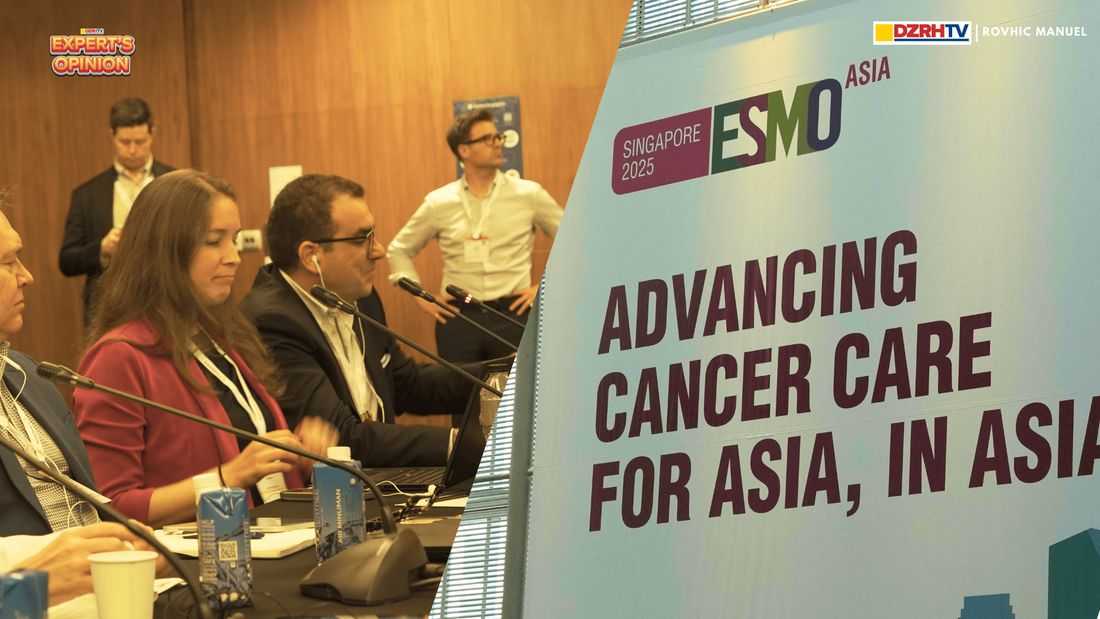
SINGAPORE — Artificial intelligence could soon transform cancer screening and early detection in the Philippines, as AstraZeneca executives highlighted new AI-driven approaches aimed at expanding access, reducing costs, and diagnosing cancer at earlier stages during ESMO Asia 2025.
Speaking in an exclusive interview on the sidelines of the conference, AstraZeneca Area Vice President for Asia Sylvia Varela said combining AI technology with chest X-rays offers a practical solution for widening screening coverage, particularly for lung cancer, one of the country’s deadliest diseases.
“We are trying to broaden the base of patients we can screen by combining artificial intelligence with chest X-rays,” Varela said. “This allows diagnoses to happen earlier and supports the healthcare system, as AI-enabled X-rays are more cost-efficient than referring all patients for low-dose CT scans.”
AstraZeneca executives said the approach could significantly improve early lung cancer detection in the Philippines, where many cases are still diagnosed at advanced stages.
Eldana Sauran, Director for Asia Oncology, said the company envisions a phased rollout, beginning with pilot sites or high-risk populations.
“The future for the Philippines is to have screening nationwide, or at least to start with high-risk groups,” Sauran said. “Reaching these communities first could be an important next step.”
New Cancer Data at ESMO Asia 2025
AstraZeneca also presented new clinical data at ESMO Asia 2025, underscoring progress in early detection, precision medicine, and treatment outcomes for Asian cancer patients.
Advances in Breast Cancer
Varela shared results from two major studies.
- DESTINY-Breast09, which supports using antibody–drug conjugates earlier for HER2-positive breast cancer.
- TROPION-Breast02, which showed better survival outcomes for Asian patients with metastatic triple-negative breast cancer.
Lung cancer developments
Meanwhile, Mark Sims, Global Franchise Head for EGFR-mutated lung cancer, discussed new data showing the continued importance of osimertinib in Asian patients.
Key trials like NeoADAURA, NEOLA, SAVANNAH, and SACHI showed promising results using osimertinib alone or combined with other therapies, especially for patients whose cancer progresses due to MET-driven resistance.
Progress in GI Cancers
AstraZeneca’s GI cancer leaders highlighted several important studies:
- MATTERHORN, which supports adding immunotherapy to treatment for gastric and GEJ cancers, common in Asia.
- HIMALAYA, SIERRA, and TOURMALINE, which reinforced the role of durvalumab-based treatments for liver and biliary tract cancers.
About Astra and ESMO
AstraZeneca is a global, science-led biopharmaceutical company focused on the discovery, development, and commercialization of prescription medicines across oncology, cardiovascular, respiratory, and renal and metabolic disease areas.
In the Philippines, AstraZeneca ranks among the country’s top pharmaceutical companies, with more than 380 employees nationwide delivering innovative medicines guided by the company’s core values.
The European Society for Medical Oncology (ESMO) Asia is an annual meeting that brings together oncology experts, researchers, and healthcare professionals across the Asia-Pacific region to advance cancer research and care.
ESMO marks its 50th anniversary this year under the theme, “50 Years of ESMO: From Progress to Global Impact,” highlighting its continued commitment to improving cancer outcomes worldwide.
