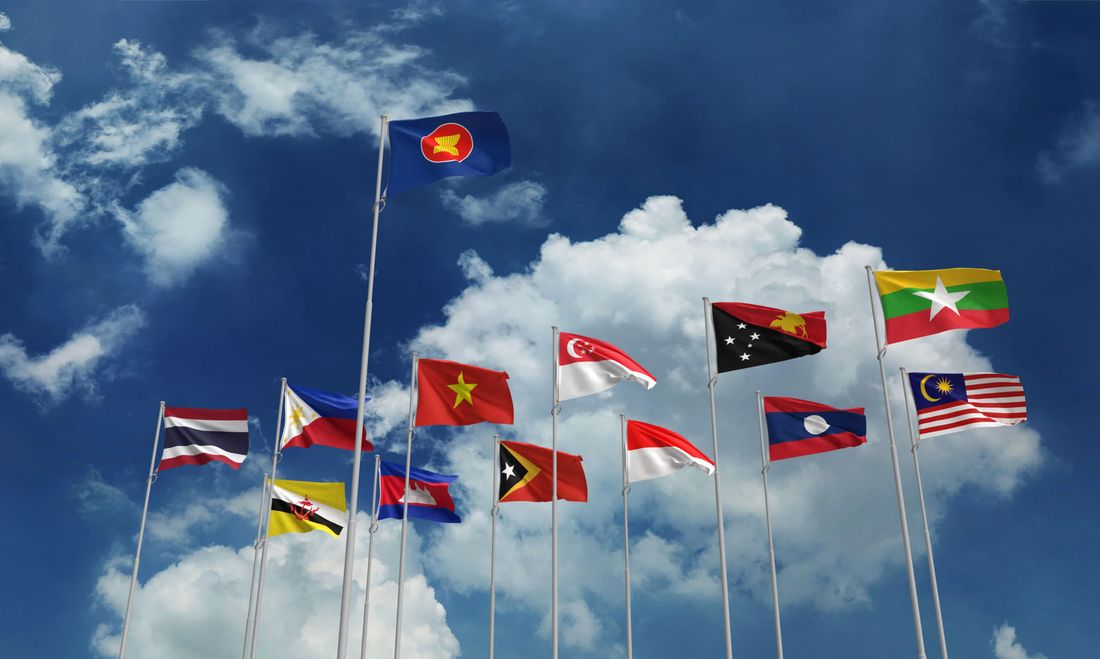
The Association of Southeast Asian Nations (ASEAN) was established on August 8, 1967, through the signing of the ASEAN Declaration, also known as the Bangkok Declaration, in Bangkok, Thailand.
According to the ASEAN website, The regional organization was founded by five Southeast Asian countries to promote economic growth, social progress, cultural development, regional peace, and stability through cooperation among neighboring nations.
The five founding foreign ministers who signed the declaration were Adam Malik of Indonesia, Narciso R. Ramos of the Philippines, Tun Abdul Razak of Malaysia, S. Rajaratnam of Singapore, and Thanat Khoman of Thailand.
ASEAN Founding Members (1967)
- Indonesia
- Malaysia
- Philippines
- Singapore
- Thailand
Current ASEAN Member States (2026)
ASEAN has expanded from its original five founding members to 11 member states, with Timor-Leste becoming its newest member in October 2025.
The following are the current members and their respective dates of admission:
- Indonesia – August 8, 1967
- Malaysia – August 8, 1967
- Philippines – August 8, 1967
- Singapore – August 8, 1967
- Thailand – August 8, 1967
- Brunei Darussalam – January 7, 1984
- Vietnam – July 28, 1995
- Laos – July 23, 1997
- Myanmar – July 23, 1997
- Cambodia – April 30, 1999
- Timor-Leste – October 26, 2025
The admission of Timor-Leste marked a significant milestone in ASEAN's history, completing its expansion to 11 member states and strengthening its representation across Southeast Asia.
ASEAN's International Partner Countries
Aside from its member states, ASEAN maintains formal partnerships with countries and regional and international organizations outside Southeast Asia. These relationships aim to strengthen diplomatic ties, economic cooperation, trade, investment, education, technology, security, and sustainable development.
Dialogue Partners are countries and organizations that maintain broad cooperation with ASEAN across various areas, including political security, economic development, and socio-cultural programs. They include Australia, Canada, China, the European Union, India, Japan, New Zealand, the Republic of Korea (South Korea), Russia, Türkiye, the United Kingdom, and the United States.
Sectoral Dialogue Partners cooperate with ASEAN in specific sectors and areas of mutual interest. These include Brazil, Denmark, Germany, Morocco, Norway, Pakistan, Qatar, South Africa, Switzerland, and the United Arab Emirates.
Meanwhile, Development Partners support ASEAN's development initiatives, capacity-building programs, and regional cooperation projects. These countries are Chile, France, Italy, the Netherlands, and Peru.
ASEAN's Regional Cooperation
ASEAN also works through several regional cooperation mechanisms, including:
- ASEAN Plus Three – A cooperation framework involving ASEAN member states, China, Japan, and South Korea, focusing on economic, financial, political, and socio-cultural cooperation.
- East Asia Summit (EAS) – A regional leaders-led forum that provides a platform for dialogue and cooperation on strategic, political, and economic issues.
- ASEAN Regional Forum (ARF) – A platform for discussing regional security and political concerns among participating countries.
These initiatives reinforce ASEAN's role in addressing regional and international challenges through dialogue, diplomacy, and collective action.
ASEAN's Significance
With 11 member states and an extensive network of international partners, ASEAN continues to serve as a major regional organization promoting unity, economic integration, and peace in Southeast Asia.
Its establishment in 1967 laid the foundation for stronger diplomatic relations among neighboring countries, while its continued expansion and international partnerships demonstrate its growing role in regional and global affairs.