Leaders of the Association of Southeast Asian Nations (ASEAN) has adopted a Philippine-led declaration establishing stronger regional safeguards for migrant workers, including measures to curb excessive recruitment fees, combat human trafficking and dismantle online scam operations.
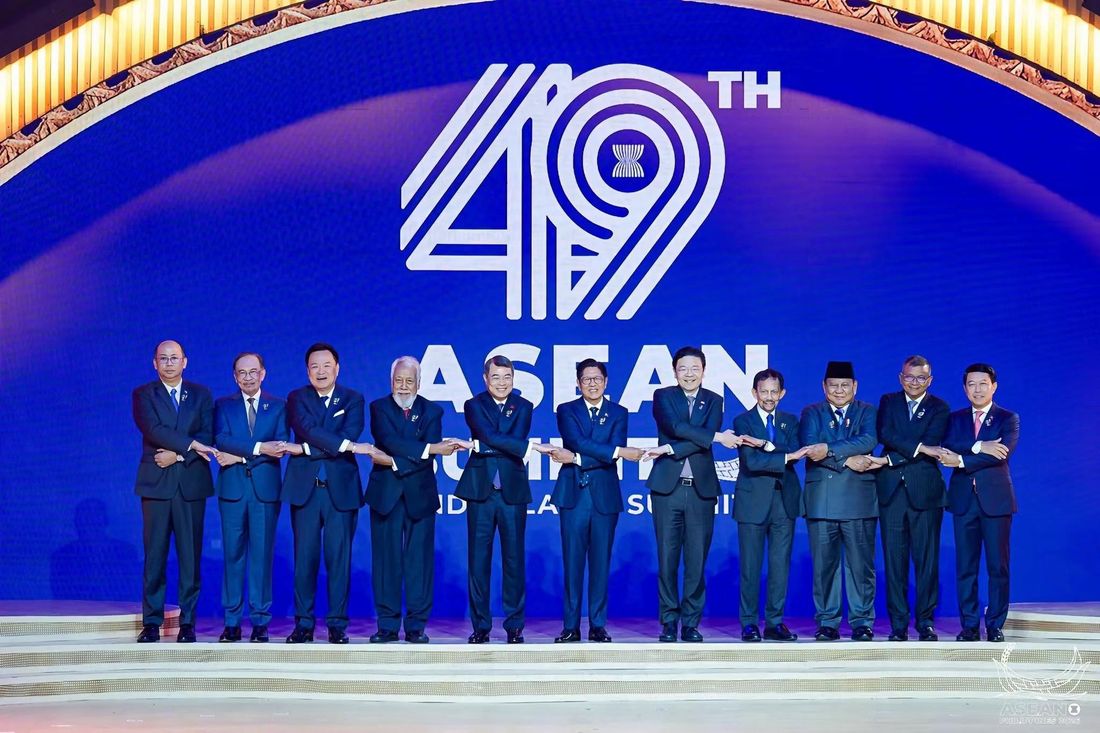
The ASEAN Declaration on Fair, Ethical and Sustainable Recruitment for Empowered Migrant Workers was formally adopted during the 49th ASEAN Summit and Related Summits in Manila.
The agreement is expected to benefit millions of Southeast Asian migrant workers, including approximately 600,000 Overseas Filipino Workers (OFWs) across the region.
The declaration was spearheaded by the Philippines under the leadership of President Ferdinand R. Marcos Jr., through the Department of Migrant Workers (DMW), as part of the country's ASEAN chairship under the theme, "Navigating Our Future, Together."
It builds on existing regional agreements, including the 2007 Cebu Declaration, the 2017 ASEAN Consensus, the ASEAN Checklist adopted during the 48th ASEAN Summit in Cebu, and recommendations from the 19th ASEAN Forum on Migrant Labour held in Manila last month.
DMW Secretary Hans Leo J. Cacdac said the new agreement strengthens existing ASEAN commitments to protect the rights and welfare of migrant workers.
"This declaration advances ASEAN instruments toward the protection and promotion of rights of migrant workers," Cacdac said during a press briefing at the Summit's International Media Center in Pasay City.
"With this Declaration, there will be greater transparency and accountability in recruitment and placement across all ASEAN Member States—prohibiting excessive or unreasonable recruitment fees, strengthening agency licensing and monitoring, and promoting access to justice and complaint mechanisms," he added.
Online scam hubs
The declaration also seeks to strengthen cross-border cooperation against human trafficking networks operating through online scam hubs, particularly those that lure migrant workers with fraudulent employment offers.
Cacdac said the DMW and the Philippine Embassy in Yangon are monitoring approximately 90 to 100 Filipinos allegedly trapped in scam compounds in Myanmar.
"Our cooperation with ASEAN Member States will certainly be strengthened, particularly regarding our OFWs who find themselves in situations involving so-called 'scam hubs' or 'scam farms,' aimed at stopping these scam hubs and assisting our OFWs," he said.
He also warned Filipinos against recruiters offering employment in neighboring ASEAN countries through visa-free entry arrangements.
Cacdac stressed that visa-free travel applies strictly to tourists and does not authorize employment, describing its use for overseas job deployment as a "foremost badge of illegal recruitment or human trafficking."
Meanwhile, DMW Assistant Secretary Levinson Alcantara, the Philippines' chief negotiator for the declaration, said the agreement would be implemented through regional consensus, regular progress reporting and institutional capacity-building rather than punitive sanctions.
The declaration has already been incorporated into the ASEAN Committee on the Protection and Promotion of the Rights of Migrant Workers' (ACMW) 2026–2030 Work Plan, Alcantara said.
Implementation will receive support from Canada through the Fair ASEAN project, in partnership with the International Labour Organization (ILO) and the International Organization for Migration (IOM), as well as from Australia through the ILO's TRIANGLE Partnerships program.
The DMW is finalizing arrangements for a regional capacity-building seminar scheduled by the end of November 2026, ahead of the agreement's initial full rollout in early 2027.
The DMW said the declaration marks another step in ASEAN's efforts to establish fairer recruitment practices, strengthen protection mechanisms and improve regional cooperation in addressing the vulnerabilities faced by migrant workers.