
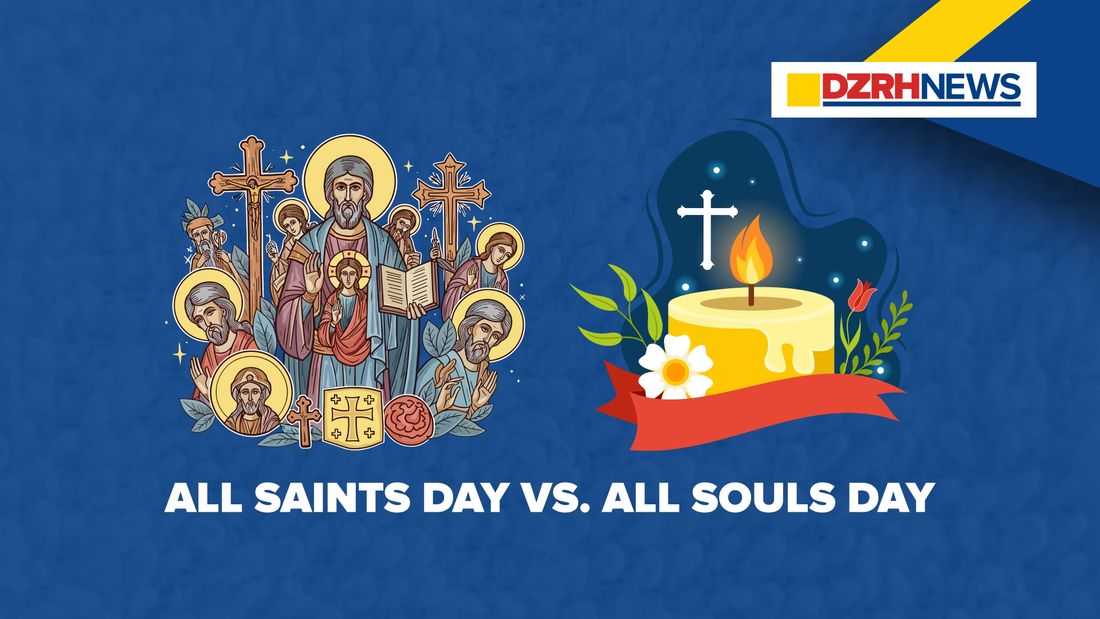
As Filipinos observe Undas every November, families across the country gather in cemeteries to honor their departed loved ones through prayers, flowers, candles, and family reunions. While All Saints’ Day and All Souls’ Day are often observed together, the two Catholic celebrations have distinct religious meanings and historical origins.
History of All Saints Day
All Saints’ Day, celebrated every November 1, traces its roots to the early centuries of Christianity, when Christians gathered to honor martyrs who died for their faith during Roman persecution.
In 609 or 610, Pope Boniface IV dedicated the Pantheon in Rome as a Christian church honoring the Virgin Mary and all martyrs. Later, Pope Gregory III (731–741) established November 1 as the date for honoring all saints. The celebration was eventually extended to the entire Western Church by Pope Gregory IV in the ninth century.
Today, the solemnity honors all saints in heaven, including those officially canonized by the Catholic Church and those whose holiness is known only to God.
History of All Souls Day
All Souls’ Day, observed every November 2, developed from the early Christian practice of praying for deceased members of the faith.
In 998, St. Odilo, Abbot of Cluny in France, ordered monasteries under his authority to dedicate November 2 to prayers for all the faithful departed. The practice eventually spread throughout the Catholic Church.
In 1915, Pope Benedict XV allowed priests to celebrate multiple Masses on All Souls’ Day, emphasizing the importance of praying for the deceased.
What's the difference?
Although observed on consecutive days, the celebrations have different purposes.
All Saints’ Day honors those who have attained heaven, recognizing their holiness and examples of faith.
All Souls’ Day remembers all the faithful departed and encourages Catholics to offer prayers and Masses for their souls, particularly those believed to be undergoing purification before entering heaven.
Both celebrations reflect the Catholic belief in the communion of saints and the spiritual connection between the living and the dead.
Filipino tradition during 'Undas'
In the Philippines, the observance of All Saints’ Day and All Souls’ Day is collectively known as Undas, a long-standing tradition that brings families together to remember their deceased loved ones.
The Filipino term "Undas" is believed to have originated from the Spanish word "honras," meaning "honors" or "funeral honors," referring to ceremonies and religious observances held in memory of the dead.
During the Spanish colonial period, Catholic traditions such as All Saints’ Day and All Souls’ Day became deeply established in the Philippines.
Among the most common practices are visiting cemeteries and columbaria, cleaning and decorating graves, lighting candles, offering flowers, and attending Masses and prayer services.
For many Filipino families, the occasion is also an opportunity to reunite with relatives, share meals, exchange stories, and spend time together while remembering those who have passed away.
Some families even stay overnight in cemeteries, turning the observance into a family gathering.
Certain communities also preserve unique local customs. In Pangasinan, some families observe padasal, a traditional prayer gathering for deceased relatives, while others prepare inlubi, a sweet black rice delicacy associated with Undas.
Another regional tradition is panagkamarerwa, in which singers called cantores go from house to house singing Pantawtawag, or calling songs, for the departed.
Beyond the flowers, candles, and gatherings, Undas remains a meaningful expression of Filipino faith, family values, and cultural identity, reminding everyone to honor the lives of their departed loved ones and keep their memories alive through generations.
