
MANILA, Philippines – U.S. Regional English Language Office (RELO) in Manila led a session showcasing how technology is setting the standard for measuring and delivering educational outcomes in schools across Southeast Asia.
During the ASEAN English Leadership Forum held in Makati City recently, the U.S. Embassy in the Philippines, through its Regional English Language Office, discussed ways to advance policies on English Medium Instruction (EMI), or using the English language to teach academic subjects, by leveraging American artificial intelligence (AI) to improve K-12 and higher education systems in the region.
According to the U.S. Embassy, Microsoft Philippines led a session showing participants how to apply AI tools from the United States for “improved teaching and learning,” such as the use of Microsoft Teams as an AI-powered language tutor that provides students with customized feedback and real-time interaction.
This was followed with a workshop on how universities can integrate AI as a genuine learning tool while ensuring assessments are able to measure real student ability.
“Participants explored oral defenses and project-based evaluation as methods that keep human learning at the center of their programs,” the Embassy mentioned.
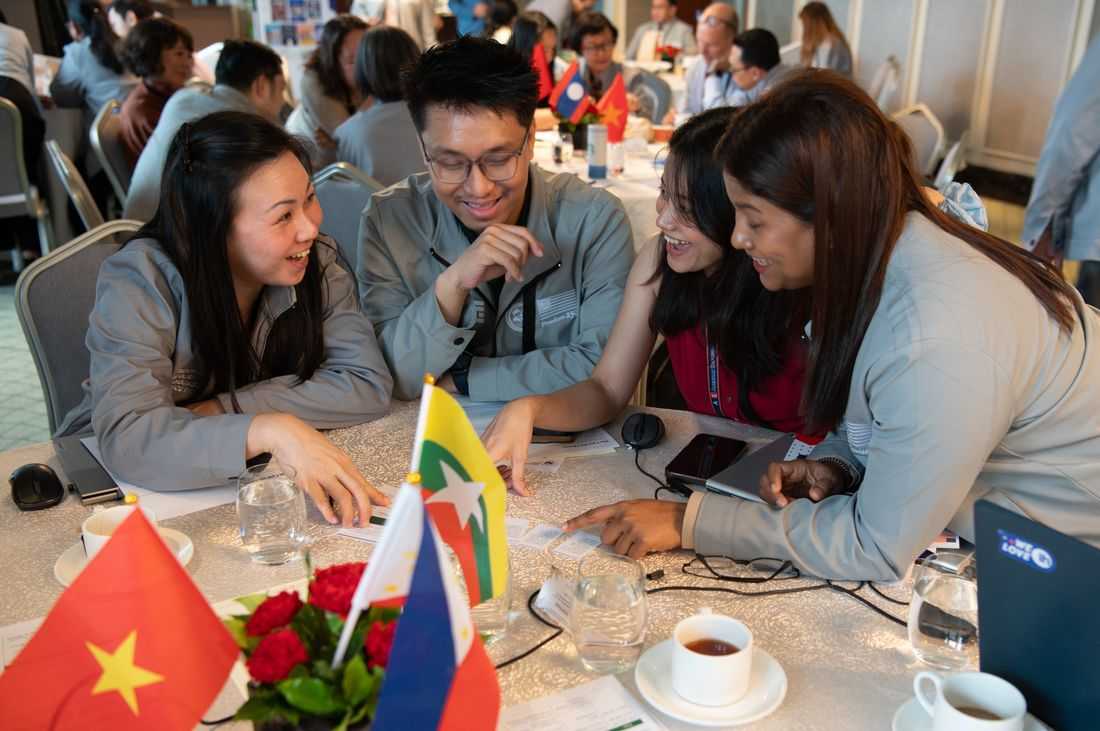
Attended by 34 academic and government officials, who shape curriculum and language policy in schools and higher education institutions in all 11 ASEAN member states, the Regional English Language Offices at the U.S. Embassies in Manila, Jakarta, Bangkok and Hanoi, with Dr. Martha Bigelow, Professor of Second Language Education at the University of Minnesota, guided each participating delegation on formulating institutional strategic plans on advancing EMI, to be presented to their home university, school system, or education ministry.
“As ASEAN Chair, the Philippines is shaping regional cooperation. The ASEAN English Leadership Forum showed what the U.S.-Philippines partnership produces when we work toward a shared goal,” Regional English Language Officer Jeff McIlvenna said.
“Every participant built their own plan, grounded in their own institution, and left with something they can act on. That is American engagement producing real results,” he added.
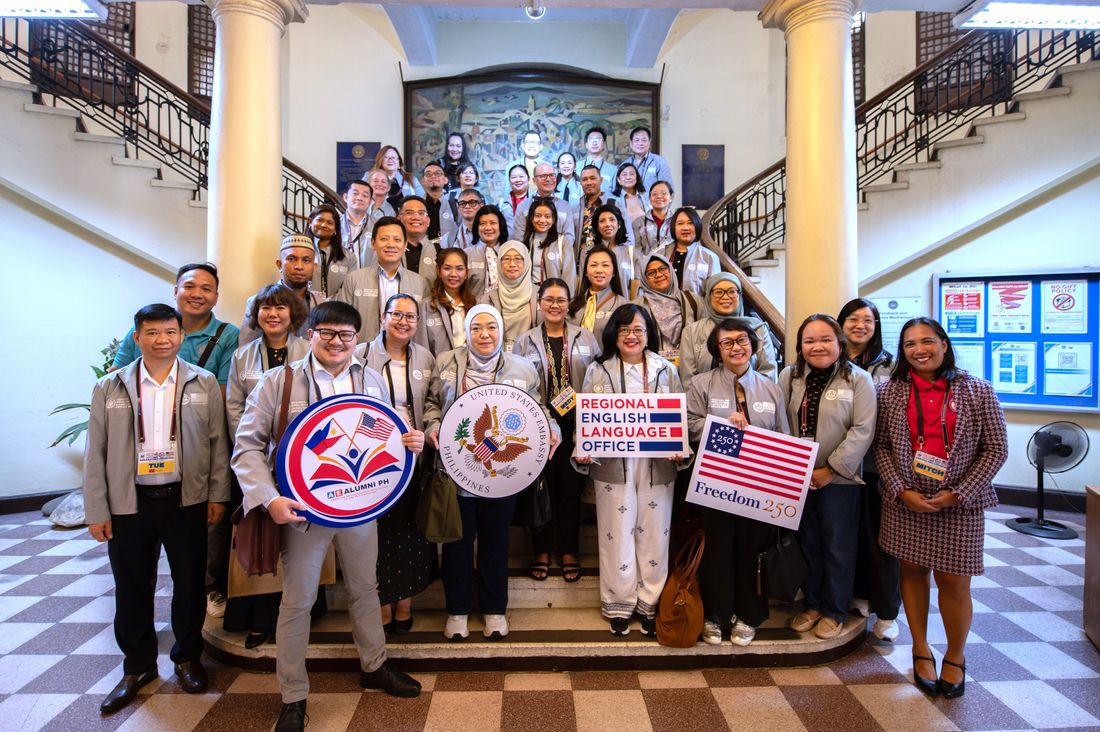
Courtesy of U.S. Embassy in Manila
The Embassy also highlighted the Institutional Leadership Playbook – one of the notable outcomes of the forum.
According to the Embassy, this a practical, step-by-step strategy document that provides academic leaders with a blueprint for updating degree programs, setting teaching standards for technical staff, and securing approval from senior leadership.
“Under our national curriculum framework, achieving a high level of English proficiency is our immediate, vital benchmark for educators. While EMI is not yet active in our teacher education institutions, the Institutional Leadership Playbook developed through this Forum allows us to look toward the future,” said Dr. Vichheka Khuon, a forum participant from Cambodia.
“It provides a realistic framework to lay the groundwork today, ensuring that as we chart a long-term horizon toward EMI, we are steadily cultivating the faculty capacity and institutional standards necessary for enduring success,” she added.
