
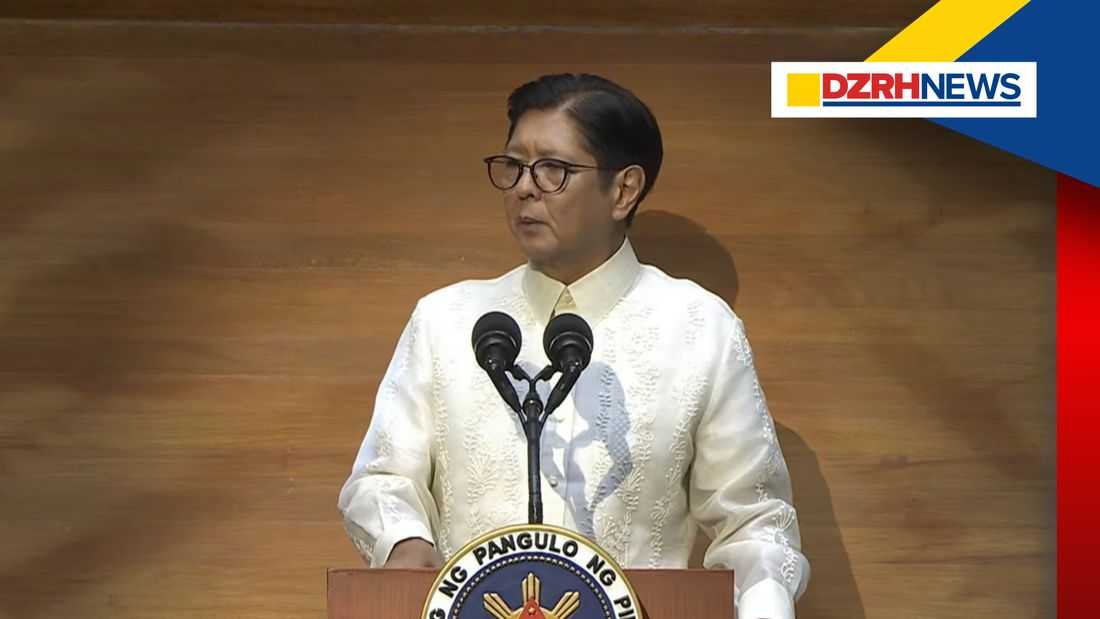
President Ferdinand “Bongbong” Marcos Jr. emphasized the growing role of artificial intelligence (AI) in the country’s future, saying the Philippines must embrace and harness the technology to remain globally competitive during his fifth State of the Nation Address (SONA) on Monday, July 27.
Marcos said the government is expanding digital transformation initiatives by equipping Filipinos with technology skills needed to adapt to the rapidly changing digital landscape.
“AI is here to stay, and so we adopted to harness its potential to enhance critical sectors from our educational system to our industries,” Marcos said.
The President highlighted the efforts of the Department of Information and Communications Technology (DICT) in providing high-impact technology training programs aimed at preparing Filipinos for emerging opportunities in the digital economy.
“In line with our digital transformation drive, our DICT continues to train our tech-savvy citizenry in high-impact tech skills to help them stay competitive in this ever-evolving field,” he added.
Marcos said government-led AI readiness programs have already reached at least 1.8 million individuals, including students, parents, and teachers, as part of efforts to promote AI literacy across various sectors.
“This success inspires confidence to further scale up our initiatives for AI literacy across all sectors,” Marcos said.
The President also stressed the importance of strengthening critical thinking, creativity, innovation, and problem-solving skills among Filipino youth, both inside and outside academic institutions.
“We must ensure our global competitiveness. Within and beyond the academe, we must inculcate in our youth the virtues of critical thinking, innovativeness, creativity, as well as the ability to find solutions to problems,” Marcos said.
He cited government scholarship programs and funding grants, along with initiatives such as the Young Creative Challenge, NICE, and Philippine Ovation Awards, as efforts to recognize and support young Filipinos’ talents and innovative ideas.
Marcos said investing in digital skills and AI education will be crucial in preparing the country’s workforce for future industries and maintaining the Philippines’ competitiveness in the global economy.
