
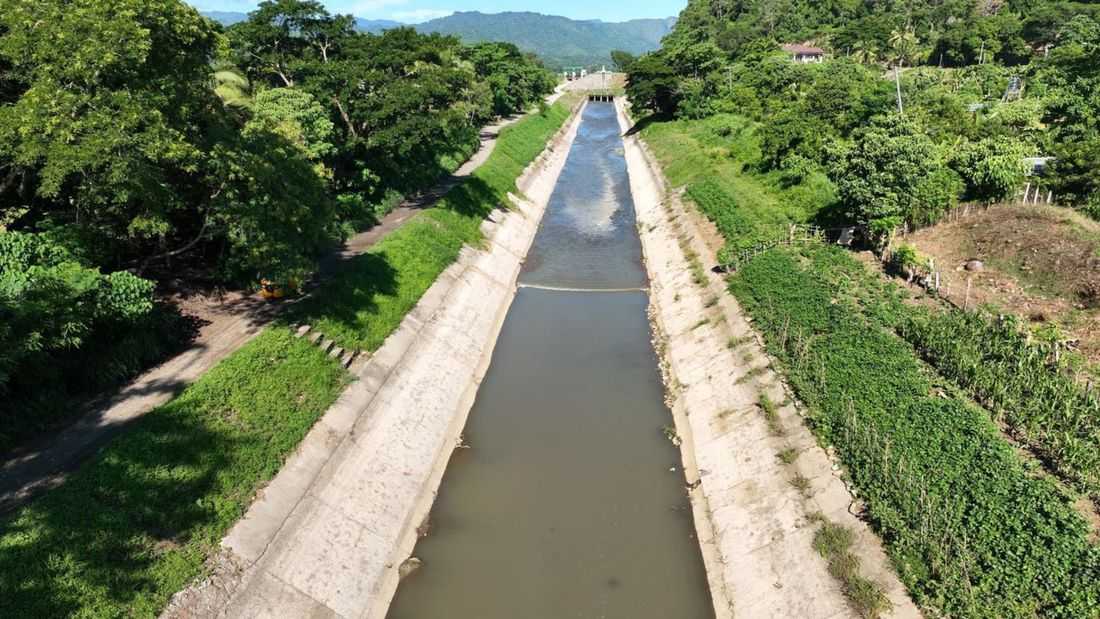
The National Irrigation Administration (NIA) has expanded its estimate of the country’s potential irrigable land to about 4.2 million hectares after revising its planning assumptions to include steeper terrain.
Speaking on DZRH’s Special on Saturday, NIA Administrator Eduardo Guillen said the agency’s earlier framework was largely based on areas with up to 3% slope. However, he said this excluded upland communities that could still be developed for irrigation.
“Sabi ko, 3% slope? Teka muna, eh paano yung mga nasa upland communities?” Guillen said during the interview. “So, ang ginawa po ng NIA ay nagsagawa po kami ng Regional Irrigation Master Plan. At kinonsider naman po natin yung mas mataas pa na slope, average of 8%.”
With the revised parameters, Guillen said the agency identified an additional 1 million hectares of potential irrigable land nationwide, raising the total estimate from 3.2 million hectares to around 4.2 million hectares.
He added that despite the expanded potential, the country’s actual irrigated area remains significantly lower compared with demand, with millions of farmers still dependent on rain-fed agriculture.
The discussion also revisited long-standing concerns about the absence of a comprehensive national land use framework, which critics say has affected long-term planning for irrigation and agriculture.
Former senator Orly Mercado questioned how irrigation planning can be effectively implemented without a unified national land use plan, warning that land conversion and competing local land-use decisions continue to undermine agricultural zones.
Mercado said irrigation infrastructure and water systems require an integrated national approach, noting that canals in some areas have been affected by the conversion of farmlands into subdivisions and industrial sites.
Guillen agreed on the need for stronger alignment between land-use planning and irrigation development, but said the NIA currently relies on its National Irrigation Master Plan alongside local government comprehensive land use plans (CLUPs).
He noted, however, that inconsistencies remain when local governments reclassify land, even in areas already served by irrigation systems.
“At the end of the day, pwede pa rin nilang i-convert ito,” Guillen said, referring to irrigation-served areas reclassified for other uses.
Mercado also raised concerns about land conversion practices at the local level, suggesting these may be influenced by economic interests, while emphasizing the need for stronger national oversight to protect agricultural land.
The NIA said it continues to update its regional irrigation planning to reflect geographic realities and improve water access for upland and lowland farming communities.
